Cappadocia Türkiye

Cappadocia Türkiye

Cappadocia
·

23 September 2026

Travel Overview & Quick Facts

Location
Cappadocia
Admission / Entry Fee
There is no single entry fee for Cappadocia, as it is a vast geographical and historical region rather than a ticketed attraction. Visitors can freely explore the town of Göreme, the main roads, the many viewpoints and the various valleys. Individual heritage attractions are charged separately. Estimated prices for foreign visitors in 2026 include around 20 euros for the Göreme Open-Air Museum, 13 euros each for Derinkuyu and Kaymakli Underground Cities, 12 euros for a combined ticket for the Zellve and Paşabaglari archaeological sites, and 9 euros for the Uçhisar Castle. An additional ticket of around 6 euros may be required for the Dark Church located inside the Göreme Open-Air Museum. Depending on the season, flight duration, operator and availability, a typical shared hot-air balloon flight usually costs around 120–250 euros per person. Additional fees apply for some viewpoints, private terraces, parking areas and organised activities. Please confirm current admission prices directly with the official ticket offices and licensed operators.
Best Time to Visit
Open year-round; however, April to June and September to October are particularly popular for sightseeing, hiking, and hot-air balloon experiences.
Opening Hours
Open 24 hours. Cappadocia is a geographical region with no fixed opening hours. Museums, underground cities, castles, private sightseeing spots and organized activities operate according to their own schedules.
Category / Type
UNESCO World Heritage Destinations, Natural Landscapes and Scenic Valleys, Historical and Cultural Heritage, Adventure and Hot Air Balloon Tourism

Introduction to Cappadocia Türkiye

Cappadocia in Turkey is one of the world's most extraordinary travel destinations, famous for its carved volcanic landscape, spectacular fairy chimneys, ancient underground settlements, centuries-old cave churches and unforgettable sunrise hot air balloon rides. Located in Central Anatolia, approximately 280 kilometers southeast of Ankara as the crow flies, this remarkable historical region spans parts of several provinces of Turkey, with its main tourist centers centered around Göreme, Uçhisar, Urgup, Avanos and Nevşehir .

Unlike any typical tourist destination, Cappadocia is a complete landscape shaped by millions of years of geological activity and thousands of years of human civilization. Ancient volcanic rocks hardened into softer rocks, which were gradually shaped by wind and water into towers, cones, ridges, and deep valleys. Generations of inhabitants have transformed these same formations into homes, temples, warehouses, monasteries, and vast underground settlements. Today, visitors can explore this extraordinary intersection of geology, architecture, archaeology, and vibrant Turkish culture.

The region gained international recognition in 1985 when the Göreme National Park and the Rock Sites of Cappadocia were inscribed on the UNESCO World Heritage List as a mixed cultural and natural property. This protected heritage landscape includes important rock-cut religious sites and underground settlements. Göreme is generally the most convenient center for first-time travelers, as its accommodations, restaurants, tour operators, and major attractions are concentrated in a relatively small area.

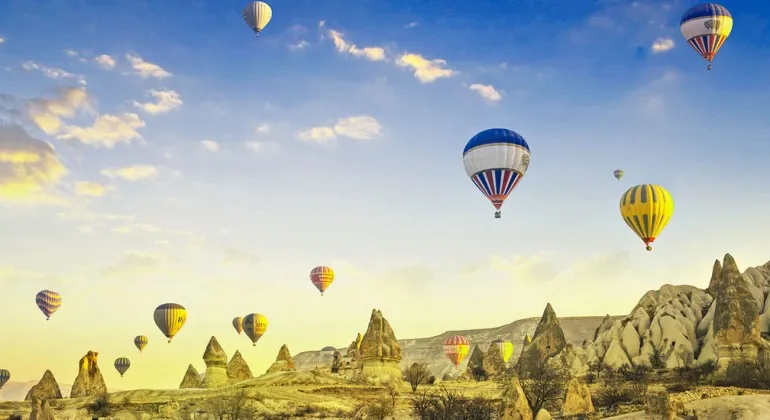
For many travelers, the most memorable experience in Cappadocia begins before sunrise: colorful hot-air balloons soar over clusters of fairy chimneys, and golden light illuminates the valley walls and cave dwellings. But this destination has much more to offer than its famous balloon photos. Visitors can hike in the Rose Valley, discover Byzantine paintings at the Goreme Open-Air Museum, descend into the Derinkuyu Underground City, watch traditional pottery being made in Avanos, and spend the night in a charming cave hotel.

Location and map notes: Cappadocia has no single official pinpoint, as it is a region rather than a single entity. The Google Maps link provided in this record identifies the main tourist destination of Göreme via a verified Google Maps place identifier. It was not possible to establish a correct Google Maps URL with a verified latitude and longitude viewport, so the coordinate fields have been intentionally left blank, rather than filled in with unverified values. Similarly, a single Google Maps rating and review count may not accurately represent the entire Cappadocia region.

Travelers planning an extensive itinerary in Turkey can combine a trip to Cappadocia with a visit (istanbul) to the historical and cultural sites of Istanbul, the capital Ankara , or other notable destinations in turkey . Allocate at least two full days in Cappadocia, although the experience is much more rewarding with three or four days.


History, geology and UNESCO heritage

How the fairy chimneys of Cappadocia were formed

Cappadocia's distinctive landscape was created by volcanic activity associated with major mountains, including Mount Erciyes, Mount Hasan, and Mount Melendez. Volcanic ash and other sediments were deposited layer by layer, eventually becoming rock, including relatively soft volcanic tuff. Over time, erosion selectively removed the softer material, creating dramatic rock peaks, cones, valleys, and isolated pillars. Where resistant rock protected the softer material below, mushroom-shaped formations formed, creating the famous Fairy Chimneys.

These formations are not man-made monuments. Their striking forms are the result of natural geological processes. Tourists can see a variety of formations in the Love Valley, the Devrent Valley, the Pashabag, and the valleys around Göreme. Their shapes vary significantly depending on the characteristics of the rock and the type of local erosion.

Ancient communities and rock-cut architecture

Cappadocia has been inhabited since prehistoric times and has witnessed a succession of civilizations, including Hittite, Persian, Roman, Byzantine, Seljuk, and Ottoman influences. Its relatively accessible volcanic rock encouraged a unique type of settlement: inhabitants carved houses, temples, churches, storehouses, and roads directly into the rock.

Christian monastic activity became particularly important from around the 4th century. During the Byzantine period, religious communities built numerous churches and monasteries depicting biblical scenes. The frescoes preserved in the Göreme area, especially from the 10th to 13th centuries, are among the most important artistic treasures of Cappadocia.

Underground settlements and protective shelters

One of Cappadocia's most fascinating features is its underground settlements. Derinkuyu and Kaymakli consist of interconnected rooms, corridors, ventilation tunnels, and social spaces spread across multiple underground levels. These complexes were developed and refined during different historical periods and could have served as refuges in times of insecurity and conflict.

Visitors should understand that underground cities were not built in a single event, and their entire history cannot be definitively attributed to any one civilization. Their surviving architectural styles reflect adaptation and reuse over a long period of time.

Why Cappadocia is a UNESCO World Heritage Site

UNESCO recognized Göreme National Park and the Rock Sites of Cappadocia under cultural and natural criteria in 1985. This recognition recognizes both the extraordinary geological scenery and the cultural significance of the rock-cut religious buildings, settlements, and traditional human interactions with the landscape.

Consult the UNESCO World Heritage Centre (357) for authoritative information on its heritage significance . This internationally recognized heritage site is a specific protected area, not a synonym for the entire larger historical region of Cappadocia.


The best attractions and experiences in Cappadocia

1. Hot air balloon ride at sunrise

Hot air balloon rides are one of the main tourist experiences in Cappadocia. On a good morning, dozens of balloons can be seen soaring over the valleys surrounding Göreme, Çavusin, and nearby takeoff areas. Regular commercial flights usually take place around sunrise, and the process of picking up passengers from hotels often begins well before dawn. Flight durations usually range from about 45 to 75 minutes, depending on the package and operational conditions.

Flights are operated only when permitted and subject to suitable air traffic and weather conditions. Flight cancellations are possible in all seasons, including popular travel months. Travelers should book their balloon trip on the earliest morning convenient for them, so that they have the opportunity to reschedule if the flight is canceled. Choose a licensed operator, review cancellation policies carefully, and never assume that the flight is guaranteed.

Visitors who prefer to stay on the ground can also enjoy memorable balloon views from suitable locations, hotel rooftops, and high up in the valley. It is not necessary to purchase a flight to view the balloons.

2. Goreme Open Air Museum

Located a short distance from the center of Goreme, the Goreme Open Air Museum is one of the most important archaeological attractions in Cappadocia. Its combination of rock-cut churches, chapels, communal rooms, and monastery sites highlights the religious history of Byzantine Cappadocia. Important churches include the Apple Church, the Snake Church, the Church of Saint Barbara, and the Dark Church.

The frescoes are particularly impressive, with surviving religious paintings displayed in the protected rock-hewn interior. Some of the decorated interiors have specific restrictions for visitors and photography may be prohibited. Allow around 90 minutes to two hours for a leisurely visit. Tickets are required for entry, and entry to the Dark Church is usually paid separately.

3. Derinkuyu Underground City

Derinkuyu is one of the most significant underground settlements in Cappadocia. Visitors follow a specific path through rock-cut chambers, passages, and ventilation systems. Some parts have steep staircases, narrow corridors, and low ceilings. The surviving architecture shows how the underground architecture supported both daily activities and communal shelter.

Derinkuyu is located about 30 kilometers south of the city of Nevsehir, so it is suitable for a half-day trip or a longer itinerary combined with other attractions in southern Cappadocia. The underground environment may be uncomfortable for people with claustrophobia or significant mobility limitations.

4. Uchihisa Castle

Uçhisar Castle is a towering natural rock formation that has been transformed into a remarkably fortified settlement. Its exterior is filled with windows, passages, and former chambers, and its accessible upper parts offer sweeping views of the surrounding valleys of Cappadocia. On clear days, visitors can see distant volcanic peaks on the horizon.

As there are stairs and uneven ground along the way, visitors should wear suitable footwear for climbing. Late afternoon is particularly popular for panoramic photography.

5. Love Valley, Rose Valley and Red Valley

The valleys of Cappadocia are ideal for travelers who enjoy hiking, photography, and exploring the natural scenery. Love Valley is known for its unusually shaped rock pillars. Rose Valley features light-colored ridges and secluded rock-carved architecture, while Red Valley is particularly appreciated for its layered formations and scenic sunset views.

The walks vary from relatively easy to steep, rocky and open. Carry drinking water, use reliable directions and seek the help of a guide if the terrain is unfamiliar. Some commercial viewpoint areas may charge an entrance fee, even where the surrounding walks are free.

6. Passabag and the Devrent Valley

Paşabag, often known as the Valley of the Monks, is home to some of Cappadocia's most famous multi-headed fairy chimneys. Historical rock-carved sites add cultural interest to the landscape. Devrent Valley, also known as the Valley of Fantasy, is famous for its naturally carved formations that resemble animals and mythical figures. Devrent is not an extensive archaeological site, but rather a stopover for sightseeing and photography.

7. Avanos Pottery Workshop

Avanos, located on the banks of the Kızılırmak River, has a long tradition of pottery. Local artisans use the clay from the river valley to create decorative and practical pottery. Visitors can watch pottery demonstrations, tour workshops, and sometimes try their hand at making clay objects on a traditional wheel. Be sure to check the cost of the hands-on workshop before attending.

8. Cave hotels and traditional villages

Staying in cave hotels is an important part of Cappadocia's appeal. Many of the hotels here are renovated rock-hewn structures or traditional stone buildings designed to complement the local architecture. Visitors can also explore quieter areas like Ortahisar, Mustafapasa, and Çavusin, where historic streets and distinctive stone buildings give the region a different feel.


Ticket prices, entrance fees and visiting rules

General admission to Cappadocia is free. There are no regional entrance fees or universal Cappadocia tickets. However, museums, archaeological sites, underground cities, castles, commercial attractions, and organized activities often require payment. The following prices are approximate for 2026 and should be confirmed before traveling.

Attraction or experience Estimated cost Important information
Goreme city and public roads Free No tickets are required for general visitors.
Selected public valley paths Free Some private entrances or designated spaces are charged separately.
Goreme Open-Air Museum About €20 for foreign adults Government taxes and exemptions may change.
Dark church About €6 extra Usually requires separate admission.
Derinkuyu Underground City About 13 euros Ticketed archaeological attractions.
Kaymakli Underground City About 13 euros Ticketed archaeological attractions.
Zelve and Paşabağları About 12 euros Check current combined-ticket arrangements.
Uchisa Castle About 9 euros The entrance fee must be paid on site.
Simple shared hot-air balloon ride Approx. €120–€250 per person Prices depend on the operator, season and flight package.
Guided group sightseeing tour Operator-dependent Check if the entrance fee, lunch, and transportation are included.

Opening hours

Cappadocia can be visited at any time of the day or night. Shops, restaurants, and accommodation businesses set their own hours, while museums and archaeological sites follow seasonal schedules. Many major sites open around 8 a.m., but closing times and last-entry policies vary. Rather than relying on a single schedule for the entire region, visitors should check the official schedule for each site.

Important entry rules

  • Protect historical sites: Don't carve names in stone, remove archaeological artifacts, or touch fragile frescoes.
  • Follow marked paths: some rock crevices, underground passages, and steep cliff edges are unsafe or unprotected.
  • Observe photography restrictions: Some historic churches may prohibit taking photos using flash and indoors.
  • Follow archaeological access controls: some areas may be temporarily closed for conservation or maintenance.
  • Book balloon rides responsibly: use approved balloon drivers and follow all safety instructions.
  • Check the museum pass: The official museum pass may include some select state-run sites, but individual exclusions and eligibility rules apply.

For current museum tariffs and official announcements, see the Museum Fee List of the Turkish Ministry of Culture and Tourism (muze ve oren yeri ucretleri.html) . Ticketing arrangements may differ for foreign visitors, Turkish citizens, and eligible pass holders.


Best time to visit Cappadocia

Cappadocia welcomes tourists all year round, although the seasons bring significant changes in the environment, tourist numbers, and outdoor activity opportunities. The months of April to June and September to October are particularly popular for those interested in sightseeing, hiking, photography, and hot air ballooning .

Spring: March to May

Spring brings an increase in tourist arrivals, flowers bloom in parts of the landscape, and valleys offer attractive opportunities for exploring. April and May are particularly popular with photographers and travelers seeking a balanced mix of outdoor sightseeing and cultural attractions.

Summer: June to August

Summer brings long daylight hours and an active tourist atmosphere. Popular tourist attractions, hotels, and balloon rides can get crowded at sunrise. Plan to walk in the valley early or late in the day and make arrangements for popular activities in advance.

Autumn: September to November

September and October are great for a varied itinerary that combines scenic hiking, cultural sightseeing, rooftop photography, and cave-hotel experiences. Late October and November are often visited by travelers who are interested in traveling during a relatively quiet time, although seasonal operations should be checked.

Winter: December to February

Winter brings a completely different atmosphere, especially when snow covers fairy chimneys and historic villages. Cave hotels and picturesque winter landscapes remain attractive, but with fewer daylight hours and the possibility of balloon rides being canceled, more flexibility in scheduling is required.

Recommended duration of the trip: It is possible to visit several of the main sights in two full days, but three days is a good starting point. For those who want more flexibility to visit underground cities, long walks in the valley, pottery experiences, and balloon trips, four days is recommended.


How to reach

Cappadocia is located in central Turkey, and Göreme serves as a convenient arrival point for most tourists. The main gateway to the region is Nevşehir , and Kayseri serves as an important alternative transportation hub. International visitors from Bangladesh usually travel via Istanbul or another connecting airport before traveling to Cappadocia.

By air from Dhaka, Bangladesh

  1. Step 1: Take an international flight from Hazrat Shahjalal International Airport (DAC) in Dhaka to Turkey, usually via Istanbul Airport (IST) or another connecting hub. Flight schedules and transit requirements depend on the airline and travel dates.
  2. Step 2: Connect to Nevsehir Cappadocia Airport (NAV) or Kayseri Erciyes Airport (ASR). Domestic flight availability depends on the departure airport and airline.
  3. Step 3: Travel from the arrival airport to your hotel in Goreme, Uchisar, Urgup or your choice using a pre-arranged shuttle, private airport transfer or licensed taxi.
  4. Step 4: Once you're settled in Goreme, explore nearby restaurants and city sights on foot, then arrange transportation to visit museums, underground cities, and further afield valleys.

Estimated airport travel time: It usually takes around 40-50 minutes to get from Nevsehir Airport to Göreme by road, while it usually takes 60-75 minutes to get from Kayseri Airport. For a typical small car, the estimated fare for 2026 from Nevsehir Airport to Göreme starts at around 45 euros per car, and from Kayseri Airport to Göreme starts at around 80 euros per car. Shared airport shuttles are usually cheaper, but their per-person fares vary by service provider. These are approximate estimates, not regulated universal taxi fares.

From Istanbul to Cappadocia

By air: Domestic flights from Istanbul-area airports to Nevsehir or Kayseri are the fastest and most convenient routes. Check whether your international and domestic flights use Istanbul Airport or Sabiha Gokcen Airport, as these are separate airports.

By intercity bus: Night buses operate between Istanbul and the Nevsehir/Cappadocia region, depending on the company and schedule. The journey usually takes around 10-13 hours, but can take longer due to traffic jams and breaks. Some services reach Göreme directly, while others terminate at the Nevsehir Intercity Bus Terminal, requiring a connecting local service.

By train: There is no direct passenger train station in Göreme. Travelers who want to combine rail travel with Cappadocia usually travel to a larger connecting city such as Ankara or Kayseri and continue their journey by bus or road from there. This is less convenient than traveling by plane or direct coach.

From Ankara to Cappadocia

Travel from Ankara by intercity bus or rental car, usually using routes connecting Nevsehir and Göreme. The journey by road usually takes around 3.5–5 hours, depending on the exact destination, route and traffic. Bus passengers should compare services that terminate in Göreme with those that require a change in Nevsehir.

From Nevşehir City Center to Göreme

Depending on the exact route, Nevsehir city centre is approximately 12-15 kilometres from Göreme. Local minibuses, often known as 'dolmüş' , and other public transport connect the main settlements in the region. The journey by road usually takes around 15-25 minutes. Check the local transport stand or bus terminal in Nevsehir for current departure points, operating times and fares.

For local taxis or private transfers between Nevsehir and Göreme, find out the fare before you start your journey or make sure the meter is being used correctly. The local Turkish Lira rate changes frequently and should not be assumed to be fixed without getting the current rate from the operator.

Transportation within Cappadocia

  • On foot: The center of Göreme is small and compact, and many restaurants, hotels, tour offices, and nearby attractions can be reached on foot.
  • Local minibus: Dolmush services connect some major cities including Nevsehir, Göreme, Avanos and Urgup, although their frequency varies at different times.
  • Taxi: This is very useful for short distances and in places where there is no convenient public transport system. Agree on the fare before starting the journey.
  • Rental cars: Especially useful for travelers who plan to explore underground cities, remote valleys, and villages independently. Compare insurance coverage, warranties, fuel policies, and parking arrangements.
  • Guided Tours: Organized regional tours are an alternative to renting a car. Red and Green Tour itineraries typically divide attractions into geographical areas, although the content included varies between operators.
  • ATV and equestrian tours: Available for certain recreational routes, but should not be considered a substitute for regular road transportation.

Nearby attractions for directions

Convenient directional locations include Goreme city center, Goreme Open Air Museum, Uchisar Castle, Ortahisar, Avanos city, and the main roads connecting Goreme to Nevsehir and Urgup. Travelers should use the exact address of their residence to get from one place to another, rather than treating Cappadocia as a single destination pin.

Bangladeshi travelers: Before booking non-refundable flights, please check Turkey's current visa requirements, passport validity conditions, and applicable transit visa requirements through official diplomatic or immigration channels. Entry eligibility may depend on nationality, travel documents, and personal circumstances.


Where to eat

Cappadocia offers a unique dining experience in Central Anatolia, where traditional Turkish cuisine is combined with restaurants set in historic stone buildings, courtyards and cave-inspired interiors. Goreme, Urgup, Uchisar and Avanos are home to a collection of eateries serving Turkish specialties as well as internationally renowned cuisine.

Traditional food worth tasting

  • Tasty Kebab: Cappadocia's famous clay pot kebab, which is traditionally made in a closed clay pot and the pot is opened when serving. Its recipes vary and may include beef, lamb, or other ingredients.
  • Manti: Small Turkish dumplings that are usually served with yogurt and spiced butter or sauce.
  • Gozleme: A type of thin bread filled with ingredients such as cheese, spinach, or potatoes.
  • Pottery-cooked food: Slow-cooked regional dishes, reflecting the pottery tradition of the region.
  • Mercimek çorbası: Turkish lentil soup, which is popular as an inexpensive starter or light meal.
  • Turkish breakfast: It consists of a large assortment of foods, often including bread, olives, cheese, eggs, vegetables, pickles, and tea.

Food place

Goreme city center: This is the most convenient option for travelers without a car, with many hotels within walking distance offering a variety of quality restaurants, cafes, breakfast terraces, and traditional Turkish cuisine.

Uchhisar: Popular for its restaurants with panoramic views of the valley from elevated positions and attractive dinners. Some establishments offer extensive tasting menus or hotel-based dining experiences.

Urgup: A mix of traditional and modern restaurants in a historic town atmosphere, perfect for travelers exploring the eastern region of central Cappadocia.

Avanos: Particularly enjoyable for its riverside cafes, traditional Turkish cuisine, and pottery-based dining experiences.

General food budget

Budget approximately 250–500 Turkish Lira per person for a basic meal, 500–1,000 Turkish Lira for a slightly better restaurant meal, and 1,000 or more per person for a fine dining experience. These are approximate budget estimates, not verified restaurant menus; prices can vary significantly based on location, season, and exchange rate fluctuations.

Vegetarian travelers can often find lentil soups, salads, various vegetable dishes, and gozleme filled with cheese or potatoes. Travelers with halal dietary requirements should check with the restaurant about the ingredients and preparation methods, rather than assuming that every item on the menu will meet their needs.


Where to stay?

Cappadocia is particularly famous for its cave hotels, where traditional rock-cut structures have been converted into guest rooms, suites and boutique accommodation. However, travelers can also choose from modern hotels, family guesthouses, stone palaces and hostels. Choosing the right city is often more important than choosing the most photographed hotel.

Goreme: Best for first-time travelers

The most convenient place to stay for most visitors is in Göreme. There are numerous restaurants, tour operators, hotels and local transport. Some hotels have rooftop terraces from which you can see the hot air balloon launch area, although this visibility depends on the location of the hotel and the actual daily flight path.

Ideal for: First-time travelers, backpackers, couples, photographers, and those without a rental car.

Uchisar: Best for scenic views and boutique hotels

Situated on a high plateau overlooking the surrounding valleys, Uchhisar's boutique cave hotels and sophisticated accommodations attract travelers seeking scenic terraces, distinctive architecture, and a relatively quiet environment.

Ideal for: Couples, newlyweds, photographers, and travelers interested in boutique accommodations.

Urgup: Best for comfort and local town atmosphere

Urgup combines well-established tourist services with the atmosphere of a larger city. Accommodation here ranges from simple guesthouses to high-end hotels housed in restored historic buildings.

Ideal for: Families, long-term travelers, and those interested in restaurants, shopping, and day trips.

Avanos: Best for art, pottery, and riverside atmosphere

With its pottery workshops, traditional streets, and the Kızılırmak River, Avanos offers a different side of Cappadocia. It is a convenient base for travelers exploring northern Cappadocia or seeking a relatively quiet urban environment.

Ideal for: Families, cultural tourists, and visitors interested in pottery and local crafts.

Estimated housing budget

Housing Department Estimated nightly budget General features
Hostel or budget guesthouse €20–€55 Some institutions have common rooms or dormitories and shared facilities.
Standard hotel or simple cave room €55–€130 Private rooms, convenient location, and a variety of readily available breakfast options.
Boutique cave hotel €130–€250 Distinctive stone architecture, balconies and additional guest services.
Luxury Cave Suite 250 euros and above Premium interiors, spacious suites and advanced amenities.

Accommodation prices are not verified final prices, but rather an estimated planning range. Seasonal demand, room size, cancellation policies, and accommodation amenities can significantly change the final price.

What to check before booking

  • Whether the dwelling is truly made of stone or simply decorated in a cave-inspired style.
  • Does the property have easy vehicle access, or does it require walking uphill with luggage?
  • Is airport pickup and drop-off and breakfast included?
  • Is there a rooftop terrace and is it accessible to all guests?
  • Whether the room has adequate ventilation, heat control, sound insulation, and usable facilities if necessary.
  • Balloon flight reservations can be made independently or through the hotel.

Recommended Itinerary for Cappadocia

Day 1: Goreme and the Landscape of Ancient Cappadocia

Start the day with an early morning balloon viewing experience or a booked hot-air balloon flight. After breakfast, explore the Goreme Open-Air Museum and its extraordinary rock-hewn churches. In the afternoon, enjoy the picturesque views of Uchisar Castle and the nearby valley. End the day with a sunset view of the Rose Valley or Red Valley and a traditional Turkish dinner.

Day 2: Underground Cities and Southern Cappadocia

Visit the Derinkuyu or Kaymakli underground cities to discover the region's underground heritage. If you have enough time, travelers can head to the Ihlara Valley, known for its dramatic gorges, riverside walkways, and rock-hewn churches. Since the distance to travel is quite long, hiring a driver, joining a tour with a guide, or using a rental car can make the day easier.

Day Three: Fairy Chimneys, Pottery, and Cultural Experiences

Explore the Pashabag and Devrent Valley, then head to Avanos for a pottery exhibition and a leisurely lunch. Spend the afternoon walking in Cavusin or discovering lesser-known rock formations. Save the evening for a meal on the terrace of a cave hotel, in a restaurant, or at one of the organised cultural events.

Optional Day Four: Long Walks and Quiet Villages

Use an extra day to take a long walk in Love Valley, Rose Valley or Pigeon Valley, or visit Ortahisar and Mustafapasa. The last day is flexible, allowing you to reschedule your balloon trip if an earlier flight is cancelled.

Realistic planning advice: Don't plan to visit several remote underground cities and valleys in a row without checking road distances and walking requirements. Cappadocia's attractions are spread out over a vast area, and a well-thought-out itinerary is much more enjoyable than trying to visit every attraction in one day.


Essential travel tips and visitor safety

Money and Payment

The official currency is the Turkish Lira (TRY). Hotels, established restaurants, and major tour operators often accept payment cards, although smaller businesses and local transportation providers may prefer cash. Some tourist services quote prices in euros; confirm the accepted payment currency and exchange rate before purchasing.

Clothing and walking equipment

Comfortable closed-toe walking shoes are strongly recommended, as the trails in Cappadocia often consist of loose gravel, rough rocks, and slopes. Bring appropriate clothing for temperature changes during the day and extra clothing for early morning activities. Sun protection and drinking water are essential for walking in the open valleys.

Safety in valleys and underground spaces

Stay on maintained paths and avoid entering unstable caves, abandoned tunnels, or preserved archaeological sites. Take extra care near steep cliffs and viewing areas without protective fencing. The paths in the underground city are narrow, steep, and may not be suitable for visitors with certain health or mobility limitations. Families should keep a close eye on young children in both environments.

Balloon flight safety

Book only with approved operators and follow the crew's instructions during boarding, flight and landing. Balloon operations at sunrise are subject to approval by the aviation authority and appropriate conditions. Travelers should maintain flexible travel plans, not considering confirmed bookings as an unconditional guarantee of travel.

Responsible tourism

The landscape of Cappadocia is both a natural environment and a fragile archaeological resource. Please refrain from damaging the rock formations, littering, entering closed churches, or disturbing protected habitats. Please respect the residents living in historic settlements, especially when photographing private homes or religious sites.

Connection and emergency assistance

Mobile networks are generally available in major cities, although signal strength may be poor in deep valleys and isolated rural areas. Download offline maps before hiking and keep someone informed of your planned route when traveling off-road. The national emergency number for Turkey is 112 .

Government information and future plans

For heritage information, see the official UNESCO listing of Cappadocia . For guidance on destinations and archaeological sites, (357)consult the Turkish Ministry of Culture and Tourism. For more destination inspiration, (nevsehir goreme national park.html) see the turkey Travel Guide .


Nearby attractions

The most interesting nearby places in Cappadocia are spread across the province of Nevsehir and the surrounding Central Anatolian region. Göreme is a convenient starting point for many of these trips. The distances mentioned below are approximate and should be taken into account in the actual road route from your accommodation.

  • Goreme Open Air Museum : Located about 1-2 kilometers from the center of Goreme, it is famous for its Byzantine church, religious frescoes, and rock-carved monastery architecture.
  • Uchisar Castle : Located about 4-5 kilometers from Goreme, it is a massive rock fortress known for its sweeping views of central Cappadocia.
  • Love Valley : A famous valley near Goreme and Uchisar, with strangely shaped fairy chimneys and scenic walking trails.
  • Pigeon Valley : A picturesque valley between Göreme and Uçhisar, known for its walking trails and historic pigeon houses carved into the rock.
  • Rose Valley : A beautiful hiking destination with layered rock formations, quiet trails, and captivating sunset views.
  • Red Valley : Known for its eye-catching rock colors, panoramic viewpoints, and memorable afternoon landscapes.
  • Pasabag Monastery Valley : Located about 5-7 kilometers from Goreme depending on the route. It is famous for its multi-headed fairy chimneys and unusual geological formations.
  • Zeleve Open Air Museum : Located about 9-11 kilometers from Goreme, it is a historic rock-cut settlement, with former dwellings, churches, and paths.
  • Devrent Valley : Located about 10-12 kilometers from Goreme, it is popular for its imaginative animal-like rock formations and landscape photography.
  • Cavusin Village : Located about 4-5 kilometers from Goreme, it is a historical village with remarkable rock-cut dwellings and churches.
  • Avanos : Located about 8-10 kilometers from Goreme, it is a traditional pottery town located on the banks of the Kızılırmak River, where workshops and craft exhibitions are organized.
  • Ortahisar Castle : Located about 6-8 kilometers from Goreme, it is an impressive rock-cut structure surrounded by traditional stone houses.
  • Kaymakli Underground City : Located about 25-30 kilometers from Goreme by road, it is an interesting archaeological structure consisting of underground corridors, rooms, and communal spaces.
  • Derinkuyu Underground City : Located about 35-40 kilometers from Göreme by road, it is one of the best-known multi-level underground settlements in the region.
  • Ihlara Valley : Located in the neighboring Aksaray province, about 75-90 kilometers by road from Göreme, it is a spectacular gorge with riverside walkways and historic rock-hewn churches.

For short trips, prioritize the Goreme Open-Air Museum, Uchisar Castle, and one or two scenic valleys. Travelers staying three or four days can add an underground city, Avanos, Pashabag, and a longer trip to southern Cappadocia. Linked attraction routes should be matched with the suggested relevant URLs and published destination slugs for ColoZai.com before use.

Frequently Asked Questions (FAQ)

Cappadocia is a historical and geographical region in Central Anatolia, Turkey . Its main tourist attractions include Göreme, Uçhisar, Ürgüp, Avanos, and Nevşehir. The larger region spans parts of several provinces, but most first-time visitors stay in the Nevşehir area. Göreme is the most convenient hub for many popular activities, such as ballooning, staying in cave hotels, and visiting the Göreme Open-Air Museum.

logo ColoZai

ColoZai is a trusted travel guide and destination explorer platform in Bangladesh. We are making travel simple, authentic, and accessible for everyone.

Need Help ?

We are Always here for you! Knock us on Whatsapp (10AM - 10PM) or Email us.