Male, Maldives – The Complete Travel Guide to the Capital of the Maldives

Male, Maldives – The Complete Travel Guide to the Capital of the Maldives

Male
·

3 October 2026

Travel Overview & Quick Facts

Directions
Location
Male
Admission / Entry Fee
Entry to Malé is free for all visitors. There is no general admission ticket or city entrance fee. Walking around the city, exploring the main streets, visiting Republic Square and seeing the historic waterfront are free. Separate entrance fees may apply to individual attractions. There are additional costs for the National Museum, guided sightseeing tours, boat trips and private transport. Public ferry tickets from the airport to Malé during the day usually cost around 15 Maldivian Rufiyaa for adults, and fares are higher at night. All prices are subject to change.
Opening Hours
Open 24 hours
Category / Type
Island capital cities, cultural and historical destinations, city tours, coastal and heritage tourism

Introduction to Male, Maldives – The Complete Travel Guide to the Capital of the Maldives

Malé, the capital of the Maldives, is the vibrant capital of the Republic of Maldives. It is a charming island city where centuries of maritime heritage, traditional Islamic architecture, colorful markets, and modern city life blend with the turquoise waters of the Indian Ocean. Unlike the country's famous private island resorts, Malé offers travelers an authentic introduction to Maldivian culture, history, cuisine, and daily life.

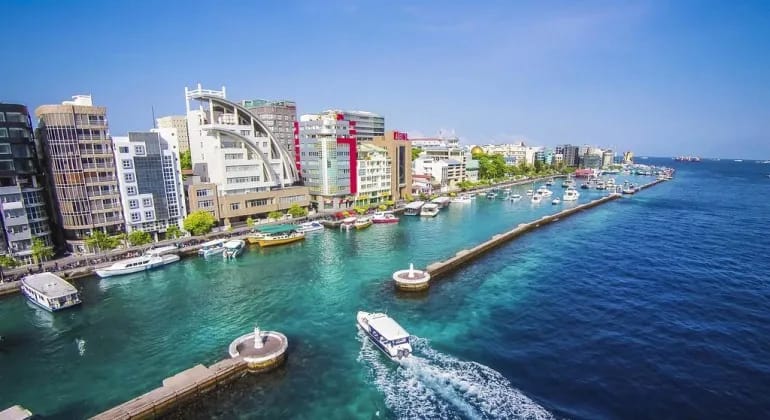
Located in central Maldives, Male is the country's political, commercial and administrative centre. This historic island covers an area of ​​approximately 2.08 square kilometres, making it an exceptionally compact capital. Its narrow streets, densely populated buildings, busy harbour, mosques, government institutions and waterways create a vibrant urban character, creating a beautiful contrast to the peaceful surroundings of the surrounding tropical islands.

Visitors to Malé, Maldives, can enjoy centuries-old coral architecture, traditional fish markets, colorful fruit stalls, peaceful open spaces, and important national monuments. Notable landmarks include the historic Malé Friday Mosque, the Islamic Center, the National Museum, Sultan Park, Republic Square, and the city's distinctive harbor area.

Male city is particularly convenient for travelers arriving at Velana International Airport on the neighboring island of Hulhule. The capital is connected to the airport by the Sinamale Bridge and regular ferry services. This ease of access makes Male an excellent destination for a half-day trip, an overnight stop, or the starting point for a longer maldives tour .

Whether you're interested in Maldivian history, photography, street food, cultural attractions, or simply enjoying life outside of the luxury resorts, the city of Male offers a fascinating glimpse into the country's identity. Travelers should keep in mind that this is a bustling capital city, not a secluded seaside resort. So its biggest attractions are its heritage, diverse communities, markets, and marine environment.


History and cultural significance of the goods

Male has served as the center of political power in the Maldives for centuries. Traditionally associated with the country's sultanates, the island became an important administrative and commercial settlement due to its strategic location on the sea lanes of the Indian Ocean.

The Maldives adopted Islam in the 12th century, which profoundly influenced the architecture, religious institutions, customs, and cultural identity of the city of Malé. The city's historic mosques, royal chambers, tombs, and coral stone buildings preserve important relics of this period.

From Sultanate to Modern Capital

For most of its history, Male served as the political center of the Maldivian Sultanate. The archipelago subsequently maintained relations as a British protectorate before gaining independence on 26 July 1965. In 1968, the Maldives became a republic and Male continued to serve as the center of the national government.

Today, the capital is home to major government institutions, national businesses, financial services, educational institutions, and cultural centers. Its streets reflect the country's transformation from a maritime trading society to a modern island nation with a thriving global tourism industry.

Traditional Maldivian identity

The main local language is Dhivehi, written in the Thana script. Islam plays a central role in public life here, and visitors will find mosques, prayer traditions, local markets, and a strong sense of community throughout the city.

Fishing is an important part of the Maldivian cultural identity. The capital's fish market and nearby port provide an opportunity to understand the country's historical relationship with the sea and the ongoing importance of tuna fishing for local livelihoods.


Best things to see and do in Male

Although geographically small, Male has numerous attractions to explore, both in its historic center and along its waterfront. Many of its main attractions can be visited on a well-planned walk lasting approximately three to five hours.

1. Visit the Grand Friday Mosque and Islamic Center

The Islamic Centre is one of the most well-known landmarks in Male. Its impressive golden dome dominates the city skyline and is located near Republic Square. The complex includes the Grand Friday Mosque, an important religious and architectural landmark.

Visitors can admire the exterior architecture and the surrounding public areas. Entry inside the mosque is subject to religious timings, appropriate attire, and permission for non-Muslim visitors. Please refrain from entering restricted areas or disturbing worshippers.

2. Discover the Friday Mosque in Male

The historic Male Juma Mosque, also known as Hukuru Miski, was built in 1658 and is one of the most important surviving examples of traditional religious architecture in the country. It is notable for its meticulous coral stone construction, intricate carvings, and historical inscriptions.

The historic cemetery surrounding the mosque contains beautifully decorated tombstones of important figures in Maldivian history. Visitors should consider this site as an active religious and heritage site. Prior permission may be required to enter the interior.

3. Visit the National Museum

The National Museum provides an introduction to the royal history, religious traditions, crafts and cultural development of the Maldives. Exhibitions include historical artifacts, ceremonial objects, traditional costumes, manuscripts and items related to the country's former monarchy.

This museum is particularly valuable for those who want to gain historical context before exploring the capital's civic life, including its shrines, mosques, and monuments. Check current opening hours and admission prices before visiting, as the museum operates independently of the city's public spaces.

4. Relax at Sultan Park

Sultan Park is a well-maintained public park attached to the grounds of the former royal palace. Its greenery, walkways, and resting areas create a pleasant contrast to the surrounding commercial streets.

Families, couples, and solo travelers can enjoy a short break here between visiting museums and exploring the historic center. It is important to check with the local park for park rules, visitor access, and applicable entry requirements.

5. Experience Republic Square

Republic Square, also known as Jumhuri Maidan, is an important public space near the northern waterfront. The square is associated with national events and serves as a convenient starting point for visiting the sights around the Islamic Center and the port.

Its open environment, nearby government buildings, and location along a water body make it a convenient place for first-time visitors to get their bearings. Please observe any temporary safety restrictions around government buildings and public events.

6. Visit the Malay fish market

The capital's fish market offers one of the most authentic cultural experiences. Fishing boats deliver fresh fish, especially tuna, and local traders and shoppers engage in the daily commercial activities that have long sustained Maldivian society.

The port and market area becomes particularly attractive when fishing vessels unload their catch. Visitors should be aware of busy areas, ask permission before photographing anyone, and wear appropriate footwear for the potentially wet surface.

7. Visit the local vegetable market

The local market near the waterhole sells fresh fruits, vegetables, coconuts, packaged foods, and agricultural products from various islands in the Maldives. The colorful merchandise and bustling shopping atmosphere provide an interesting glimpse into local commerce.

Travelers can observe the methods of exchanging supplies between the islands and the capital, as well as find coconuts, bananas, seasonal tropical fruits, and locally made light meals.

8. Praise the Lord first.

The Muli'Aga is the official residence of the President and an important heritage building in the historic center. Its distinctive architectural style and political significance make it an attractive outdoor attraction.

As the property is a government residence, it should not be assumed that general tourists have access to its interior. Visitors can enjoy its exterior from approved public spaces, following safety guidelines.

9. Explore the waterways and artificial beaches

The waterfront of Male highlights the city's close relationship with maritime transport. The bustling traffic of passenger ferries, fishing boats, speedboats, and cargo ships creates an attractive backdrop for urban photography.

The artificial beach, located on the east side of the city, is a popular public recreation area. Visitors can enjoy beautiful views of the water from here, but they must adhere to swimming regulations, local dress codes, and any temporary restrictions. It should not be confused with a private resort beach.

10. Take a picture of the Sinamalay Bridge

The Sinamale Bridge connects Male to Hulhule and from there to Hulhumale by road. This major infrastructure project has revolutionized the transportation system between the capital and the airport.

Visitors can enjoy the bridge from suitable locations along the watershed or while traveling between the city and the airport. Pedestrians should only use officially approved paths and should not enter the protected areas of the bridge.

Architecture, photography and local experiences

One of the most striking features of Male is the contrast between traditional architecture and dense modern development. Historic coral mosques stand alongside narrow streets filled with government buildings, apartments, offices, shops, and motorbikes.

Notable aspects of architecture

  • Coral stone craftsmanship: The historic Juma Mosque showcases the sophisticated carving techniques used by traditional Maldivian builders.
  • Islamic Architecture: The golden dome of the Islamic Center forms one of the most recognizable features of the capital's skyline.
  • Historic Residence: Muli'Aga is a valuable example of the city's architectural and political heritage.
  • Contemporary urban landscape: The dense arrangement of buildings demonstrates how the capital has adapted to its limited island-like space.

Best photography opportunities

Popular subjects for photography include the Islamic Center, the northern port, fishing boats, colorful market stalls, historic streets, waterfront attractions open to the public, and the surrounding blue sea.

Early morning is ideal for photographing commercial activity around the port, while late afternoon can be interesting for photographing waterfront views and city streets. Always respect the privacy of residents and refrain from photographing restricted security installations.

Daily experience in Maldives

Tourists seeking cultural experiences can visit local cafes, sample traditional cuisine, observe the port activities, shop at nearby shops, and hang out at public places. These activities offer a glimpse into the everyday life of Maldivian society that is not easily visible in the private resort setting.


Ticket prices and entry rules

Entry to Male is free. Being the national capital and a densely populated urban area, Male is not a ticket-based tourist destination. Travelers can walk the streets, explore the open water areas, visit the markets, and see many important sights without paying any entrance fee to the city.

Entrance fees and activity costs

Attraction or activity Admission information
Malay city tour Free access to public roads and accessible public spaces.
Republic Square Areas open to the public are generally free; however, temporary restrictions may apply.
Exterior of the Islamic Center It is free to view from a public open space; entry to the mosque is subject to the rules applicable to visitors.
Historic Friday Mosque There is usually no fee to view from the outside; permission may be required to enter.
Malay fish market There is no general admission fee for sightseeing; purchases must be paid separately.
National Museum Separate ticket required; check current government admission prices.
Sultan Park Please check the current access conditions and any applicable visitor charges.
Guided city tour The price of commercial tours varies depending on the duration, itinerary, and service provider.
Private boat trip Different prices are determined according to the destination and operator.

Important rules for visitors

  • Dress modestly: Male is a predominantly Muslim city. It is advisable to wear modest clothing that covers the shoulders and knees in crowded areas, especially near religious sites.
  • Follow mosque etiquette: Follow the instructions of visitors, take off your shoes if necessary, and refrain from disrupting prayers.
  • Alcohol prohibition: Alcohol is not available in local restaurants and public places in Male. Licensed tourist resorts operate under separate regulations.
  • Public behavior: Respect local customs, religious practices, residents, and displayed rules and regulations.
  • Photography: Ask permission before taking pictures of people and avoid reserved government or security installations.
  • Beaches open to the public: Follow local swimming and clothing regulations; resort-style swimwear is not appropriate everywhere.

Visitors should understand the difference between free entry to Male city and immigration regulations and applicable accommodation taxes. International travelers must meet the current entry requirements of the Maldives, regardless of whether they wish to visit the capital or another island.


Best time to travel

Male welcomes tourists all year round. The months of November to April are particularly popular with international tourists visiting the Maldives, but the city's museums, markets, restaurants, and heritage sites remain attractive in all seasons.

Best time of day

  • Morning, approximately 8:00 AM to 11:00 AM: A good time to explore the markets, historic streets, and waterfront attractions.
  • Late afternoon, approximately 4:00 PM to 6:00 PM: A pleasant time for walking, taking photos of the city, and visiting public water bodies.
  • Evening: Perfect for exploring local restaurants, cafes, shopping streets, and the social atmosphere of the capital.

Friday is an important weekly religious festival in the Maldives. Some businesses, markets, museums, and government services may be open for limited hours or temporarily closed, especially during congregational prayers. If your trip falls on a Friday or a national holiday, be sure to check the opening hours of each attraction.

If you're making a short stopover, allow at least three to five hours to explore the city center's attractions. A full day allows for a more comfortable mix of historic sites, local food, shopping, and waterway exploration.


How to reach

Male is the capital of the Maldives and is mainly served by international flights, domestic flights, ferries, and road from neighboring airports on the island. For travelers starting their journey from Bangladesh, Hazrat Shahjalal International Airport in Dhaka is the main departure point.

Step 1: Fly from Dhaka to Velana International Airport

  1. Start from Hazrat Shahjalal International Airport in Dhaka, Bangladesh.
  2. Search flights for Velana International Airport, whose international airport code is MLE.
  3. Depending on the airline's schedule, flights may operate directly or require a connection through another international hub.
  4. If direct service is available, it usually takes around four to five hours. Connecting journeys take longer, depending on the route and transfer times.
  5. Upon arrival, complete immigration formalities, collect your luggage, and proceed to the airport transportation system.

Flight prices: International airfares vary significantly depending on travel dates, airlines, demand, and baggage allowances. Travelers should compare live fares rather than relying on a specific estimated price for Dhaka-Male tickets.

Step 2: Travel from Velana International Airport to Male City

Velana International Airport is located on Hulhule Island, just outside the capital. Travelers can reach Male via public ferries, taxis, or scheduled bus services.

Transportation Estimated duration Indicative rent Useful information
Public airport ferry About 10 minutes in water Approximately 15 Maldivian Rufiyaa per person during the day and 20 Maldivian Rufiyaa at night There are frequent services between the airport island and Male; check the current departure schedule.
Taxi across the bridge in Sinamalay About 10-20 minutes Approximately 65–100 Maldivian Rufiyaa depending on applicable charges. Convenient for travelers carrying luggage.
Public bus Approximately 15-30 minutes depending on the route. Applicable services in the city usually cost 10-15 Maldivian Rufiyaa. Verify that the current route stops at your intended stop.
Private airport transfer Depending on the collection location and provider Quoted individually by operator Convenient for pre-arranged hotel travel.

Fares and journey times are approximate, not guaranteed. Please confirm services through the airport information center, hotel reception, or the relevant public transport company.

Step 3: Continue from the transport hubs in Male

Once you arrive at the northern waterfront of Male or at any city bus stop, take a licensed taxi or walk to the central attractions. Republic Square, the Islamic Centre, Sultan Park and the National Museum are conveniently located in the city's central area.

The historic center is small enough to explore on foot, although the streets can be congested with vehicles and motorcycles. Use designated crossings and take extra care at busy intersections.

Getting to Male from Hulhumalé

Hulhumale is connected to Male by the airport-area road network and the Sinamale Bridge. Public buses and taxis provide regular services between the two urban areas. Depending on traffic and the starting point, the journey can take approximately 15-30 minutes or more.

Hulhumalé is particularly convenient for travelers staying near the airport, as it offers accommodation, restaurants, and a waterfront setting, while also providing easy access to downtown Male.

Getting to Male from Villingili and other islands

Villingili, also commonly known as Villimalle, is connected to Male city by ferry service. The journey usually takes only a few minutes, although the actual departure time depends on the operating schedule.

Travelers arriving from other inhabited islands can use public ferries, scheduled speedboats, private transportation, or domestic flights and then onward transportation. Routes and terminals vary depending on the island of origin.

Traveling by train or bus from Bangladesh

There is no rail or direct international bus route from Dhaka to Male . Maldives is an island nation, so travelers cannot complete the entire journey from Bangladesh to Maldives by road or rail. Internal buses and trains can be used within Bangladesh to reach Dhaka before boarding an international flight.

Local transportation and vehicle rentals

  • Walking: This is generally the most economical way to get around the city center of Male.
  • Taxi: Convenient for carrying luggage, traveling long distances, or crossing bridges. Confirm applicable fares before traveling.
  • Public transport bus: Suitable for selected routes connecting Male, Hulhule and Hulhumalé.
  • Motorcycle rental: Tourists generally do not need one to explore Central Male. Any rental must comply with local licensing, insurance, and road regulations.
  • Private Car Rental: Renting a conventional car is not realistically necessary to drive around this small capital island.
  • Speedboat: Useful for traveling to other islands, but fares vary widely depending on the destination.

Nearby attractions for directions

Important landmarks include Republic Square, the Islamic Center, the National Museum, Sultan Park, the northern waterfront ferry terminal, and the fish market. These landmarks help visitors plan an easy walk through the capital's historic center.

Google Maps Location: See Male, Maldives on Google Maps (@4.17521,73.50916,17z) . Coordinates refer to the general center of the city, not to any ticket counters or individual attractions. Coordinate-based URLs are provided for navigation, but no unique URLs for Google Maps place listings have been independently verified.

Male, Maldives

GPS: 4.17521, 73.50916
Get Directions

Where to eat

Male is a great destination for a taste of authentic Maldivian cuisine. Unlike private island resorts, the capital has casual cafes, tea shops, bakeries, casual restaurants, and establishments serving international cuisine.

Traditional Maldivian food worth tasting

  • Mas Huni: A popular breakfast dish made with minced tuna fish, coconut, onion, and chili, traditionally enjoyed with roshi bread.
  • Garudiya: A light tuna fish stew, usually served with rice, lemon, chili, and other spices.
  • Rihakuru: A thick fish paste, which has a very rich flavor and holds an important place in the traditional Maldivian food culture.
  • Hedhika: A general term for light Maldivian food, which includes savory pastries and fried snacks served at local cafes.
  • Gulha: A small stuffed dish filled with spiced fish and coconut.
  • Bis kimia: A type of salty pastry often made with eggs, cabbage, and spices.
  • Fihunu Mas: Fried fish with aromatic spices.

Recommended places to eat

Central Male: The areas around the historic center have numerous cafes and modest restaurants, perfect for tourists looking to combine sightseeing with lunch.

Port Area and Market Area: The waterfront area is convenient for exploring local eateries and observing the city's commercial atmosphere.

Henveiru and other residential-commercial areas: These areas are home to local restaurants, bakeries, and takeaway food outlets, which residents frequent.

General food budget

Food or dining experience Estimated cost
Local tea and snacks Approximate MVR 15–50
Typical local breakfast Approximate MVR 35–90
Budget restaurant food Approximately 60-150 Maldivian rupees
Average restaurant food Approximately 150–350 Maldivian Rufiyaa or more per person
Specialty coffee or cafe drinks Approximate MVR 35–90

These numbers are a general estimate of the plan, they are not verified menu prices. Please check the menu, service charges, and applicable taxes before ordering.

Food and drink tips: Local cuisine is dominated by seafood and tuna. Vegetarian travelers should check the ingredients of dishes, especially fish-based dishes with spices. Restaurants generally serve halal food, but alcohol is not usually available in local eateries in the capital.


Where to stay?

Accommodation in Male ranges from basic guesthouses to comfortable business hotels and more upscale accommodations. Visitors will need to choose the best place depending on whether they want to explore the capital, catch an early morning flight, or visit another island in the Maldives.

Living in Central Malaysia

Central Male is a convenient location for those interested in visiting historical sites, shopping, government institutions, restaurants, and ferry terminals. The small size of the city means that it is possible to visit numerous attractions without the need for extensive transportation.

Popular hotels historically associated with the capital include Zen Maldives Male by Shangri-La , Hotel Zen's neighboring city hotels , Saman Grand and The Somerset Hotel . Please confirm each hotel's current commercial name, availability, services and booking conditions before making a reservation.

Staying in Hulhumale

For travelers who prefer to stay close to Velana International Airport, Hulhumale is often a convenient option. It has guesthouses, hotels, cafes, and access to its waterfront, as well as road connections to the central Male.

This area is particularly suitable for spending the night before an early morning flight or speedboat ride. Guests should allow plenty of time for bridge traffic and airport check-in procedures.

Staying in Vilimale

Vilimale offers a different kind of residential island atmosphere and can be reached by ferry from Male. Accommodation availability is generally more limited here than in the main capital area and Hulhumale, so travelers should carefully research their options before choosing this location.

Estimated accommodation costs

Housing Department Estimated nightly rent
Simple guesthouse 40-80 US dollars
Comfortable mid-range hotel 80-160 US dollars
High-quality city hotels 160-300 USD or more
Premium resort accommodation outside of Male This can vary widely and can be quite high.

Prices vary depending on dates, room category, capacity, availability and taxes. Maldives accommodation prices may not include mandatory charges or travel costs, so be sure to check the final total amount payable.

Hotel booking tips

  • If you want to go to another island, choose a hotel near your destination ferry terminal.
  • Ask if the room rental includes airport pickup or drop-off.
  • Please confirm check-in time if arriving late.
  • Check if breakfast is served.
  • Compare total rates including applicable taxes and service charges.
  • For a longer vacation in the Maldives, you may want to consider staying on another inhabited island or resort with a short trip to the capital.

Suggested one-day itinerary for a trip to Male

A well-organized day is enough to explore many of the capital's key attractions. The following itinerary focuses on culture, history, food, and waterfront experiences, while allowing for flexibility in transportation and attraction opening times.

Recommended time Activity
8:00 AM - 9:00 AM Enjoy a traditional Maldivian breakfast featuring mas huni and roshi.
9:00 AM – 10:00 AM Explore the port area, fish market, and local vegetable market.
10:00 AM – 11:00 AM Visit Republic Square and be amazed by the Islamic Center.
11:00 AM – 12:00 PM Visit the Muli'age and historic Male Juma Mosque from the designated area.
12:00 PM – 1:00 PM Take a lunch break at a local restaurant.
01:00 PM – 02:30 PM Visit the National Museum if it's open, then go to Sultan Park if it's accessible.
02:30 PM – 04:00 PM Explore the local shopping streets, cafes, and architecture of the area.
4:00 PM – 6:00 PM Enjoy the beautiful views of the water body, explore the artificial beach area, and take pictures.

Important: These times are a suggested itinerary, not the confirmed opening times of any specific location. Itinerary changes may be necessary due to museum operations, mosque entry permits, Friday prayers, public holidays, and transportation connections.

Visitors who have only two or three hours should prioritize Republic Square, the outer part of the Islamic Center, the historic Juma Mosque area, and the nearby waterways. Travelers interested in historical interpretation should allocate extra time for the National Museum.


Travel tips, safety and practical information

Getting around the city of Male is generally quite easy, but having an idea of ​​local customs, transportation systems, and travel essentials will make your trip more comfortable.

Essential travel information

Category Information
Country Republic of Maldives
Capital Malay
local language Dhivehi
Common language of tourists English
Currency Maldivian Rufiyaa (MVR)
Time zone Maldives time, UTC+5
Nearest international airport Velana International Airport (MLE)
Main transportation Walking, taxi, bus, ferry and speedboat
General city entrance fee Free
Recommended time to visit the sights Half day to full day

Visa and Immigration

Maldives generally grants free on-arrival tourist visas for up to 30 days to eligible international tourists, subject to immigration regulations and the discretion of the authorities. Travelers generally require a valid passport, onward or return travel arrangements, suitable accommodation arrangements, and the required traveler declaration.

Bangladeshi visitors should check with Maldives Immigration for the latest entry regulations before travelling . Visa eligibility does not exempt them from the obligation to meet documentation and immigration requirements. (www.immigration.gov.mv)

Money and Payment

The official currency is the Maldivian rufiyaa. Some tourism-related businesses accept US dollars, but local shops, markets, buses and ferries may prefer or require rufiyaa. Carry small denomination notes for low-cost shopping and local transportation.

Clothing and cultural respect

Visitors to Male should dress modestly in public places. Wearing loose, comfortable clothing that covers the shoulders and knees is a respectful choice, especially when visiting religious settings. Beachwear designed for private resorts should not be worn casually throughout the city.

Road and pedestrian safety

The roads in Male are busy and narrow, with lots of motorbikes. Walk carefully, use crosswalks, and avoid blocking the road when taking photos.

Traveling with children

Families can enjoy riverside walks, cultural visits, Sultan Park if accessible, and brief visits to selected attractions. Supervision is required in the city's traffic and crowded streets, especially with young children.

Internet and communication

Mobile data services and local SIMs are available in the Maldives. Wi-Fi is also available in hotels and many cafes. Check international roaming charges before using a Bangladeshi mobile connection abroad.

Responsible tourism

Reduce single-use plastic waste, dispose of trash responsibly, respect local customs, avoid disturbing marine wildlife, and support local businesses. When arranging a cruise, choose operators who adhere to appropriate safety and environmental regulations.


Nearby attractions

Male's small and convenient location allows travelers to explore multiple historical sites and waterfront attractions within a short itinerary. Additionally, the larger capital region provides access to neighboring islands, which are connected by bridges and ferries.

Important tourist attractions in Central Malay

  • grand Friday Mosque and Islamic Center : An iconic religious building, known for its golden domes, monumental architecture, and prominent location near Republic Square.
  • male Juma Mosque (Hukuru Miski) : A 17th-century coral stone mosque, renowned for its traditional Maldivian craftsmanship and historical significance.
  • Maldives National Museum : A major cultural institution that preserves artifacts related to the country's monarchy, artistic heritage, and historical development.
  • Sultan Park : A well-maintained public park connected to the former royal palace grounds and close to the National Museum.
  • Republic Square : A central civic structure facing the northern waterfront, surrounded by important government and religious buildings.
  • Muli'Age : The official residence of the President, notable for its architecture and proximity to historic religious sites in Male.
  • Male Fish Market : A vibrant traditional commercial attraction, where visitors can witness the capital's fishing heritage and port activities.
  • Artificial Male Beach : A public waterfront recreation area, from which one can enjoy a beautiful view of the surrounding sea and have the opportunity to explore at ease.
  • Tsunami Memorial : A memorial built in memory of the victims of the devastating 2004 Indian Ocean tsunami.

Nearby islands and attractions in the greater capital region

  • Hulhumale : A planned urban island connected by road to the capital and airport area, with accommodation, restaurants and waterfront attractions.
  • Hulhumalé Beach : A popular coastal destination for walking along the beach and enjoying the beautiful ocean views, but local swimming and clothing regulations apply.
  • Vilimale Island : This is a neighboring residential island, accessible by ferry, and offers a different take on local island life.
  • Sinamalay Bridge : A major transportation link between Malé and the airport island, visible from various points on the watershed.

Most of the historical sites are located in the center of Male and can be explored on foot. Additional transportation is required to get to Hulhumale and Vilimale. Travelers planning to travel to further parts of the island can find out more about the destinations in the Maldives travel guide .

Frequently Asked Questions (FAQ)

Malé is the capital of the Republic of Maldives, located in the central part of the country's Indian Ocean archipelago. The historic capital is located on a small island near Hulhule, where Velana International Airport is located. It is connected to Malé Airport by road via the Sinamale Bridge and by public ferry services. The most commonly used geographical coordinates for the city center are approximately 4.17521° North latitude and 73.50916° East longitude.

logo ColoZai

ColoZai is a trusted travel guide and destination explorer platform in Bangladesh. We are making travel simple, authentic, and accessible for everyone.

Need Help ?

We are Always here for you! Knock us on Whatsapp (10AM - 10PM) or Email us.