Taj Mahal Agra India

Taj Mahal Agra India

Agra
·

4 October 2026

Travel Overview & Quick Facts

Directions
Location
Agra
Admission / Entry Fee
For Indian citizens and eligible OCI cardholders: Rs 50 per adult. For citizens of SAARC and BIMSTEC countries including Bangladesh: Rs 540 per adult. For other foreign visitors: Rs 1,100 per adult. Entry is free for children below 15 years of age, irrespective of nationality. An additional ticket of Rs 200 is required for each eligible visitor to enter the main mausoleum, making the total combined price for adults Rs 250 for Indian visitors, Rs 740 for SAARC/BIMSTEC visitors and Rs 1,300 for other foreign visitors. Discounts may apply on online bookings. There are separate tickets and terms and conditions for the special full moon night darshan. Prices are based on information published by the Government of Uttar Pradesh and the Archaeological Survey of India and are subject to change; please check the current prices on the website https://asi.paygov.org.in/ before visiting.
Opening Hours
Saturday - Thursday: 30 minutes before sunrise to 30 minutes before sunset (closed on Fridays). Opening and closing times vary seasonally. Special ticketed night tours are available on select dates.
Google Rating
★ 4.6 (253013 reviews)
Category / Type
UNESCO World Heritage Sites, Historical Monuments, Mughal Architecture, Cultural and Heritage Tourism

Introduction to Taj Mahal Agra India

Situated on the banks of the Yamuna River in Agra, Uttar Pradesh, the Taj Mahal is one of the world's most famous architectural masterpieces and an eternal symbol of love, memory and artistic excellence. Built during the golden age of the Mughal Empire, this magnificent white stone mausoleum attracts millions of tourists who come to see its perfectly balanced architecture, exquisite craftsmanship, picturesque gardens and extraordinary historical significance.

The Taj Mahal, built by the Mughal emperor Shah Jahan in memory of his beloved wife Mumtaz Mahal, is a symbol of 17th-century Indian artistic achievement. Construction of the main mausoleum was largely completed in 1648, and work on the surrounding courtyard continued until approximately 1653. The architecture combines Persian, Islamic, Central Asian, and Indian architectural traditions, and is noted for its symmetry, proportion, and the subtlety of its ornamentation.

Declared a UNESCO World Heritage Site in 1983 and selected as one of the New Seven Wonders of the World in 2007, the Taj Mahal is much more than just a famous photo destination. Visitors can explore its ornate Mughal gardens, admire its exquisite marble carvings, explore its grand arches, and learn about the fascinating history of the royal family whose stories inspired its construction.

Located in the historic city of Agra, about 200 kilometers southeast of New Delhi, the Taj Mahal is an essential destination for travelers on India's famous Golden Triangle tourist circuit, which connects Delhi, Agra, and Jaipur. Whether you're interested in Mughal history, architectural photography, cultural heritage, or a memorable family vacation, this monument offers an extraordinary experience.

Location: Dharmapuri, Forest Colony, Tajganj, Agra, Uttar Pradesh 282001, India. The monument is located on the south bank of the Yamuna River and is accessible through a designated visitor gate. Most visitors should allow about two to three hours for a leisurely day tour; additional time is required for security checks, photography, and exploring the surrounding heritage area.


History of the Taj Mahal

The story of the Taj Mahal begins with the Mughal Emperor Shah Jahan and his wife Arjumand Banu Begum, better known by her royal title Mumtaz Mahal . Their marriage in 1612 became one of the most famous royal relationships in Indian history. Mumtaz Mahal died in 1631 while giving birth to their fourteenth child, prompting the emperor to order the construction of a magnificent mausoleum in her memory.

Construction began around 1632 on land along the banks of the Yamuna River. The emperor assembled a vast workforce of craftsmen, stone carvers, calligraphers, architects, and specialized artists. Historical accounts and official accounts generally estimate that 20,000 or more workers were involved in the project, although the exact number of workers is uncertain.

The construction of the main tomb was largely completed by 1648, and the entire architectural complex was completed around 1653. The white marble was brought from Makrana in present-day Rajasthan, and decorative materials were brought from various parts of the Indian subcontinent and beyond. The project reflects the immense wealth, artistic patronage, and international contacts of the Mughal court.

In 1658, Shah Jahan was deposed by his son Aurangzeb and imprisoned in the Agra Fort. After his death in 1666, Shah Jahan was buried next to Mumtaz Mahal inside the Taj Mahal. Their actual tombs are located in the lower chamber, while the highly ornate monuments seen by visitors are in the upper chamber.

Over the following centuries, the Taj Mahal has witnessed various phases, including changes in royal patronage, colonial preservation, and modern maintenance. It is currently protected by the Archaeological Survey of India and is internationally recognized as an exceptional example of Mughal funerary architecture.

Important historical milestones

  • 1612: Shah Jahan married Arjumand Banu Begum, who later became known as Mumtaz Mahal.
  • 1631: The death of Mumtaz Mahal inspired the construction of this memorial.
  • 1632: Construction of the Taj Mahal begins.
  • 1648: Construction of the main mausoleum is essentially completed.
  • 1653: The larger complex is generally considered complete.
  • 1666: Shah Jahan is buried next to Mumtaz Mahal.
  • 1983: UNESCO included the Taj Mahal in the World Heritage List.
  • 2007: The Taj Mahal is recognized as one of the New Seven Wonders of the World.

Architecture and main attractions

The Taj Mahal is internationally acclaimed for its harmonious proportions, intricate ornamentation, and extraordinary use of white marble. Its architectural design combines grandeur with delicate artistic detail, creating different visual sensations as the natural light changes at different times of the day.

White marble tomb

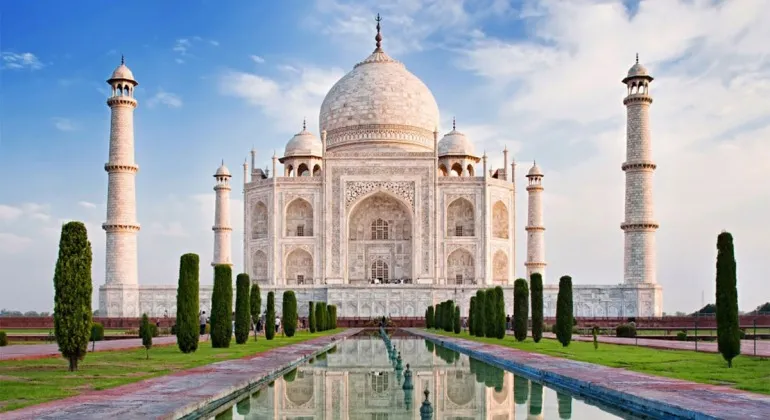
The central mausoleum is situated on a high marble platform facing the Yamuna River. Its massive central onion-shaped dome stands tall above a symmetrical arrangement of smaller domed pavilions. The building has impressive arched entrances on all four facades, adorned with intricate ornamentation and inscriptions.

The main dome rises some 73 meters above the surrounding ground, and four magnificent minarets surround the marble platform. These minarets reinforce the monument's balanced form and contribute to creating one of the world's most recognizable architectural forms.

Intricate marble inlay and calligraphy

One of the monument's greatest artistic achievements is its pietra dura-style stonework , known locally as parchin kari. Skilled craftsmen have created intricate floral designs by carefully setting pieces of shaped colored stone into the marble. Visitors can observe this extraordinary craftsmanship on the doors, wall panels, and interior decorative surfaces.

The main entrance and selected architectural features are surrounded by verses from the Quran in elegant black calligraphy. These inscriptions demonstrate sophisticated design techniques, including coordinating the proportions of the letters in a way that creates a harmonious visual atmosphere when viewed from below.

Charbagh Garden

The formal gardens follow the traditional Mughal Charbagh design, using geometric paths, waterways, and carefully landscaped gardens. A long reflecting pool along the central axis of the garden creates the famous mirror image of the Taj Mahal. It is one of the most popular places to take photos within the complex.

Grand entrance

The monumental red sandstone entrance, commonly known as Darwaza-e Rawza, introduces visitors to the mausoleum through a dramatic scene. Its ornamentation, calligraphy, and geometric designs establish the architectural character of the larger complex.

Mosque and guesthouse

On opposite sides of the mausoleum stand two towering red sandstone buildings. The western building is used as a mosque, while the eastern structure is a similar architectural counterpart, often described as a guest house or Jawab. Their positioning contributes to the well-planned symmetry of the Taj Mahal complex.

Interior of the main mausoleum

Inside the mausoleum, visitors with the required additional tickets can visit the elaborately decorated memorials to Mumtaz Mahal and Shah Jahan. The intricate marble screens, floral designs and carved stonework are examples of the exquisite craftsmanship of the Mughal period. Photography is prohibited inside the main mausoleum and visitors must follow instructions regarding movement, footwear and restricted areas.


Things to do at the Taj Mahal

A visit to the Taj Mahal offers an opportunity to experience Indian history, architecture, cultural heritage, and some of the country's most famous natural scenery. The following activities help travelers make the most of their time in and around this monument.

Experience the Taj Mahal at sunrise

Arriving early in the visiting season is one of the best ways to enjoy this monument. As the daylight increases, the marble surfaces take on a changing hue of ivory white, pale gold, and light pink. Early-morning visitors may encounter shorter lines than late-night visitors.

Take pictures of classic architecture.

Photographers can capture memorable shots from the central reflecting pool, main entrance, garden paths, and marble podium. The symmetrical layout of the complex creates excellent opportunities for architectural photography, and the changing details of the domes and minarets emerge from different perspectives.

Explore Mughal arts and crafts

Observe the meticulously carved marble panels, stonework, calligraphy and floral designs throughout the complex. These details illustrate how the Mughal court combined artistic tradition and advanced craftsmanship to create a masterpiece of architecture.

Travel with a licensed heritage guide

A knowledgeable and properly licensed guide can explain the lives of Shah Jahan and Mumtaz Mahal, the monument's construction style, its symbolic significance, and its architectural features. Check the guide's qualifications and negotiate a price before you set off. For a private guided tour, travelers can expect to pay an estimated ₹500–₹1,500 or more, depending on the duration, language, and service.

Explore the gardens and riverside environment

Take time to stroll through the landscaped gardens and observe the relationship between the mausoleum and the Yamuna River. The gardens allow you to appreciate its monumental symmetry rather than focusing solely on the main building.

Enjoy traditional Agra handicrafts

After leaving the monument, explore Tajganj and other shopping areas in Agra, where you can find authentic shops selling marble-worked souvenirs, leather goods, textiles and locally produced handicrafts. Ask about materials, compare prices and ask for receipts when buying expensive items.

Consider special moonlight viewing.

There may be special nighttime viewing opportunities around the full moon, usually on the night of the full moon and the two nights before and after, depending on government schedules, Friday restrictions, religious calendar exclusions, and other regulations. This visit requires a separate advance ticket, has limited availability, and is operated differently from general daytime access.


Taj Mahal ticket prices and entry rules

The Taj Mahal is a ticketed heritage monument managed by the Archaeological Survey of India. The entry fee depends on nationality, age and whether the visitor wishes to enter the main mausoleum. The published government tariff schedule has separate rates for Indian citizens, eligible SAARC/BIMSTEC nationals and other foreign tourists.

Official daytime admission price

Inspectorate Department General admission Main Mausoleum Addition Adult combined price
Indian citizens and eligible OCI cardholders ₹50 ₹200 ₹250
SAARC/BIMSTEC citizens, including Bangladeshis ₹540 ₹200 ₹740
Other foreign nationals ₹1,100 ₹200 ₹1,300
Children under 15 years of age Free Check applicable cemetery regulations. General admission is free.

Important for Bangladeshi visitors: Bangladesh is a member of both SAARC and BIMSTEC, so eligible Bangladeshi passport holders are generally considered for the Regional Entry Category of Tk 540 instead of the General Foreign Citizen Category of Tk 1,100. Bring an acceptable original ID or passport to prove eligibility.

An optional additional entrance fee of Tk 200 applies for visitors wishing to enter the designated main tomb chamber. Visitors purchasing a general admission ticket only can also enjoy the gardens and permitted outdoor areas of the complex. Discounts may be available for online tickets and all published prices are subject to change.

How to buy Taj Mahal tickets

  • Online Booking: Use the official booking platform of the Archaeological Survey of India asi.paygov.org.in and follow the current ticketing instructions.
  • Ticket Counters: Subject to prevailing arrangements, general tickets can be purchased from designated counters at the East Gate and West Gate.
  • Special nighttime visits: Separate advance booking and additional terms and conditions apply.
  • Identification: Carry a government-issued identification card, especially when claiming nationality-based admission rates.

Opening days and visiting hours

The Taj Mahal is usually open from Saturday to Thursday, from 30 minutes before sunrise to 30 minutes before sunset . It is closed to the general public every Friday, as entry to the mosque on that day is reserved only for permitted prayers. Since sunrise and sunset vary throughout the year, there is no specific opening and closing time for each season.

Safety rules and prohibited items

  • It is prohibited to bring food, large bags, weapons, smoking items, and other prohibited items inside the monument.
  • The use of drones in and around protected monument areas is strictly prohibited.
  • Tripods require specific permission to use and should not be brought without permission.
  • Taking photographs inside the main mausoleum is prohibited.
  • Visitors should refrain from touching the delicate marble artwork or damaging any historic surfaces.
  • Water bottles are generally allowed to be brought in, subject to security checks and current government restrictions.
  • Use the approved cloakroom for items that cannot be carried through security screening.
  • Wear comfortable shoes and follow instructions about wearing shoe covers or opening shoes in specific areas.

Government Information: Visit the Uttar Pradesh Government's Taj Mahal website (www.tajmahal.gov.in)for opening times, ticket categories, access information and announcements for visitors . Check the official ticketing portal again just before your trip, as fees, online discounts and entry arrangements may change.


Best time to visit Taj Mahal

The Taj Mahal is open to visitors during the day throughout the year, except on Fridays and officially declared closures. However, the months of October to March are generally considered the most convenient time to combine a visit to the Taj Mahal with a visit to nearby Agra, Delhi, and Jaipur .

The best months

October, November, February, and March are popular months for those who want to visit multiple monuments on the same trip. December and January are also popular months for tourists, although morning fog can sometimes reduce visibility and make it difficult to photograph the sunrise. Visitors should check local weather forecasts and visibility conditions before deciding to take photos in the early morning.

Best time of day

Sunrise: This is a favorite time for many photographers and heritage enthusiasts. Arrive before the start of the entry time for ticket verification and security screening.

Morning: A convenient option for families and travelers who want enough time to explore the gardens, examine architectural details, and visit other sights later in the day.

Late afternoon: As the sun sets, the marble surface of the monument begins to change color. Visitors must leave before the scheduled closing time.

How long will it take?

Allow about two to three hours for a general visit. Architecture enthusiasts and photographers can expect three to four hours, while travelers who plan to enter the mausoleum, hire a guide, or visit on a busy holiday should allow extra time for waiting in line.

If you're visiting for the first time, you might want to consider spending the previous night in Agra so that you can reach the entrance gate quickly without having to rely on a long same-day journey from Delhi.


How to reach

The Taj Mahal is located in Agra, in the Indian state of Uttar Pradesh , about 200 km southeast of New Delhi. The nearest major transport hubs include Agra Cantonment Railway Station, Agra Airport, Agra Fort Railway Station, and Agra's intercity bus terminals. International visitors, including from Bangladesh, usually arrive in Agra via Delhi or Kolkata.

By air from Dhaka, Bangladesh

  1. Step 1: Before purchasing a non-refundable ticket, obtain the necessary Indian travel documents and confirm the applicable visa or entry permit.
  2. Step 2: Search for flights from Hazrat Shahjalal International Airport in Dhaka to Indira Gandhi International Airport in New Delhi. Direct service availability, routes, and airline schedules vary depending on travel dates.
  3. Step 3: After reaching Delhi, go to the appropriate railway station for the train to Agra, hire a private car, or use an intercity bus.
  4. Step 4: Arrive at Agra Cantonment or any other suitable arrival point, then take a prepaid taxi, app-based cab, auto-rickshaw or authorized local transport to head towards the visitor area at the East or West Gate of the Taj Mahal.
  5. Step 5: Complete the final stage on foot or by approved electric shuttle or golf-cart service, as conventional motorized vehicles are prohibited near the protected monument.

Estimated cost: International airfares vary considerably and should be checked for actual dates. From Delhi to Agra, regular train fares for some classes can start from around ₹200–₹500, while express or premium services can cost around ₹700–₹1,800 or more. Depending on the type of vehicle, tolls, route and operator, a privately hired car for a one-way intercity journey can cost around ₹4,000–₹8,000 or more. These figures are estimates for planning purposes, they are not verified actual prices.

From Dhaka via Kolkata by road and train

Travelers who prefer to travel by land may want to look for an approved route to cross the Bangladesh-India border before heading to Kolkata, which is usually via the Benapole-Petrapole corridor. Cross-border bus services and passenger train services may change or be suspended, so it is important to check their current availability before traveling.

  1. Travel from Dhaka to the designated Bangladesh-India border crossing using operating and authorized transport services.
  2. Complete immigration and customs formalities at an authorized border checkpoint and ensure that your visa allows entry through that location.
  3. Continue your journey towards Kolkata using suitable local or intercity transport connections from the Indian side.
  4. Search for a suitable train route from Kolkata to Agra, Tundla or Delhi according to the available schedule.
  5. After reaching Agra or any connecting station, take local road transport to the Taj Mahal's visitor entrance.

This route usually takes much longer than flying to Delhi and may also include an overnight train journey. Check with the relevant authorities and official railway system for border policies, train schedules, seat availability and approved visa routes.

By train from New Delhi

Rail travel is one of the most convenient ways to reach Agra from New Delhi. The Delhi-Agra corridor is served by the Gatimaan Express, Shatabdi services and other scheduled trains as per the current schedule. Some fast trains complete the journey in about 100 minutes, while others take two to four hours or more.

  1. Choose a suitable Delhi departure station like Hazrat Nizamuddin or New Delhi as per the selected train.
  2. Book a confirmed ticket using the official IRCTC railway booking platform or any authorized ticketing channel. (www.irctc.co.in)
  3. Go to Agra Cantonment Railway Station or any other station in Agra that is within the reach of your train.
  4. Hire a taxi or auto-rickshaw to get to the Taj Mahal entry area.
  5. Proceed along the designated pedestrian and electric vehicle paths towards the east or west gate.

Agra Cantonment is located about 6 km from the Taj Mahal, depending on the route and gate chosen. A typical auto-rickshaw ride can cost around Rs 150-350, while app-based or prepaid taxis can cost around Rs 250-600. Fares depend on traffic, type of vehicle, luggage, demand and bargaining.

By road or bus from New Delhi

Agra is connected to the Delhi metropolitan area via the Yamuna Expressway and other highways. The journey by private vehicle takes about three to four hours under favorable conditions, although this time can increase significantly due to traffic jams, vehicle collection points, and breaks.

Intercity buses and private coaches also ply on the greater Delhi-Agra corridor. Estimated bus fares can range from around Rs 300 to Rs 1,200 or more, depending on the operator, seat type and destination. Passengers should confirm the actual boarding terminal and final destination, as buses generally do not stop directly at the tomb.

By air to Agra Airport

Agra Airport, also known as Kheria Airport, is located about 13 km from the Taj Mahal. Commercial flight routes may be limited or subject to change, so travelers should check with their departure city to ensure scheduled service is available. Delhi is generally a more flexible international gateway.

From Agra city center and district transport hub

Visitors already staying in Agra can conveniently reach the monument by using auto-rickshaws, e-rickshaws, taxis, authorized tourist vehicles or the city's metro network. The Agra Metro has a Taj Mahal station, which provides an additional option depending on the visitor's starting point and current service arrangements.

  • Agra Cantonment Railway Station: About 6 kilometers from the Taj Mahal.
  • Agra Airport: About 13 kilometers away.
  • Agra Fort: Its distance from the Taj Mahal is about 2.5–3 kilometers, depending on the entrance and road.
  • Tajganj: The surrounding area, where there are numerous guesthouses, hotels, restaurants, and shops.
  • Shilpagram: An important entrance to the eastern gate, from where there is an electric vehicle connection towards the monument.

Vehicle rental and local transportation costs

Transportation options Estimated cost Useful information
Local e-rickshaw For short distance travel, fare is 50-200 taka or negotiable. Suitable for short distance connections on roads in and around Tajganj.
Auto-rickshaw from Agra Cantonment ₹150–₹350 Make sure the amount quoted is for the entire vehicle.
Local taxi or app-based cab 250–600 rupees for many trips from the station to the monument The final fare depends on the route, demand, and vehicle class.
Private car with driver for Agra sightseeing ₹1,800–₹4,000 or more per day Clarify the included hours, distance, fuel, parking, and driver costs.
Electric shuttle or golf cart Free or separate charges apply for certain authorized services Availability and eligibility depend on specific service and ticket category.

Important: Petrol and diesel vehicles are prohibited within approximately 500 metres of the monument. There are designated entrances for visitors on the east and west sides. The south gate is not currently a regular entrance. Ask your driver to drop you off at the correct authorized entrance, rather than expecting direct vehicle access to the mausoleum.

Taj Mahal Agra India

GPS: 27.17516268207537, 78.02368812831392
Get Directions

Where to eat

Agra has a diverse food culture, influenced by Mughal culinary traditions, North Indian cuisine, and contemporary tourism. Visitors can find casual eateries, vegetarian restaurants, cafes, and upscale hotel dining near the Taj Mahal and in other parts of the city.

Restaurants and cafes around Tajganj

The Tajganj area is one of the most convenient places to eat before or after visiting the monument. Its streets are lined with small restaurants, rooftop cafes, guesthouse kitchens, and food stalls catering to tourists, serving Indian and international cuisine. Rooftop restaurants in the surrounding area offer partial or distant views of the Taj Mahal, although visibility depends on the specific property and local conditions.

Travelers looking for a familiar dining experience can check out established restaurants like Shero's Hangout and Pinch of Spice , known for their social enterprise , but it depends on their current branch, menu, and management status. For those looking to dine in a more relaxed atmosphere, hotel restaurants near Taj East Gate Road could be another option.

Traditional food to try in Agra

  • Agra Petha: The city's famous sweet made from rice flour, which is available in various flavors and types.
  • Bedai and Jilapi: A popular local breakfast combination, consisting of savory fried bread and a sweet accompaniment.
  • Mughlai Curry: A richly spiced dish associated with the royal culinary traditions of North India.
  • Tandoori dishes: Grilled bread, vegetable, cheese, and meat dishes served in many restaurants.
  • Kachori and Chaat: Popular delicacies available in local markets.
  • North Indian Thali: A convenient way to taste a variety of vegetarian or mixed dishes in one meal.

Estimated food budget

Dining section Estimated cost per person
Local breakfast or street food ₹60–₹200
Typical local restaurant ₹150–₹400
Cafe or mid-range restaurant for tourists ₹350–₹800
High-quality hotel dining ₹1,000–₹3,000 or more

These are approximate planning ranges, not verified current menu prices. Choose restaurants that adhere to visible hygiene rules, ensure dietary requirements, and purchase drinking water from a reliable source. Remember, food cannot be taken inside the protected Taj Mahal grounds.


Where to stay?

Agra offers a variety of accommodation options, from budget guesthouses and backpacker hostels to boutique heritage properties and internationally recognized luxury hotels. Staying overnight is especially convenient for travelers who want to visit the Taj Mahal near sunrise and explore other Mughal architecture without rushing.

Low budget accommodation in Tajganj

Tajganj is a popular area for budget travelers due to its proximity to the monument. Tourists can find small hotels, guesthouses, and hostels within walking distance or a short e-rickshaw ride from the tourist entrance.

Estimated budget: Around 700–2,000 taka per night for basic guesthouses and economy rooms, depending on the season, amenities, room category, and availability.

Mid-range hotel near Taj East Gate Road

There are some established hotels in the Taj East Gate Road area, which are within easy reach of the East Gate entrance and major attractions. Hotels in this area may have air-conditioned rooms, in-house restaurants, family facilities, transportation assistance, and organized sightseeing services.

Estimated budget: Around ₹2,500–₹7,000 per night, but this can vary significantly during holidays and tourist rush times.

Luxury hotels in Agra

Travelers seeking a high-end experience can consider established hotels like The Oberoi Amarvilas, known for its proximity to the Taj Mahal and panoramic views; or ITC Mughal, a Luxury Collection Resort & Spa , known for its expansive grounds and high-quality hospitality. Other major hotel brands also operate in Agra.

Estimated budget: Luxury accommodations can cost ₹10,000–₹50,000 or more per night, depending on the hotel, room type, season, included amenities, and demand. Confirm current availability and pricing directly with the hotel or a reliable booking platform.

Which area is the best to live in?

  • Tajganj: Suitable for budget travelers, backpackers, and those who want to easily reach the monument.
  • Taj East Gate Road: Convenient for families and travelers who prefer established mid-range or luxury hotels.
  • Fatehabad Road: There are numerous hotels and easy road connectivity around Agra.
  • Agra Cantonment and surrounding areas: This is convenient for travelers who prioritize rail connectivity, although a visit to the Taj Mahal is a must.

Accommodation tip: Ask if an accommodation's advertised Taj Mahal view is available from your specific room, terrace, restaurant, or only from select premium categories. Also, check early morning transportation arrangements, especially if you plan to reach the monument before sunrise.


Practical travel tips and recommended itineraries

A successful visit to the Taj Mahal requires planning, taking into account opening times, entrances, security checks, and the large number of domestic and foreign visitors. These practical tips are especially helpful for first-time visitors.

Essential tips for visitors

  • Avoid Fridays: Every Friday the monument is closed to general tourist visits.
  • Come early: There can be long lines at the entrance, especially on public holidays and during popular travel months.
  • Have identification with you: Have your passport or appropriate government-issued identification handy for ticket verification.
  • Travel light: Avoid large bags, food containers, prohibited electronics, and unnecessary items, which can cause delays at security checks.
  • Respect the monument: do not touch its ornate surface, do not climb on prohibited structures, or disobey the instructions of security personnel.
  • Check the photography regulations: Photography is generally permitted in designated open areas, but restrictions apply inside the main mausoleum and with professional equipment.
  • Use authorized guides: Before accepting any guided service, you want to see their credentials and get a clear idea of ​​the price.
  • Consider accessibility: Wheelchair assistance may be available, but uneven surfaces, stairs, and limited access to upper floors can pose mobility challenges. Confirm current accessibility measures before visiting.
  • Use licensed transport: If an auto-rickshaw or taxi does not have a meter or app-based fare system, agree on the fare before boarding.
  • Keep a flexible schedule: Access to certain areas may be affected due to security measures, official activities, conservation work, and temporary restrictions.

Suggested one-day itinerary for Agra trip

Estimated time Activity
30-60 minutes before opening Arrive at the Taj Mahal entrance area and prepare for tickets and security.
From sunrise to approximately 9 am Explore the Taj Mahal, its gardens, exterior architecture, and authorized burial areas.
9:00 AM – 10:00 AM Enjoy breakfast near Tajganj.
10:30 am – 12:30 pm Visit Agra Fort and explore its Mughal palaces and historic courtyards.
12:30 PM – 2:00 PM Have lunch and taste the traditional food of Agra.
2:30 PM – 4:00 PM Visit the tomb of Itmad-ud-Daulah or explore local handicraft workshops.
Late afternoon You can consider visiting Mehtab Bagh to enjoy the beautiful view of the Yamuna, but it depends on the opening hours.

This schedule gives a rough idea. The exact opening time of the Taj Mahal follows sunrise, while the time it takes to get from one attraction to another depends on traffic. Travelers who want to visit Fatehpur Sikri should consider setting aside an extra half-day or second day in Agra rather than trying to fit all the major monuments into a rushed itinerary.

Travel documents for Bangladeshi visitors

Bangladeshi nationals should check India's current visa requirements, permitted ports of entry, travel restrictions and immigration requirements before planning their travel. Travel regulations and international transport services are subject to change. Carry the necessary documents to prove eligibility for the regional SAARC/BIMSTEC ticket price at the memorial.


Nearby attractions

Agra has a remarkable collection of Mughal architectural monuments, historical gardens, and UNESCO-listed monuments. Visitors to the Taj Mahal can extend their tour to various important places in the Agra district. The following attractions further enrich the history and architectural features of the Taj Mahal.

1. Agra Fort

Agra Fort, located about 2.5–3 km from the Taj Mahal, is another UNESCO World Heritage Site and one of the most important Mughal forts in India. Its massive red sandstone walls enclose palaces, halls, courtyards and marble architecture associated with emperors Akbar, Jahangir and Shah Jahan. It is particularly important for understanding the political and imperial history behind the Taj Mahal.

2. Mehtab Bagh

Mehtab Bagh, located across the Yamuna River opposite the Taj Mahal, is a historic Mughal garden, famous for its picturesque views of the white-stone mausoleum. It is popular with landscape photographers and visitors who want to experience the monument's riverside setting from a different perspective. Access here depends on the availability of roads and the current opening of the garden.

3. Tomb of Itmad-ud-Daulah

Often referred to as the 'Baby Taj', the Tomb of Itmad-ud-Daulah is a magnificent marble mausoleum built during the reign of Emperor Jahangir. Built on the orders of Nur Jahan in memory of her father, the monument is particularly admired for its exquisite stonework, geometric design and garden setting. It is a fine comparison to the later Taj Mahal.

4. Fatehpur Sikri

Fatehpur Sikri, located about 35-40 kilometers west of central Agra, is a UNESCO World Heritage Site and a historic royal city built by Emperor Akbar in the 16th century. Its monumental architecture includes the Buland Darwaza, Jama Masjid, Panch Mahal and several royal residential buildings. Allow a few hours for a meaningful visit, including transportation from Agra.

5. Akbar's Tomb, Sikandra

Akbar's tomb is located in Sikandra, about 10-12 kilometers from the Taj Mahal by road. This vast garden-tomb features red sandstone and marble carvings and provides an important insight into the architectural evolution of the Mughal Empire.

6. Jama Masjid, Agra

jama Masjid, located near the historic Agra Fort area, is a prominent Mughal-era mosque associated with Shah Jahan's daughter Jahanara Begum. Its red sandstone architecture, ornamentation, and historical setting make it a worthwhile stop for tourists visiting the old part of Agra. Visitors should observe prayer times and religious etiquette.

7. Rambagh

Rambagh is one of the historic Mughal gardens in Agra, traditionally associated with Emperor Babur. Situated on the banks of the Yamuna River, this garden offers an opportunity to learn more about the landscape architecture traditions that influenced later Mughal architecture.

8. Sugar and Rauza

Chini Ka Rowza is a historic tomb, notable for its surviving glazed tile decoration and Persian-influenced architecture. Although less visited than the major monuments of Agra, it offers a unique cultural experience for tourists interested in the historic craftsmanship and architecture of Mughal tombs.

Suggested Sightseeing Combinations: For a one-day Agra Heritage Tour, combine the Taj Mahal, Agra Fort and either Mehtab Bagh or Itmad-ud-Daulah's Tomb. Two-day travelers can add Fatehpur Sikri and Akbar's Tomb to get a more comprehensive view of Agra's royal heritage. The internal links above use the suggested ColoZai attraction slug and should be compared with the actual published route on the website before use.

Frequently Asked Questions (FAQ)

The Taj Mahal is located on the south bank of the Yamuna River in Agra, in the Indian state of Uttar Pradesh . Its address for visitors is Dharmapuri, Forest Colony, Tajganj, Agra, Uttar Pradesh 282001. Agra is located about 200 km southeast of New Delhi and is an important part of India's Golden Triangle tourist circuit. The monument is located about 6 km from Agra Cantonment Railway Station and can be reached by taxi, auto-rickshaw and certain local electric transport.

logo ColoZai

ColoZai is a trusted travel guide and destination explorer platform in Bangladesh. We are making travel simple, authentic, and accessible for everyone.

Need Help ?

We are Always here for you! Knock us on Whatsapp (10AM - 10PM) or Email us.