Meghalaya, India

Meghalaya, India

Meghalaya
·

2 October 2026

Travel Overview & Quick Facts

Location
Meghalaya
Admission / Entry Fee
There is no general entry fee for Meghalaya, as it is an Indian state and not a single ticketed attraction. Individual destinations may charge differently. As per published indicative rates, the entry fee for Elephant Falls is Rs 20 per person, Nohkalikai Falls is around Rs 20-50 per person, and certain activity areas in Dauki and Shnongpadeng are around Rs 50 per person. Depending on the location and operator, boating on the Umongat River costs around Rs 800 per boat. The Meghalaya Tourism Development Corporation offers guided sightseeing bus tours from Shillong to Sohra, starting at Rs 750 per person for adults, and tours via Jowai to Dauki start at Rs 1,000 per person for adults. Additional costs may include parking, photography, local guides, trekking, caving, camping, and transportation. These are published indicative prices, not verified counter prices as of October 2026; please confirm costs before traveling.
Opening Hours
Open 24 hours (attractions, parks, caves, boating services and border posts have different opening hours)
Category / Type
Rock and Scenic Destinations, Nature and Waterfall Tourism, Adventure and Eco-Friendly Tourism, Cultural and Heritage Tourism

Introduction to Meghalaya, India

Meghalaya, India, known as the 'Abode of Clouds' , is one of the most attractive travel destinations in North-East India. With rolling green hills, spectacular waterfalls, ancient living root bridges, limestone caves, crystal clear rivers and rich indigenous heritage, Meghalaya offers a unique blend of natural beauty and unique cultural experiences. This hilly Indian state, located between Assam and Bangladesh, is particularly attractive to nature lovers, photographers, adventure seekers, families and travelers looking for new experiences beyond traditional city tourism.

Meghalaya, covering an area of ​​about 22,429 square kilometers , became a full-fledged Indian state on 21 January 1972. Its capital , Shillong, is a lively hill town, famous for its music, markets, colonial-era architecture, cafes and scenic natural beauty. Outside Shillong, tourists can explore the dramatic landscape of Sohra (Cherrapunji) , the extraordinary living root bridge at Nangriat, the clear waters of the Umangat River at Dawki, the traditional village of Mawlynnong and the remarkable limestone formations of the Mawsmai Caves.

Meghalaya is home to the Khasi, Jaintia and Garo communities, whose language, cuisine, architecture, festivals and traditional environmental knowledge are an essential part of the region's identity. The region is particularly attractive to tourists interested in tribal traditions, which include the matriarchal system prevalent in many Khasi, Jaintia and Garo families.

Meghalaya is a geographically convenient international travel destination for travelers from Bangladesh, as its southern border is located near Sylhet. Subject to valid Indian immigration documents, approved entry points, and effective border management, the Tamabil-Dauki border crossing could be a possible land route. Travelers planning to travel to Northeast India can explore other destinations in india besides Meghalaya.

Important location information: Meghalaya is an entire Indian state, and does not have a single business or attraction on Google Maps. As a result, it does not have a single universally meaningful tourist gateway, ticket counter, total number of reviews, or opening hours. It was not possible to establish an accurate Google Maps place URL with verified pinpoint coordinates for the state from the available search results. Therefore, the map URL, GPS coordinates, Google ratings, and number of reviews have been intentionally left blank, rather than filled in with fabricated information. For destination mapping, the specific Google Maps pin for Shillong can be used as a useful travel guide after independently verifying it.


Top attractions and natural features

Meghalaya's greatest attraction is its extraordinary diversity of landscapes. In a single trip, visitors can explore picturesque mountain scenery, traditional villages, protected forests, waterfalls, underground caves, and exciting riverside destinations. Many of these places are separated by winding mountain roads, so careful route planning is essential.

Shillong – The capital of Meghalaya

Shillong serves as the main tourist and transport hub of Meghalaya. The city offers comfortable accommodation, shopping malls, restaurants, cultural attractions and connectivity to other parts of the state. Visitors often visit Ward's Lake, Police Bazaar, Don Bosco Centre for Indigenous Cultures, Shillong Peak and Elephant Falls. Police Bazaar is particularly convenient for shopping, dining and transportation. Shillong is also a convenient hub for travelers who prefer to travel during the day rather than changing hotels frequently.

Sohra (Cherrapunji) - waterfalls and dramatic landscapes

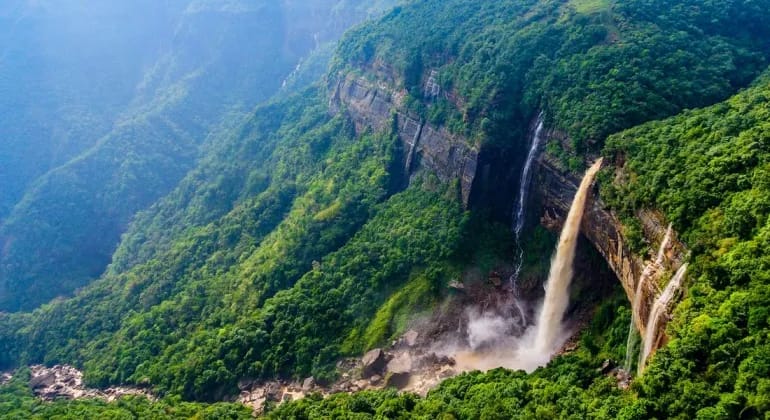
Located about 53-55 km from Shillong, Sohra is famous for its high steep mountain ranges, deep valleys, waterfalls and rich natural heritage. Its most famous attractions include Nohkalikai Falls, Nohsngithyang Falls (commonly known as Seven Sisters Falls), Dainthalen Falls and Maosmai Caves. Nohkalikai Falls is famous for its dramatic plunge into a pool of water below the steep mountain ranges surrounding it, while Seven Sisters Falls creates a spectacular cascade of water along the steep slopes. Sohra is also an important gateway to the living root bridges of Meghalaya.

Nangriat Double-Story Living Root Bridge

The two-story Living Root Bridge in Nangriyat is one of the unique attractions of Meghalaya. Rather than being built with conventional materials, this bridge is constructed by driving the living aerial roots of rubber fig trees over the flowing watercourse. Over the years, the roots grow stronger and create a sustainable natural crossing. The bridge is a testament to the ecological knowledge of the local Khasi community, passed down through generations.

Visitors usually head towards Nangriat via the village of Tirna, near Sohra. Reaching the bridge involves a strenuous descent down thousands of steps, and then an equally strenuous climb back up. Travelers should plan to have most of the day on hand for this experience, wear suitable footwear, carry drinking water, and arrange for a registered local guide as needed. This route may not be suitable for those with significant mobility limitations.

Dauki and Umongat Rivers

Dawki, located in the West Jaintia Hills near the Bangladesh border, is famous for the Umangat River. Under favorable conditions, the river becomes exceptionally clear, creating a beautiful sight of boats floating on the riverbed. Visitors can enjoy scenic boat rides, photography, and various exciting activities nearby. The Dawki Suspension Bridge and the surrounding hills add to the charm of this border destination.

Shnongpadeng – Riverside Adventure

Shnongpadeng, near Dawki, is a popular destination for camping and outdoor activities. Depending on seasonal conditions and operator availability, visitors can enjoy kayaking, boating, snorkeling, zip-lining, and supervised water activities. Travelers should use qualified operators, request appropriate safety equipment, and refrain from entering the river despite warnings from local authorities.

Mawlynnong – Traditional Village Tourism

Mawlynnong is well known for its village cleanliness initiatives and community-based tourism. Its well-maintained paths, traditional houses, gardens and surrounding countryside make it a delightful cultural destination. Subject to local access arrangements, travellers can also visit a nearby living root bridge and a bamboo skywalk. Visitors should respect the restrictions on private residences, social spaces and photography.

Lake Umiam

Umiam Lake, also known as Barapani, is a large reservoir located north of Shillong. Surrounded by wooded hills, it is a picturesque spot for photography, relaxing by the lake, and engaging in a selection of recreational activities. Travelers arriving by road from Guwahati often catch a glimpse of Umiam Lake before reaching Shillong. The reservoir itself is not a place for swimming; visitors should use the designated recreational areas.

Maosmai Caves and the Limestone Landscape of Meghalaya

Meghalaya has a remarkable limestone cave system, formed by geological processes over a long period of time. The Mausmai Caves near Sohra are one of the relatively accessible caves for tourists, allowing visitors to observe the natural rock formations and the paths. Some parts of it can be narrow or slippery. The more remote caves located elsewhere in the state should only be explored with an experienced guide and proper equipment.

Krang Suri Waterfall

Krang Suri Falls, located near Amlareem in the West Jaintia Hills, is known for its dazzling blue-green waters and surrounding forests. The site is particularly attractive for photography and nature walks. Visitors should adhere to locally established access regulations and never assume that swimming is permitted without permission and appropriate safety supervision.


History, culture and indigenous traditions

Meghalaya's cultural identity is shaped by the Khasi, Jaintia and Garo peoples, whose traditions predate the modern Indian state. Their history is reflected in oral storytelling, sacred groves, traditional institutions, festivals, music, food and social life.

Historical context

Before the formation of the present state, the region included the traditional Khasi and Jaintia political areas and the Garo community with its own administration. After British colonial expansion, most of the region was administratively merged with Assam. On 2 April 1970, Meghalaya was created as an autonomous state within Assam and on 21 January 1972, it was granted full statehood.

Matriarchal tradition

Many Khasi, Jaintia, and Garo communities follow a matriarchal kinship system, where family lineage and specific inheritance systems flow through women. Specific customs vary by community and family, so matriarchy should not be confused with the idea that every political or social decision is necessarily controlled by women.

Sacred Forests and Traditional Conservation

The Mawphlang Sacred Forest near Shillong is an important example of indigenous conservation. Local traditional beliefs and social practices have contributed to the conservation of its flora and ecological features. Visitors can learn about medicinal plants, forest traditions and environmental responsibility from knowledgeable local guides. Removal of plants, rocks or other natural elements from the protected area should be avoided.

Festivals and cultural experiences

Meghalaya's cultural calendar includes Khasi festivals like Shad Suk Minsiem and Nangkrem dance, the Jayantia Behdienkhlam festival and the Garo Wangala festival. These celebrations reflect the community's identity, agricultural traditions, religious practices and social heritage. The dates and arrangements for visitors vary each year, and some events have rituals that require special cultural sensitivity.

For a well-structured introduction to the people of the region, exhibitions showcasing the heritage of various communities in North-East India are organised at the Don Bosco Centre for Indigenous Cultures in Shillong . Visits to local markets and villages provide additional opportunities to understand traditional crafts, cuisine and everyday culture.


Things to do in Meghalaya

Meghalaya offers a variety of activities for both the leisurely tourist and the seasoned traveler. The natural beauty here blends with the cultural experiences under the care of the locals, providing the most enjoyable experience.

  • Waterfall Tour: Visit Nohkalikai Falls, Seven Sisters Falls, Elephant Falls, Dainthalen Falls, and Krang Suri Falls, and allow enough time for scenic viewpoints and walking trails.
  • Living Root Bridge Trekking: Explore the traditional plant bridges located near Nangriat, Sohra and other specific villages with responsible local guides.
  • River Cruise: When the boat ride is open and local conditions are favorable, enjoy a guided cruise along the Umongat River in Dawki.
  • Adventure tourism: You can consider kayaking, guided hiking, camping, zip-lining, and other activities organized by established operators around Shnongpadeng and some selected adventure destinations.
  • Cave Exploration: Explore the accessible limestone formations at the Maosmai Caves or arrange a special tour for more challenging cave systems.
  • Photography: Capture the scenic views of mountains, river reflections, traditional architecture, sacred forests, and waterfalls.
  • Cultural Tourism: Visit indigenous heritage museums, village markets, and community-run tourism initiatives.
  • Local Food Experience: Savor traditional Khasi and Jaintia dishes, regional rice dishes, and locally produced specialties.
  • Travel along scenic routes: Explore the Shillong–Sohra, Shillong–Dauki and Guwahati–Shillong routes and stop only at safe and designated sightseeing spots.

Responsible Travel Guidelines

The terrain of Meghalaya requires careful preparation. River levels, trail access, and cave conditions can change rapidly. Do not attempt difficult treks alone, enter restricted areas, or swim in unfamiliar water bodies. Carry drinking water, comfortable shoes, identification, and sufficient cash. Use approved safety equipment for water activities and follow the instructions of local guides and authorities.


Ticket prices and entry rules

There is no single entry fee for visiting attractions across the state in Meghalaya. Tourists have to pay separately for attractions, guided activities, vehicle parking and optional experiences. Entry to general towns and streets is usually free, but maintained tourist attractions may have their own ticket counters.

Indicator attraction and activity charge

Attraction or service Published reference price Important information
General admission to Meghalaya Free Immigration and other applicable travel regulations will remain separate.
Elephant Falls 20 taka per person Historical rates published on the official tourism page; check current counter charges.
Nohkalikai Falls Viewpoint About 20-50 taka per person Additional costs may apply for photography, parking, or other services.
Daoqi and Shnongpadeng designated activity areas Around 50 taka per person in certain places The amount of charge varies depending on the location and operator.
Boat trip on the Umongot River About 800 taka per boat Estimated tourist tax; confirm boat capacity, duration and current price.
Local guide service Starting from around 500 taka per day according to the selected published tariff Specialized trekking and group guides may cost more.
MTDC Shillong-Sohra Guided Bus Tour ₹750 per adult Confirm published official tour rates; itinerary and included entrance fees.
MTDC Shillong-Dauki via Jowai Guided Bus Tour ₹1,000 per adult Published official tour rates; advance booking recommended.

These figures are indicative information taken from published tourism information and are not confirmed and final ticket prices for October 2026. Official tour details can be found in the Meghalaya Tourism Department's Bus and Guided Tour (buses) Information.

Entry conditions for international tourists

International travelers, unless covered by an approved exemption, require valid travel documents and an appropriate Indian visa. Bangladeshi visitors should check their specific visa category, permitted entry and exit points, passport conditions, and applicable immigration requirements before booking travel.

Most major tourist areas in Meghalaya do not require an Inner Line Permit, which is used in some other states in Northeastern India. However, different rules may apply to protected areas, guided treks, border areas, conservation areas or certain tourist activities. Visitors should check the state's current tourist registration requirements and the latest instructions from local authorities.

Information regarding Indian visas is available on the Indian government's visa online portal. Immigration and land border entry regulations should always be checked separately from tourism advertisements.


Best time to travel

Meghalaya welcomes tourists all year round, although the ideal time to visit depends on the type of activities and scenery that tourists want to enjoy. The months of October to April are generally the most convenient for a balanced itinerary, including Shillong, Sohra, Dawki, Mawlynnong, and the Living Root Bridges.

October to November

These months offer a pleasant green landscape and the best opportunities to explore Shillong, Sohra, scenic spots and cultural centers. This time is especially suitable for travelers who want a combination of sightseeing, photography and rural experiences.

December to February

This time is popular for sightseeing, mountain driving, overnight stays in villages, and experiencing the Umongat River. The clarity of the river can be particularly impressive when local water conditions are favorable, although clarity is never guaranteed on any specific date.

March to April

March and April are attractive months for trekking, cultural exploration, landscape photography and a few select adventure activities. Travelers can also combine a guided nature walk with a city tour of Shillong.

May to September

These months offer the most dramatic waterfall views and lush green landscapes in Meghalaya. However, heavy monsoon rains can disrupt trekking routes, reduce visibility, affect river movement, and make some roads or trails dangerous. Tourists planning waterfall-focused trips should follow local advisories and keep their itinerary flexible.

Recommended duration of the trip: Allow at least three to four days for Shillong and Sohra, five to six days for Dawki and Mawlynnong, or seven to ten days for a more relaxed itinerary with additional districts, cultural experiences, and longer treks.


Suggested itinerary for Meghalaya trip

A five-day itinerary offers a realistic opportunity to visit Meghalaya without having to travel too far between attractions. Shillong is a convenient base for arrival and accommodation, although overnight stays in nearby Sohra or Dawki can reduce the need for frequent driving.

Day 1: Arrival in Shillong

Depart for Shillong from Guwahati Airport, Guwahati Railway Station or any authorized border entry point. Depending on your arrival time, visit Umiam Lake, explore Police Bazaar and enjoy a relaxing evening in the city.

Day 2: Shillong visit

Visit Ward's Lake, Don Bosco Center for Indigenous Cultures, Elephant Falls, and select scenic spots. Allow extra time for traffic and operating hours of attractions.

Day Three: Sohra and Waterfalls

Drive to Sohra, about 53-55 km away. On the way, visit Nohkalikai Falls, Seven Sisters Falls, Mausmai Caves and other easily accessible tourist attractions. It is advisable to stay overnight in Sohra if you are planning a long trek the next day.

Day 4: Living Root Bridge or Scenic Village Tour

Active travelers can dedicate this day to the Nangriat double-story living root bridge trek with a qualified local guide. Those who want a less strenuous experience can instead explore the easily accessible Sohra viewpoint and rural destinations. Don't underestimate the effort required for the return climb to Nangriat.

Day 5: Daoqi, Mawlynnong and departure

Visit the Umongat River in Dawki and if you have time, visit nearby Mawlynnong or Shnongpadeng. Starting and ending in Shillong, this is enough for a full day of sightseeing. Travelers who plan to cross the border to their next destination should plan separately according to immigration formalities and checkpoint operating hours.

Planning tip: This five-day itinerary is a suggested outline, not a fixed itinerary. Those with an extra day can spend more time around Dawki, Jowai, or Krang Suri Waterfalls rather than rushing between distant sites.


How to reach

Meghalaya can be reached by road from Assam, by air via Guwahati or Shillong airports, and by an approved international border crossing with Bangladesh. Shillong, the state capital and headquarters of the East Khasi Hills district, is the most convenient hub for reaching many major tourist attractions. Other district headquarters, such as Jowai in the West Jaintia Hills and Tura in the West Garo Hills, provide services to their respective regional destinations.

Option 1: From Dhaka to Meghalaya via Sylhet and Tamabil-Dauki

Step 1 – Dhaka to Sylhet: Travel from Dhaka to Sylhet by intercity bus, train or domestic flight. The journey by road and rail usually takes a few hours, depending on the service and conditions. Book through licensed transport operators and check the schedule before you start your journey.

Step 2 – Sylhet to Tamabil: Travel about 55 km from Sylhet towards Tamabil via the Jaflong corridor. Buses, reserved CNG autorickshaws and private cars are available. It may take about 1.5 to 2.5 hours depending on traffic and road conditions. Reserved vehicles offer additional convenience in terms of luggage and border formalities.

Step 3 – Complete the immigration process: At Tamabil, complete the exit process from Bangladesh and once the checkpoint accepts your nationality and visa category, proceed to the relevant Indian Immigration Centre located in Dawki. Carry your passport, valid Indian visa, residence details and any other documents required by the relevant immigration authorities. Do not assume that having a visa will grant you permission to use all land borders.

Step 4 – Dawki to Shillong: After authorized entry into India, hire a taxi or arrange for an authorized shared transport to Shillong. The distance from Shillong to Dawki by road is about 80-85 km and the journey usually takes about 2.5 to 3.5 hours. Travelers can also stay in the vicinity of Dawki or Shonpadeng before continuing their journey.

Important Border Advisory: The 2026 report mentions changes to visitor access at the Dawki-Tamabil crossing, including its possible use for certain Indian e-Visa categories. Such arrangements are nationality-based and subject to change. Bangladeshi passport holders should confirm their eligibility directly with the Indian government visa and immigration authorities. This crossing is generally open at specific times of the day, rather than continuously.

Option 2: By air from Dhaka or other cities

The main air gateway to Meghalaya is the popular Gopinath Bordoloi International Airport in Guwahati, Assam . Passengers arriving from Bangladesh should check available international connections and any necessary transfers via Indian or regional airports. It is not advisable to assume that direct flights from Dhaka to Guwahati will be available without checking the current airline schedules.

Shillong is about 100-125 km from Guwahati Airport, depending on the route and destination within the city. The journey by road usually takes three to four hours. Private taxis, pre-arranged arrangements for airport transfers, and some shared transport services are available. According to examples published by local tour operators, the cost of a private car ride from the airport to Shillong starts at around Rs 3,000 per car , but the actual fare depends on the type of car, pickup location, time, and operator.

Shillong Airport, also known as Umroi Airport, is located about 30-35 km from Shillong city centre and has more limited flight services than Guwahati. Passengers should check the current routes and operating days before choosing this airport.

Option 3: By train

Shillong, the main tourist destination in Meghalaya, does not have a conventional passenger railway station. The main railway station used by tourists is Guwahati Railway Station in Assam . Passengers arriving in Guwahati by train can take shared taxis, private cabs or buses to Shillong. Depending on traffic and the destination, the onward journey usually takes about three to four hours.

It is generally not possible for travellers travelling from Dhaka to reach Meghalaya by train alone. This route must include connecting road transport, a suitable international border crossing or another approved route. Cross-border passenger rail availability should be checked before booking.

Option 4: By bus and road from Guwahati

Passengers arriving in Guwahati can use government buses, private buses, shared taxis or reserved cars to reach Shillong. These services generally use the Guwahati-Shillong highway corridor and pass through the Umiam Lake area before entering the city. Availability of transport and departure points should be checked locally.

For further sightseeing, the Meghalaya Tourism Development Corporation operates organized sightseeing buses from Shillong. Their published tour list includes the Shillong-Sohra circuit starting at ₹750 per adult and the Shillong-Dauki circuit via Jowai starting at ₹1,000 per adult . These tours may be suitable for travelers who do not wish to hire a private vehicle.

Local transport from Shillong and other district headquarters

From the center of Shillong, travelers can arrange local taxis to nearby attractions or reserve a car for day trips. Shared transport is available from designated taxi stands, but direct services are not always available to remote waterfalls, trekking entrances, and isolated villages.

  • Shillong to Sohra: Approximately 53–55 km; usually takes 1.5 to 2.5 hours by road. Local operators advertise private transfers starting at around 2,800 rupees per vehicle.
  • Shillong to Dawki: Approximately 80–95 km depending on the route; usually takes about three hours. According to published private transfer examples, fares start from around ₹3,500 per vehicle.
  • Jowai to Dauki: About 55 kilometers through the Amlarem area, where taxis or local transportation are available.
  • Shillong to Umiam Lake: Located about 15-20 km north of central Shillong, it can be reached by hired taxi or as a stopover on the Guwahati road.
  • Shillong to Elephant Falls: About 12 kilometers by road, usually reached by hired taxi or sightseeing car.
  • Shillong to Tirna and Nangriat: First head towards Sohra and then reach the appropriate trekking starting point. The last part of Nangriat is on foot.

Local Fare Guidelines: A typical city taxi ride can cost a few hundred Indian rupees, while a full-day tourist car rental can cost up to a few thousand rupees. The Meghalaya Tourism Department has published an estimated daily tourist car rental of ₹5,000 for certain adventure circuits. These are just an idea for budgeting, not a guaranteed fare. Make sure to check the full fare, waiting time, parking, driver allowance, and return journey costs before you start your journey.

Nearby transport hubs: Police Bazaar is a convenient central landmark in Shillong, Umiam Lake is located on the way from Guwahati, and the Dawki Suspension Bridge is a well-known spot near the India-Bangladesh border. International visitors should carry Indian rupees for local transport, as Bangladeshi taka is not the prevailing currency in Meghalaya.

Where to eat

Meghalaya's food culture reflects its rich Khasi, Jaintia and Garo heritage. Shillong has the widest range of cuisines, while Sohra, Jowai, Mawlynnong and Dawki offer local restaurants, roadside eateries and homestays. Visitors should try regional dishes alongside familiar Indian and international dishes.

Traditional Meghalayan food

  • Jadoh: A rice dish of the Khasi community, traditionally made with meat and aromatic ingredients and deeply intertwined with the local food culture.
  • Dohnaeyang: A traditional Khasi pork dish made using black sesame seeds, prized for its distinctive color and rich flavor.
  • Tungrimbai: A dish made from fermented soybeans, which has a strong aroma and characteristic salty taste.
  • Pumaloi: A steamed rice dish associated with Khasi cuisine and traditional dishes.
  • Dokhliyeh: A Khasi dish that is usually made as a meat salad with onions, vegetables, and other ingredients.
  • Local rice and vegetable dishes: The dishes vary by community and season, and the ingredients are often sourced from local markets and farms.

Food and drink in Shillong

Police Bazar is one of the most convenient places to find restaurants, street food, cafes and takeaways . The Laitumkhra area is another popular area for food, with cafes and casual restaurants. Travelers interested in regional cuisine can look for established Khasi restaurants and food stalls serving traditional rice-based dishes.

Food around Sohra, Dawki and Mawlynnong

In Sohra, roadside restaurants and tourist food stalls serve rice dishes, noodles, light meals and regional dishes. In Daoqi and Shnongpadeng, there are small food stalls around tourist areas and accommodation providers. In Mawlynnong, locally run food stalls and homestays often serve simple home-style meals.

Estimated food budget: A typical local meal can cost around 100–250 taka per person, while meals at established restaurants and tourist-oriented cafes can cost 250–600 taka or more. These prices are estimates for planning purposes and are not verified prices for any specific restaurant menu.

Dietary advice: Some traditional dishes contain pork, fermented ingredients, or locally-made meat stocks. Vegetarians, travelers with allergies, and those following religious dietary restrictions should check ingredients before ordering. Carry bottled drinking water when traveling in remote areas.


Where to stay?

Meghalaya offers a variety of accommodation options, from budget guesthouses and family homestays to boutique hill properties and established hotels. The best place to stay overnight depends on what attractions visitors want to visit and how comfortable they are with driving.

Shillong – Best for first-time travelers

Shillong has the most accommodation options in Meghalaya. The Police Bazar area is convenient for travelers who want shops, restaurants, and easy access to transportation. On the other hand, those who want a more relaxed stay may prefer Laitumkhra and the relatively quiet residential areas. Shillong is a good base for day trips to Umiam Lake, Elephant Falls, cultural attractions, and nearby destinations.

Sohra – Best for waterfalls and trekking

From Sohra, it is easy to visit Nohkalikai Falls, Mausmai Caves and other nearby attractions without having to return to Shillong every evening. This is especially convenient for travelers planning the Nangriyat Living Root Bridge trek. There are a variety of accommodation options here, from homestays to resorts and charming guesthouses.

Dawki and Shnongpdeng - best for river experiences

Accommodation is available in riverside camps, guesthouses and locally run homestays around the Dawki and Shnongpadeng regions. Travellers should ensure that bathroom facilities, bedding, food, electricity and transport are available before booking. Camping and river-related activities are subject to operator availability and local security conditions.

Jowai and West Jaintia Hills

Jawai is a convenient regional hub for tourists visiting the Krang Suri Falls, Amlarem area and other attractions in the West Jaintia Hills. Accommodation options are generally less than in Shillong, but the town can help reduce travel time for itineraries centered around this district.

Estimated accommodation budget

Housing Department Estimated price per night Suitable for
Budget guesthouse or homestay ₹800–₹1,800 Backpackers and budget travelers
Mid-range hotel or comfortable homestay ₹2,000–₹4,500 Couples and families
Premium hotel or luxurious resort ₹5,000–₹12,000 or more Travelers are looking for extra amenities
Simple camping by the river ₹800–₹2,000 per person or package, depending on the included items Adventurers and outdoor travelers

These accommodation figures are not guaranteed and final prices, but rather an approximate budget idea. Prices may vary significantly during holidays and popular festivals. International travellers should check whether their chosen accommodation accepts foreign guests and whether the necessary registration procedures can be completed. Advance reservations are particularly advantageous for Shillong, Sohra and riverside camps during peak travel times.


Travel tips and visitor safety

Careful preparation makes a big difference when traveling to Meghalaya. The distances between major attractions may seem short on the map, but mountainous roads, traffic jams, limited transportation, and the need for walking can increase the total travel time.

  • Carry valid identification: International travelers should keep their passports, visas, and other necessary entry documents handy.
  • Use approved guides: For trekking routes, especially in the East Khasi Hills, ensure current guide requirements and choose qualified local guides.
  • Plan your car trip carefully: Avoid visiting too many remote waterfalls, villages, and scenic spots in one day.
  • Carry Indian Rupees: While digital payments are common in Shillong, they can be less reliable in smaller villages and remote work areas.
  • Check the schedule of attractions: Statewide public access does not mean that every waterfall, cave, boat launch counter, or museum is open 24 hours a day.
  • Choose safe shoes: Sturdy shoes with good grip are essential for exploring forest paths, rock stairs, and caves.
  • Respect indigenous communities: Ask permission before taking photos of residents, traditional ceremonies, or private village spaces.
  • Protect natural spaces: Avoid littering, damaging living root bridges, removing plants, or disturbing wildlife.
  • Check transportation arrangements: Negotiate private taxi fares and waiting charges before starting your trip.
  • Prioritize water safety: Do not swim in springs or river bodies of water without permission and supervision from the appropriate local authorities.
  • Maintain flexibility in your schedule: Mountain road conditions and local restrictions can affect travel plans at short notice.

The national emergency response number for medical emergencies in India is 112. Travelers should keep contact details of their accommodation, local driver information, and relevant immigration documents handy when traveling long distances.


Nearby attractions

Since Meghalaya is a state rather than a separate territory, the following tourist attractions are located in different districts and itineraries within Meghalaya . Not all of them are strictly adjacent to each other. Travelers should plan their trip according to the region to avoid unnecessary travel.

Shillong and the East Khasi Hills

  • Shillong : The capital of Meghalaya, home to markets, cultural attractions, city tours, and connectivity to other destinations.
  • Elephant Falls : A popular multi-tiered waterfall located about 12 kilometers from the center of Shillong.
  • Umiam Lake : A picturesque reservoir located north of Shillong, popular for taking scenic photos and relaxing by the lake.
  • Maoflang Sacred Forest : A culturally important forest that offers opportunities to explore traditional conservation methods.

Sohra and South East Khasi Hills

  • Sohra (Cherrapunji) : Located about 55 kilometers from Shillong, Sohra is a famous hill tourist destination with waterfalls, limestone caves, and living root bridges.
  • Nohkalikai Falls : One of the major waterfall viewing points in Meghalaya, known for its dramatic natural surroundings.
  • Seven Sisters Falls : A group of spectacular waterfalls cascading down the steep mountains of the Sohra region.
  • Maosmai Cave : A cave easily accessible to tourists, it has interesting limestone formations.
  • Nangriyat Two-Story Living Root Bridge (double decker living root bridge) : A remarkable example of living architecture, reached by a arduous staircase in the jungle.

West Jaintia Hills and Dawki Circuit

  • Dawki : A border town, famous for its exceptionally clear Umangat River and pleasant boating experience.
  • Shnongpadeng : A riverside destination with a selection of adventure activities, camping, and opportunities to get close to nature.
  • Mawlynnong Village : A community-centered tourist destination, known for its well-groomed surroundings and tradition of village cleanliness.
  • Krang Suri Waterfall : A beautiful waterfall near Amalrem, known for its colorful natural water bodies and tree-lined landscape.
  • Jawai : An important town in the West Jaintia Hills region and a convenient hub for exploring nearby cultural and natural attractions.

Suggested regional itinerary: Visit Umiam Lake and Elephant Falls with Shillong; Nohkalikai Falls, Mawsmai Caves and Nangriat with Sohra; and Shnongpadeng, Mawlinong and selected attractions in the West Jaintia Hills with Dawki. Travelers who want to visit remote Garo Hills destinations should keep extra days in hand rather than treating them as short trips from Shillong.

The internal links above use the suggested descriptive ColoZai destination path. Their publishing status and correct URL slug have not been verified, so they should be reconciled with existing ColoZai pages before publishing to avoid broken links.

Frequently Asked Questions (FAQ)

Meghalaya is a state in northeastern India , bordered by Assam to the north and east and Bangladesh to the south and west. Its capital is Shillong. The state comprises the Khasi, Jaintia and Garo hill ranges and covers an area of ​​about 22,429 square kilometres. Tourists usually enter through Guwahati in Assam or through an authorized checkpoint on the India-Bangladesh border. Meghalaya is a vast region, with not a single attraction or sightseeing spot, but numerous tourist destinations.

logo ColoZai

ColoZai is a trusted travel guide and destination explorer platform in Bangladesh. We are making travel simple, authentic, and accessible for everyone.

Need Help ?

We are Always here for you! Knock us on Whatsapp (10AM - 10PM) or Email us.