Cherrapunji India

Cherrapunji India

Cherrapunjee
·

17 October 2026

Travel Overview & Quick Facts

Directions
Location
Cherrapunjee
Admission / Entry Fee
Entry to Cherrapunji (Sohra) town and its public areas is free. Each attraction has its own separate entry fee. Budget approximately INR 20-100 per person for selected viewpoints, parks and caves, although some attractions may cost more. Additional fees may apply for parking, photography, local guides, adventure activities and guided treks. Please confirm the current prices at each attraction before entering. All amounts are in Indian Rupees (INR).
Opening Hours
Open 24 hours (for entry into the city; opening hours vary for each attraction).
Category / Type
Rock cities and scenic destinations, Waterfalls and natural wonders, Adventure and eco-friendly tourism, Khasi cultural heritage

Introduction to Cherrapunji India

Cherrapunji, India , officially and locally known as Sohra , is one of the most extraordinary natural destinations in North-East India. Located in the East Khasi Hills district of Meghalaya, about 54 km south of Shillong, this historic hill town is famous for its towering waterfalls, dramatic limestone cliffs, mysterious caves, living root bridges and sweeping views towards the plains of Bangladesh. It is internationally renowned for its exceptional rainfall records and is widely recognised as one of the wettest inhabited places on earth.

Unlike a typical tourist destination limited to a single gateway, Cherrapunji is a complete destination in itself. Its attractions are spread across a mountainous terrain of deep valleys, forest-covered slopes, traditional Khasi villages and extraordinary geological formations. Visitors come here to enjoy the beauty of the spectacular nohkalikai falls, explore the limestone pathways of the mawsmai Caves , photograph the magnificentSeven Sisters Falls and take unforgettable walks on the living root bridges around Nangriat.

Situated at an altitude of about 1,300 meters above sea level on the southern edge of the Shillong Plateau, Sohra offers panoramic views of the surrounding valleys and the distant lowlands of Bangladesh. Its landscape has been shaped by thousands of years of flowing water, limestone erosion, and the heritage of the indigenous Khasi community. The combination of geological diversity and living cultural heritage makes this region particularly attractive to photographers, nature lovers, hikers, families, and travelers interested in responsible tourism.

Cherrapunji is also a convenient destination for international tourists from Bangladesh, especially via the Sylhet-Tamabil-Dauki corridor, when international border crossings are open and the traveler has the necessary documents. Sohra can be reached by road from Shillong, the capital of Meghalaya and the headquarters of the East Khasi Hills district, through a picturesque hilly landscape.

Important information for tourists: The distance from Shillong to Cherrapunji by road is approximately 54 km. It is accessible all year round, depending on local road conditions, and there is no general entry fee to enter the town. Most tourists should allow at least a full day to see the main attractions and two to three days to experience more of the area, including caves, waterfalls, village life, and living root bridges.


History, geography and Khasi cultural heritage

The historic city of Sohra

Long before it became internationally famous as Cherrapunji, the place was known to the Khasi people as Sohra. The town holds an important place in the historical and cultural context of the Khasi Hills. It served as an influential settlement in the Khasi political and cultural world and became an important centre of communication between the local community and the British colonial administrators in the 19th century.

In the early colonial period, Cherrapunji served as the administrative centre of the British authorities in the Khasi Hills before the administrative functions were shifted to Shillong. Later, Christian missionary activities, educational institutions and the influence of European architecture became part of the historical development of the region. Even today, local Khasi traditions continue to give Sohra its distinct identity.

Why Cherrapunji is famous for its rainfall

Cherrapunji has gained worldwide recognition for its extraordinary rainfall measurements, including historical records from the 19th century. Moist air blowing north from the Bay of Bengal meets the steep southern slopes of the Khasi Hills and rises rapidly, producing intense rainfall. The geography of the region explains its exceptionally high rainfall and its spectacular network of streams, waterfalls and deep valleys.

Cherrapunji recorded approximately 26,461 mm of rainfall during the twelve-month period ending in July 1861, making it one of the most significant annual rainfall records ever recorded. The nearby settlement of Mawsynram also receives unusually high average rainfall and is often ranked as the wettest place on the long-term average. Visitors should therefore distinguish Cherrapunji's historical rainfall record from claims of the highest average annual rainfall in the world.

The Khasi people and their lifestyle traditions

The Khasi community of Meghalaya is known for its distinct cultural practices, language, traditional institutions, and matriarchal kinship system. In Khasi matriarchal society, lineage and inheritance traditionally flow through women, although family structures and responsibilities vary from family to family.

One of the most notable manifestations of indigenous ecological knowledge is the construction of living root bridges. The Khasi community uses the aerial roots of rubber fig trees to propel them across streams and gradually shape them into functional crossing structures. These bridges take many years to build and, if properly maintained, can remain functional from generation to generation.

Visitors can gain a deeper understanding of Khasi history through local guides, community-run homestays and cultural exhibitions, including exhibits related to the Ramakrishna Mission in Sohra. Respectful treatment of the residents, traditional customs and sacred sites of the community is essential.


Main attractions and unforgettable experiences

Nohkalikai Falls: The Famous Jumping Waterfall

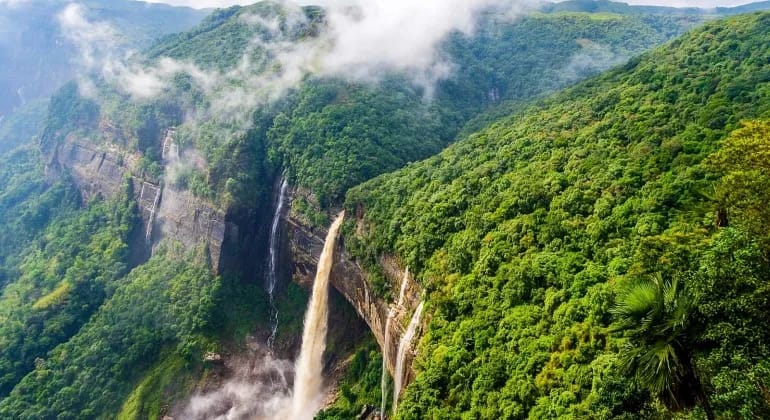
Nohkalikai Falls is one of the most famous natural attractions in Meghalaya. With a sheer drop of about 340 meters, it is considered the highest waterfall in India. The water cascades down a dramatic cliff and into a picturesque pool surrounded by dense vegetation and steep rock formations. Visitors can enjoy the main waterfall from designated viewpoints without having to undertake any strenuous treks.

This waterfall is associated with a tragic Khasi folktale about a woman named Ka Likai. Local guides can explain the story and its cultural significance. When the sheer cliff and waterfall are in full view, it is especially enjoyable to take photos.

Seven Sisters Falls: A scenic spot located on the edge of a mountain

Seven Sisters Falls , also known as Nohsngithyang Falls, is famous for its multiple waterfalls cascading down a steep limestone cliff near the village of Maosmai. Depending on the seasonal flow of water, several distinct cascades can be seen here. The waterfalls create a spectacular landscape against the backdrop of the South Khasi Hills, and under favorable conditions, views can be seen as far as Bangladesh.

Maosmai Cave: An accessible underground adventure

Mawsmai Cave is one of the most well-known limestone caves in the Sohra region. Its visitor-accessible path features impressive stalactites, stalagmites and naturally carved rock surfaces. In some parts, there is little headroom or the path is narrow, so visitors should wear safe footwear and walk carefully. The controlled tourist path here is relatively short, which is suitable for many first-time cave explorers, although it is not fully accessible for those with mobility limitations.

Arowah Cave: Fossils and Limestone Formations

Arwa Cave offers another interesting underground environment. It is known for its sedimentary rock formations and visible fossil imprints. There is a scenic walk through the surrounding landscape on the way. Visitors interested in geology should visit both Arwa and Maosmai Caves, but be sure to follow the marked visitor paths and avoid contact with the fragile rock layers.

Double-decker living root bridge in Nangarhar

The extraordinary two-story living root bridge at Nangriat is one of the unique attractions of Meghalaya. To reach it, one usually has to go to Tirna village and descend a long staircase of stone and concrete through steep, forested terrain. The return journey is a difficult climb and should not be mistaken for an easy roadside attraction.

The bridge consists of two interconnected tiers made of living tree roots. Depending on physical ability, trail conditions, rest breaks, and chosen itinerary, travelers should allow approximately five to seven hours or more for the entire round-trip trek. A registered local guide may be required as per the applicable regulations regarding trekking in the East Khasi Hills, so this should be ensured before starting the trek.

Daenthalen Waterfall and Wei Saw Dong Waterfall

The Dhinthlen Falls are a beautiful blend of natural beauty and Khasi mythology. Its name is associated with a local legend about a giant serpent known as the Tholen. The surrounding rock formations and open landscape make this area a worthwhile stopover during sightseeing tours.

Wei So Dong Waterfall is known for its beautiful three-tiered waterfalls and secluded surroundings. Reaching the observation decks below requires a steep descent, which can be quite difficult, especially when the surface is slippery. This trip is best suited for visitors who are comfortable with a tough hike.

Mokdoc Dimpeap Valley Viewpoint

One of the most memorable stopovers on the Shillong-Sohra road is the Makdok Dimpep Valley Viewpoint. From here, travelers can enjoy the scenic views of the lush green valleys and deep natural gorges. Some operators offer thrilling activities like zip-lining, subject to operational conditions and safety restrictions . (mawkdok dympep valley viewpoint)


Best time to travel and recommended itinerary

Choosing the right season to travel

October to April is the best time to visit Cherrapunji's waterfalls, scenic viewpoints, cultural monuments and trekking trails . October to March is especially suitable for travelers who want to combine walking and other outdoor activities with road trips. April can also be fruitful, although conditions become more variable as the year progresses.

The region's extraordinary seasonal landscapes and powerful waterfalls are visible from June to September. However, heavy rains, low visibility, slippery roads, and occasional road disruptions may limit access to certain attractions, caves, or trekking destinations. Tourists traveling during this time should plan flexibly and follow local safety guidelines.

One day Cherrapunji sightseeing tour plan

  • Morning: Depart from Shillong early in the morning and stop at the Maokdok Dimpep Valley viewpoint.
  • As the day progresses: Explore the Maosmai Caves and visit the Seven Sisters Falls viewpoint.
  • Lunch: Enjoy Khasi or Indian food at a restaurant in Sohra.
  • Afternoon: Visit Nohkalikai Falls and if you have time, visit Arua Caves or Dainthalen Falls.
  • Evening: Return to Shillong or stay overnight in Cherrapunji.

Two-day nature and culture itinerary

Day 1: Visit Makdok Valley, Mausmai Caves, Seven Sisters Falls, Nohkalikai Falls and Madhya Sohra. Overnight at a local homestay or resort.

Day 2: Take a long trek to the Nangriat Living Root Bridges or take a leisurely route to visit the Arwa Caves, Dainthalen Falls, and other scenic viewpoints. The Nangriat trek is physically demanding and should generally be done over most of the day, rather than connecting it with distant attractions.

Three-day exciting itinerary

Over three days, travelers can dedicate one day to the main waterfall tour, another day to the Living Root Bridge trek to Nangriat, and the third day to explore caves, village tours, cultural experiences, or the surrounding countryside. For those who want a slower trekking experience, overnight accommodations in Nangriat may be suitable, but this is subject to availability and local regulations.


Ticket prices, entry rules and visitor expenses

There are no entrance fees to Cherrapunji town. Visitors can enter the town, travel along public roads, and explore public areas without paying any general admission fee. However, separate fees may be charged for operated attractions, private tourist centers, certain sightseeing spots, and organized adventure activities.

Attraction or service Estimated cost Important information
Cherrapunji city Free There is no general ticket to enter the city.
Nohkalikai Falls Viewpoint About 20–100 taka per person Local entrance, parking and camera charges may vary.
Maosmai Cave About 20–100 taka per person Confirm current fees for adults, children, and cameras.
Arowah Cave About 50-100 taka per person Local entrance and guide fees may apply.
Managed parks and attractions About 20–100 taka per person There is no entrance fee to all attractions.
Nangriyat Trekking Variable The cost of guides, community, access, and overnight stays depends on the management.
Zip-lining and adventure activities Quoted separately by operators The price depends on the length of the activity and the operator.

These amounts are tentative estimates, not verified ticket prices as of October 2026. Individual attraction fees and local regulations are subject to change without notice. Please confirm pricing with the designated operator prior to travel.

Important access and safety rules

  • Use designated trails, designated sightseeing spots, and approved cave routes.
  • Do not cross the safety fence or go near the edge of a steep, unstable cliff.
  • Avoid swimming under waterfalls or entering rapid rivers without first confirming that the area is safe locally.
  • During long hikes, carry adequate drinking water, suitable footwear, and necessary personal medication.
  • Follow the instructions of the local guide for controlled trekking routes.
  • Do not damage living root bridges, cave structures, or protected plants.
  • Respect Khasi villages, tribal property, and culturally sensitive sites.
  • Keep Indian rupees with you, as digital payment acceptance and mobile connectivity may be erratic in remote areas.

How to reach

Cherrapunji is located in the East Khasi Hills district of the Indian state of Meghalaya . It is the state capital and district headquarters of Shillong, located about 54 km away. The most common way to reach it is by road, using State Highway 5 from Shillong. Subject to immigration clearance and operational restrictions, travelers from Bangladesh can enter Meghalaya through the Tamabil-Dawki International Border.

From Dhaka, Bangladesh: Travel by road via Sylhet and Tamabil

Step 1: Dhaka to Sylhet. Travel from Dhaka to Sylhet by intercity bus, train or domestic flight. The journey by road usually takes around five to seven hours, depending on traffic and road conditions. Bus fares can vary considerably depending on the bus operator and class of service; it is reasonable to have around 700–1,600 taka per person on hand, but this is not a verified current fare. Train fares depend on the train and class of seat.

Step 2: Sylhet to Tamabil. Arrange a car, bus or other local transport from Sylhet city to Tamabil, near the Bangladesh-India border. This journey is about 55-60 kilometers long and usually takes one and a half to two and a half hours. Traveling by local bus is usually less expensive than hiring a private car. Confirm the departure point and current fares locally.

Step 3: Complete Bangladesh and Indian immigration procedures. Tamabil is connected to Dawki on the Indian border. Travelers must carry a valid passport, appropriate Indian visa or other valid entry permit, and any additional documents required by immigration authorities. Not all visas or entry permits allow entry through all land borders. Check whether Dawki is an approved entry point for your nationality and visa category, and ensure that the border crossing is open for passenger movement on your intended date.

Step 4: Dawki to Cherrapunji. After entering India, arrange for onward road transport to Sohra. Depending on the prevailing conditions and the driver's itinerary, the route may take you via Pinnursalai and connecting roads. A reserved car is usually the most convenient option for international visitors with luggage. Allow a few hours for the road trip and extra time for immigration formalities. Do not assume that there will be a direct public bus to Sohra.

Alternative route: Travelers entering via Dawki can first travel to Shillong and then follow the well-established Shillong-Sohra road towards Cherrapunji. This is convenient if you are staying overnight in Shillong or if you are planning to take an organized sightseeing tour.

From Shillong: Main Road Route

Step 1: Reach the central transport area of ​​Shillong, specifically Police Bazaar or the respective shared-taxi drop-off point.

Step 2: Take a shared sumo, local shared taxi, government sightseeing coach or reserved private car to Sohra. Shared vehicles may depart from Mawlonghat or the Big Bazaar area, but you will need to reconfirm your pick-up arrangements locally.

Step 3: Head south along SH5 towards Cherrapunji. A notable place on this route is the Makdok Dimpep Valley Viewpoint.

Step 4: Upon arrival in Sohra, use pre-arranged transportation to explore the waterfalls, caves, and sights located outside the city center.

The distance by road is approximately 53-56 kilometers. The direct journey usually takes about one and a half to two and a half hours, although journey times can be significantly longer due to stops along the way and local conditions.

Shillong Transport Fare

Transportation options Indicative rent Best
Shared taxi or sumo One-way fare per person is around 100-200 taka. Low-budget travelers with light luggage
Government sightseeing tour According to the published Meghalaya Tourist Bus Schedule, the fare is ₹750 per adult or child; ₹650 per senior citizen. Visitors interested in organized day trips
Reserved sightseeing taxi Approximately ₹2,500–₹4,500 or more per car Families and visitors who want a convenient break
Private vehicle with driver Prices are determined according to route, duration, and vehicle type. Multi-day trips and customized itineraries

Meghalaya Tourism's bus schedule advertises a bus departing from Shillong at 8:00 AM for their Sohra sightseeing service. The published fares and departure details should be reconfirmed before travelling, as sightseeing circuits, seasonal services and reservation conditions are subject to change. The separate fares for shared-taxi and private-car mentioned above are not guaranteed fares, but rather approximate estimates.

By air

Guwahati Airport (GAU): Assam's popular Gopinath Bordaloi International Airport is the main airport for many tourists visiting Meghalaya. From the airport, take a taxi, shared transport or the available shuttle services to Shillong, then travel by road to Cherrapunji. Depending on the route chosen and traffic, the entire journey from the airport to Sohra takes about five to seven hours.

Shillong Airport (SHL): Shillong Airport in Umroi is another option for travelers whose itinerary fits into its limited flight network. It is located about 80 km from Sohra by road. Flight availability and routes operated should be checked directly with the airlines before planning a connecting flight.

From Dhaka by air: Passengers can arrive at any Indian airport currently served by international flights and from there travel to Guwahati or Shillong. The route and transit requirements depend on the airline's schedule, visa requirements and the passenger's nationality.

By train

There is no railway station in Cherrapunji and there is no conventional passenger rail network connecting it to Shillong or Sohra in Meghalaya. The main rail gateway is Guwahati Railway Station in Assam . From Guwahati, passengers can take buses, shared taxis or reserved cars to reach Shillong and from there travel to Cherrapunji. Depending on the route, the road distance from Guwahati Railway Station to Sohra is about 145 km.

Passengers starting their journey from Dhaka can first take a Bangladesh Railway domestic train to Sylhet and then travel by road to Tamabil. One should not assume that cross-border train services will be available without checking the current international rail services.

Local transportation, rentals, and nearby attractions

Private taxis and hired cars are usually the most convenient way to explore the scattered attractions of Cherrapunji. Motorbike and self-drive car rentals are available in parts of Shillong and Guwahati, but visitors must check licensing requirements, rental permits, insurance terms, and applicable road rules. A recognized International Driving Permit may be required for foreign-issued driving licenses.

Short-distance local transport and taxis are available around Sohra, but the city's conventional rickshaw and CNG network should not be relied upon. Fares for short journeys are usually negotiated directly with drivers. For day trips, it is more reliable to arrange transport in advance than to rely on getting a taxi at a secluded waterfall or cave entrance.

Useful places for orientation include Shillong , Police Bazaar, Makdok Dimpep Valley Viewpoint, Sohra town center, Maosmai village, and the road leading to Nohkalikai Falls.

For official information on transport, see the Meghalaya Tourism Department's bus service information (buses) and the East Khasi Hills District Transport Guide . (how to reach)

Cherrapunji India

GPS: 25.2899116, 91.6343852
Get Directions

Where to eat

Cherrapunji has a mix of traditional Khasi cuisine, North Indian cuisine, vegetarian restaurants, local cafes and food facilities attached to hotels and resorts. The most convenient places to find food are in Sohra town, Saitsopen, Khlieshnong and the main tourist routes. Food options are usually more limited in remote trekking villages, so planning ahead is especially important for tourists heading to Nangrit.

Traditional Khasi food worth tasting

  • Jadoh: A popular rice dish from the Khasi region, traditionally made with meat and aromatic spices. Travelers should ask about the ingredients, as the preparation varies.
  • Dohnaeyeong: A traditional pork dish made with black sesame seeds, prized for its distinctive flavor.
  • Tungtap: A type of fermented fish dish that is usually served as a condiment or accompaniment to local dishes.
  • Pumaloi: A traditional steamed rice dish served with other Khasi dishes.
  • Local vegetables and seasonal produce: Regional vegetables, bamboo shoots, and other locally available ingredients are worth trying through community-run kitchens.

Recommended dining venues and restaurants

Orange Roots, Sohra: A well-known vegetarian restaurant on Sohra-Shela Road, it is especially suitable for tourists looking for South Indian and Indian vegetarian food. It is a convenient stopover for families and travelers who prefer meat-free food.

Cafe Cherrapunji: A popular cafe-style stop on the Shillong-Sohra route, it offers a relaxed atmosphere for snacks and meals. Be sure to check its exact location and current opening times before making a special trip.

Resort restaurants: Establishments like Jiva Resort and other established resorts in Sohra may serve Indian, local and continental cuisines as per their current menus. Some hotel restaurants also cater to outside guests, though it is advisable to confirm in advance.

Local eateries: Small restaurants around Saitsopan and Madhya Sohra offer rice dishes, noodles, tea, light meals and traditional regional dishes at relatively affordable prices. The quality of the food, menus and opening hours vary.

Expected food costs

Type of food or dining Estimated budget
Tea and light snacks ₹30–₹120 per person
Typical local rice dish ₹120–₹250 per person
Vegetarian restaurant food 150–350 taka per person
Average restaurant food ₹300–₹700 per person
Resort Dining 500–1200 taka or more per person

These are approximate food budgets, not verified restaurant menu prices. Travelers with dietary restrictions should inquire about pork, fish, fermented foods, and cooking utensils. Pack light snacks and drinking water for long trips, as restaurants may not be available near isolated attractions.


Where to stay?

Accommodation in Cherrapunji ranges from simple family homestays to comfortable hotels, rural cottages and high-end resorts. Where to stay depends on whether your priorities are waterfall viewing, village experiences, trekking, or a convenient base for exploring the greater Khasi Hills.

Low budget homestay in Sohra

Locally run homestays offer an affordable way to experience Khasi hospitality. For those who prefer shared transport or taxis, homestays around Madhya Sohra and Saitoshopen are convenient. A basic room can cost around ₹800–₹2,000 per night, although prices vary based on amenities, season, and number of guests.

Mid-range hotels and guesthouses

Mid-range accommodations may include private bathrooms, self-catering facilities, sightseeing assistance, and convenient road transportation. An estimated budget for a room per night is around ₹2,000–₹5,000. Before booking, visitors should review reviews from past guests, cancellation policies, transportation options, and availability of hot water.

Premium resort with beautiful views

Jiva Resort is a well-established resort in the Cherrapunji Sohra area, offering accommodation in a hilly setting. Travelers who prioritize comfort and resort amenities can consider it.

Polo Orchid Resort Cherrapunji is another well-known establishment in the region, known for its pleasant surroundings and leisure-oriented accommodation. Room categories, restaurant access, and available amenities should be verified directly.

Depending on the season, accommodation category and booking conditions, premium quality hotels usually require a budget of around 5,000–12,000 taka or more per room per night. These figures are estimates for planning purposes, they are not final prices.

Staying close to Nongriat and Lightkinsew

Those planning the Living Root Bridge trek may want to consider accommodation near Tirna, Lightkinsew or Nongriat, depending on their itinerary. Cherrapunji Holiday Resort in Lightkinsew in the greater Sohra region is a well-known option and is known for its local exploration and trekking opportunities.

While basic homestays in Nangriat villages offer basic sleeping arrangements and home-cooked meals, amenities can be limited. Villages are a long walk away, and visitors should not expect direct road connections to every homestay.

Accommodation booking tips

  • Book in advance during major holidays and popular travel seasons.
  • Please confirm the correct street location of the property and do not rely solely on the 'Cherrapunji' label.
  • Check if breakfast, heating, parking, and driver accommodation are included.
  • Ask about power backup and mobile connectivity, if these are essential.
  • For trekking trips, ensure luggage storage, local guide arrangements, and transportation to the trekking starting point.
  • Choose a licensed or established accommodation and check the latest guest reviews before paying.

Practical travel tips and responsible tourism

Clothing and necessary equipment

Bring sturdy walking shoes with reliable grip, a waterproof outerwear, comfortable walking clothes, and a small daypack. A reusable drinking water bottle, power bank, first aid kit, and appropriate protection for electronic devices come in handy. For longer hikes, carry enough food and water, and follow your guide's equipment recommendations.

Connection, currency and payment

The official currency is the Indian Rupee (INR). ATMs and digital payment facilities are more readily available in larger commercial centres than in remote villages. It may be convenient to carry small notes of cash for local purchases, social fees and travel expenses. Mobile connectivity varies by operator and region.

Health and Safety

The roads in the Khasi Hills have bends, steep slopes and variable visibility. Use experienced drivers and avoid unnecessary night driving on unfamiliar mountain roads. Check the current conditions during heavy rains, before heading to caves, waterfalls or steep trekking routes. Do not enter restricted areas or attempt difficult routes without proper preparation.

The national emergency number for emergency assistance in India is 112. Travelers should keep contact details of their accommodation, driver and local guide. The Meghalaya Tourism Department has launched a visitor assistance helpline at 1800-599-2026 ; check if it is operational during your trip.

Responsible travel to the Khasi community

Respect local traditions and ask permission before photographing residents or entering private property. Avoid talking loudly around settlements and sacred sites. Remove trash from natural areas, use designated trails, and avoid damaging living root bridges or limestone caves. Whenever possible, support local guides, family-run accommodations, and community-run food businesses.

Travel documents for international visitors

International visitors must comply with India's passport, immigration and visa regulations. Bangladeshi passport holders will generally require a valid Indian visa and will need to ensure that the proposed border crossing is permitted under their travel documents. Entry procedures, international border operations and local trekking regulations are subject to change, so check government guidelines well in advance of travel.

For tourism-related information and updated destination information, contact the Meghalaya Tourism Department and East Khasi Hills District Administration . (eastkhasihills.gov.in)


Nearby attractions

Cherrapunji is an excellent base for exploring the South Khasi Hills. The following places of interest are located in Sohra or the adjoining East Khasi Hills district. Distances are approximate, depending on the starting point and should be adjusted to the actual driving or trekking route.

  • Nohkalikai Falls : Located about 5-8 km from Madhya Sohra, depending on the route, this is one of the most dramatic waterfalls in India, with an easily accessible main viewpoint and a beautiful surrounding valley.
  • Seven Sisters Falls : Located about 5-8 km from Sohra, it is a magnificent multi-tiered waterfall descending from the steep southern slopes of the Khasi Hills.
  • Mausmai Cave : Located about 5-7 km from the center of Sohra, it is a popular limestone cave characterized by narrow passages and naturally carved rock formations.
  • Arwa Caves : A short drive from the main Sohra area, then a walk away. This is particularly interesting for tourists interested in fossils and geology.
  • Eco Park Cherrapunji : A well-developed tourist area located on a plateau, with open spaces and expansive views of the surrounding valleys and the plains of Bangladesh.
  • Dinthlen Falls : Located about 5-10 km from Sohra area, depending on the route chosen, this is a picturesque waterfall associated with traditional Khasi folklore.
  • Wei So Dong Waterfall : A beautiful three-tiered waterfall, accessible by road and a steep walking trail. It is best suited for those who are comfortable traveling over relatively difficult terrain.
  • Thankarang Park : About 10-12 km from Sohra. This is a beautiful park, known for its expansive views of the valley and the Kinrem Falls seen from a distance. Make sure to check its operating schedule before visiting.
  • Kinrem Falls : A spectacular multi-tiered waterfall associated with the Thankarang area, which becomes particularly impressive during high water flows.
  • Double-Storied Living Root Bridge : Located in Nangriyat village, accessible via the Tirna trekking route, it is one of the most famous examples of living architecture in Meghalaya and a major destination for hikers.
  • Maokdok Dimpep Valley Viewpoint : Located along the Shillong-Sohra road, it is a convenient roadside attraction that offers a scenic view of the surrounding highlands.
  • Shillong : Located about 54 km from Sohra, this capital of Meghalaya offers cultural attractions, markets, restaurants and convenient transportation to other destinations in the East Khasi Hills.

To make the trip more productive, divide the nearby attractions into geographical segments rather than returning to Sohra town repeatedly. The Mausmai Caves, Seven Sisters Falls and nearby viewpoints can be visited together, while another circular itinerary can be made with Nohkalikai Falls and selected attractions further inland. The Nangriat Living Root Bridge requires considerably more time and should generally be planned as a separate trekking expedition.

Frequently Asked Questions (FAQ)

Cherrapunji, also known as Sohra, is located in the East Khasi Hills district of the state of Meghalaya in northeastern India. It is located about 54 km south of the state capital Shillong, near the southern edge of the Shillong Plateau. The area overlooks deep valleys and the plains of neighboring Bangladesh. It is accessible by road from Shillong and other connected destinations in Meghalaya.

logo ColoZai

ColoZai is a trusted travel guide and destination explorer platform in Bangladesh. We are making travel simple, authentic, and accessible for everyone.

Need Help ?

We are Always here for you! Knock us on Whatsapp (10AM - 10PM) or Email us.