Andaman and Nicobar Islands

Andaman and Nicobar Islands

Andaman
·

15 October 2026

Travel Overview & Quick Facts

Location
Andaman
Admission / Entry Fee
There is no general entry fee for entry into the Andaman and Nicobar Islands. However, separate fees may be charged for individual attractions, museums, national parks, boat trips and water sports. Estimated costs for tourists include: 100-600 rupees for entry fees to selected museums or attractions, 1,000-3,500 rupees per person for many inter-island private ferry rides, 500-2,000 rupees for selected guided boat trips and 3,000-6,000 rupees for basic scuba-diving experiences. These are tentative estimates, not verified current prices. Government ferry fares, forest department permits, conservation fees and charges for foreign tourists may vary. Access to the Nicobar Islands and protected tribal areas is restricted and requires separate permits.
Opening Hours
Open 24 hours (there are separate operating hours for attractions, ferry services and protected areas)
Category / Type
Tropical Island Destinations, Beach & Marine Tourism, Adventure & Water Sports, Nature & Historical Heritage

Introduction to Andaman and Nicobar Islands

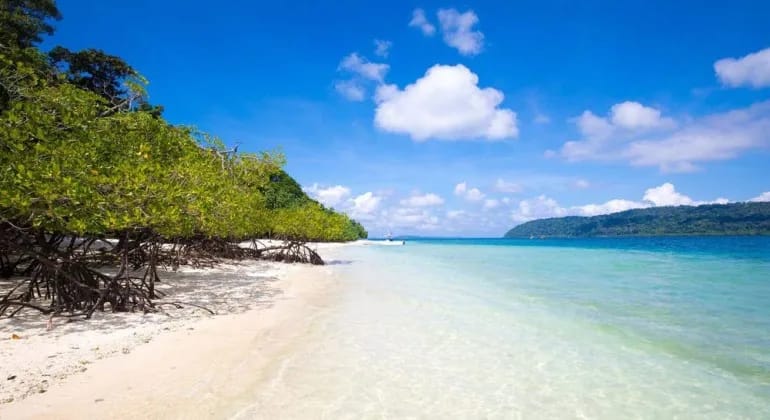
The Andaman and Nicobar Islands are one of India's most unique tropical destinations, spread across the Bay of Bengal between the Indian mainland and Southeast Asia. This vast archipelago is famous for its turquoise lagoons, white sand beaches, coral reefs, evergreen forests, fascinating colonial history and remarkable marine biodiversity. For travelers seeking an unforgettable combination of natural beauty, cultural heritage and outdoor adventure, the Andaman Islands offer an experience unlike most destinations on the mainland.

Officially administered as the Union Territory of Andaman and Nicobar Islands of India, the archipelago consists of hundreds of islands, islets and rocky outcrops, although only a small portion is inhabited and only a few are easily accessible to tourists. The islands are divided into two main geographical groups: the Andaman Islands in the north and the Nicobar Islands in the south. Most conventional holiday itineraries are based around the Andaman Islands, as tourism infrastructure, accommodation, scheduled ferry services and sightseeing facilities are concentrated there.

The administrative capital , Sri Vijaya Puram, formerly known as Port Blair , serves as the main gateway to the archipelago. From here, travelers can explore historical sites, embark on ferry rides, discover secluded beaches, and travel to famous destinations such as Swaraj Dwip (Havelock Island) and Shaheed Dwip (Blue Island) . From the vibrant diving centers and beach resorts of Swaraj Dwip to the peaceful coastal villages of Shaheed Dwip, each island has its own unique character.

The region's international reputation is closely tied to its beautiful beaches, such as Radhanagar Beach, where long stretches of pale sand are combined with clear blue waters and lush coastal vegetation. However, these islands offer much more than a traditional beach trip. Travelers can learn about the history of India's independence movement at Cellular Jail , explore mangrove waterways near Baratang, experience guided snorkeling in coral reefs, and enjoy boat trips through the natural scenery of some of India's most unique islands.

Unlike a single monument or enclosed tourist park, the Andaman and Nicobar Islands are a vast geographical destination. There is no central entry ticket, fixed opening hours or representative entrance. Visiting arrangements depend on the specific island, attraction, passenger services and applicable access rules. In particular, the Nicobar Islands and the protected tribal areas should not be considered as general tourist destinations. Responsible tourists should adhere to all government regulations and protect the ecological and cultural heritage of the islands.


Natural beauty and special attractions of the island

The Andaman and Nicobar Islands are a unique combination of tropical forests, coastal ecosystems and vast marine environments. Much of its land is covered in dense vegetation, while beaches, mangroves, rocky headlands and coral reefs create a diverse landscape. The surrounding waters are home to reef fish, sea turtles, rays and many other marine life, making select areas particularly attractive to snorkelers, divers and nature lovers.

Swaraj Island (Havelock Island)

Swaraj Island is one of the most popular destinations in the Andaman Islands. Known internationally by its former name Havelock Island, the island has beautiful beaches, diving centers, resorts, a forested interior, and a variety of organized water sports. Visitors often enjoy activities such as snorkeling, kayaking, introductory scuba diving, and sunset photography, along with a relaxing beach vacation.

Radhanagar Beach , also known as Beach No. 7, is particularly famous for its wide sandy shoreline and picturesque surroundings. Its west-facing shoreline makes it a favorite destination for watching the sunset. Elephant Beach attracts visitors interested in snorkeling and organized marine activities, while Kalapathar Beach offers a tranquil atmosphere with its striking black rocks and coastal vegetation.

Shaheed Dwip (Blue Island)

Shaheed Dwip , formerly known as Neel Dwip, is perfect for travelers who prefer a quiet island experience. Small roads, farmland, rural settlements, and picturesque beaches give the island a calm and relaxed feel. Visitors usually visit Bharatpur Beach, Laxmanpur Beach, Sitapur Beach, and the rock formation called Pratibha Setu.

The island is particularly attractive for leisurely cycling or scooter rides, walking along the beach and taking photos. Visitors interested in marine life can also join in on snorkeling or diving activities run by authorized local suppliers.

South Andaman

South Andaman combines historical monuments and accessible coastal attractions with the region's main urban center. Sri Vijaya Puram offers transport services, markets, restaurants, medical facilities, and accommodation for travelers from mainland India.

Popular tourist destinations include Corbin's Cove Beach, Zoo Tapu, Wandoor Beach, and the historic Netaji Subhas Chandra Bose Island (ross island andaman) (formerly known as Ross Island). Organized sea excursions and access to specific attractions are also available from this coastline.

North and Middle Andaman

North and Middle Andamans are particularly attractive to travelers seeking forests, mangrove creeks, geological formations, and relatively secluded beaches. Baratang is known for its limestone caves and mangrove waterways, while the Diglipur region offers access to attractions such as Ross and Smith Islands, subject to local permits and management.

Travel to these areas requires more planning than the main tourist islands. Road travel may involve controlled transport corridors, scheduled convoys, ferry crossings, and specific environmental restrictions.

Nicobar Islands

The Nicobar Islands form the southernmost part of India and are of exceptional ecological, geographical and cultural significance. Their topography includes tropical forests, rugged coastlines and sensitive habitats. Great Nicobar is also connected to Indira Point, the southernmost point of Indian territory.

Important: The Nicobar Islands are not generally open to leisure tourism. Special permits and travel eligibility rules apply, and protected tribal communities and protected areas should never be visited without permission. Travellers should consult the Andaman and Nicobar Administration before making any plans to visit the Nicobar Islands.


History and cultural heritage

The history of the Andaman and Nicobar Islands reflects indigenous traditions, maritime connections, colonial rule, political captivity, and the development of modern India. Indigenous communities had inhabited various parts of the archipelago for thousands of years, long before the arrival of European colonial powers, and maintained their distinct cultural heritage and relationship with their environment.

British colonial era

Following the Indian Rebellion of 1857, the British established a permanent penal colony in the Andaman Islands in 1858. The islands' isolation made them a centre for exile and imprisonment. In the following decades, the colonial administration built settlements, infrastructure and detention centres.

The most enduring symbol of this period is the Cellular Jail at Sri Vijaya Puram . Built in the early 20th century, this prison was associated with the imprisonment of Indian freedom fighters. Its distinctive cellular layout and solitary confinement system are important elements of India's colonial history.

World War II and Independence

During World War II, Japanese forces occupied the Andaman and Nicobar Islands from 1942 to 1945. This period is historically significant due to its political events and the suffering endured by the local inhabitants.

Subhas Chandra Bose visited the islands in December 1943, an event that is closely linked to the Indian independence movement. After the end of colonial rule and India's independence in 1947, the islands became part of the Republic of India and were later constituted as a Union Territory in 1956.

Indigenous communities and protected heritage

The islands are home to indigenous peoples with distinct histories and cultural identities, including the Great Andamanese, Jarawa, Onge, Sentinelese, Nicobarese and Champaign communities. Their lands, cultural practices and rights require special respect.

Tourists should not attempt to interact with isolated indigenous communities, enter tribal reserves, photograph community members, or organize so-called tribal safaris. In particular, North Sentinel Island is not a tourist destination. Responsible tourism requires adhering to legal protections, avoiding exploitative experiences, and recognizing the community's right to privacy and self-determination.

Contemporary island culture

Modern Sri Vijaya Puram and other populated areas reflect a diverse population with cultural connections to different parts of India. Bengali, Hindi, Tamil, Telugu and other languages ​​are heard in daily life, and local cuisine, markets, festivals and social traditions contribute to the contemporary identity of the islands.


Best things to do in Andaman Islands

From relaxing beach trips to guided marine expeditions, the Andaman Islands offer experiences suitable for couples, families, photographers, history buffs and adventure seekers. The most suitable activity depends on the island, the availability of licensed operators, sea conditions and individual physical fitness or swimming skills.

Explore famous beaches

  • Radhanagar Beach: Walk along the coastal path, take sunset photos, and relax at this one of the most well-known beaches in the archipelago.
  • Elephant Beach: Participate in snorkeling and other water-based activities supervised by authorized guides.
  • Kalapathar Beach: Take pictures of the contrast of black rocks, pale sand, and turquoise water.
  • Bharatpur Beach: Explore this popular coastal area of ​​Shaheed Dwip, known for organized boating and recreational activities.
  • Laxmanpur Beach: Enjoy the beautiful coastal views and sunset walks while being careful around the exposed rocks.
  • Corbin's Cove: An easily accessible beach near Sri Vijaya Puram for coastal scenery and select recreational activities.

Scuba diving experience

Scuba diving is one of the most popular experiences in the Andaman Islands. Authorized dive centers offer introductory sessions for beginners and more advanced experiences for qualified divers. Swaraj Island is a major diving center, and other locations may have suitable dive sites depending on operational conditions.

Beginner dive packages usually include the necessary equipment, safety instructions, and supervised underwater time. Prices vary considerably depending on location, duration, certification requirements, and photography options. Choose a reliable operator, disclose any relevant medical conditions, and follow professional advice regarding air travel after diving.

Snorkeling and marine exploration

Snorkeling allows visitors to observe the marine environment without having to take a full scuba-diving course. Reef fish, coral formations, and other aquatic life can be seen in certain snorkeling areas. Life jackets and proper supervision are essential, especially for beginners.

Never stand on coral, feed marine animals, remove snails or marine life, or enter protected waters without permission. Some marine destinations require a forest department permit or conservation fee in addition to boat rentals.

Visit the cellular jail

A visit to the cellular jail National Memorial introduces tourists to an important chapter in India's freedom struggle. The historic prison cells, exhibits, and interpretive displays help explain the experiences of those imprisoned during the British rule.

The evening light and sound show is another popular experience. Before visiting, check with the official booking authority for information on the language of the show, available times, ticket prices, and operating procedures.

Explore mangroves and limestone caves

The Baratang region is known for its mangrove waterways and limestone caves. Travel to the region usually requires combined road and water transport, and access may be limited due to forest department regulations, convoy regulations, or temporary bans. Visitors should use approved trails and refrain from disturbing wildlife.

Discover the historic islands

Netaji Subhas Chandra Bose Island preserves the picturesque ruins of colonial administrative structures, including ruined buildings gradually covered in tropical vegetation. The island can be reached by authorized boat services from Sri Vijaya Puram, subject to operating schedules.

Enjoy kayaking and coastal photography.

Guided kayaking is available through local operators in suitable locations, including selected mangrove experiences. For those who don't fancy taking part in intense water sports, taking photos of sunrise and sunset, walking along the beach, bird watching and coastal sightseeing can be enjoyable alternatives.


Ticket prices, entrance fees and visitor regulations

As a geographical destination, entry to the Andaman and Nicobar Islands is free. There is no universal ticket for visiting the islands. However, there may be significant costs for transport, accommodation, individual attractions, environmental permits, guided activities and boat trips. Entry regulations are particularly important for foreign nationals and travellers considering visiting protected areas.

Estimated tourist expenses

Expenses Estimated cost Important information
General admission to the Andaman Islands Free Valid travel documents and applicable immigration regulations will still be in effect.
Selected museums and historical attractions Approximately 20–600 taka per person Admission tickets and special presentations may be priced separately.
Private inter-island passenger ferry One-way fare per person is around 1,000-3,500 taka. Depends on route, operator, seat class and date of travel.
Government ferry Route-specific official tariff Fares and eligibility categories must be verified through the transportation authority.
Guided snorkeling Approximately 800–2,500 taka per person Equipment, boat travel, and duration of the activity affect the price.
Beginner scuba diving Approximately 3,000–6,000 taka per person Professional guidance, equipment, and included services vary.
Boat trips to visit selected islands Approximately 500–2,000 taka per person Some tours have additional reservation or island entry fees.
Scooter rental About 400-800 taka per day Terms and conditions regarding fuel, collateral, insurance, and licensing may vary.

These figures are approximate budget ranges, not confirmed ticket prices as of October 2026. Prices are subject to change without prior notice, and charges for Indian and foreign visitors to some destinations differ significantly. Please confirm all fees with official ticket offices and licensed service providers before making any payment.

Entry eligibility for Indian citizens

Indian nationals generally do not require any special permission to travel to accessible tourist areas in the Andaman Islands. Travelers should carry valid government-issued ID for flight, accommodation, ferry reservations, and restricted access checkpoints. Certain islands, protected areas, and tribal areas require additional permission or are closed to tourism.

Entry requirements for international visitors

Foreign visitors, including those from Bangladesh, must meet applicable Indian passport, visa and immigration requirements. Many designated tourist islands are exempt from the general Restricted Area Permit requirement for eligible foreign nationals, but this exemption is not universal. Specific nationality-based restrictions and island-specific regulations may apply.

Legal status may vary based on nationality, ancestry, island and intended activity. Some government guidelines list islands under broad permit exemptions, while shipping regulations specifically restrict passenger access to the Nicobar Islands. Travelers should not assume that a general permit guarantees permission to board a ship or visit protected areas, but rather must meet the actual access requirements for their intended route.

Protected areas and environmental regulations

  • Do not enter tribal reserves or attempt to communicate with isolated tribal communities.
  • Do not visit North Sentinel Island or approach its inhabitants.
  • Obtain the necessary permits for protected islands, marine parks, and conservation areas.
  • Use licensed boats, guides, and water sports service providers.
  • Avoid single-use plastics, littering, damage to coral reefs, and collecting protected natural resources.
  • Follow beach safety notices, lifeguard instructions, and temporary access restrictions.
  • Please bring the original ID used for the ferry reservation.

Passengers on government ferries must follow the reporting guidelines issued by the Directorate of Shipping Services. According to the published conditions, passengers must arrive approximately two hours before the ferry departs, and boarding gates usually close thirty minutes before the departure time.

For official information, see the Andaman and Nicobar Islands Tourism Department (tourism.andamannicobar.gov.in) , Department of Shipping Services and the government's Frequently Asked Questions on Tourism . (faq.php)


Best time to travel

The Andaman Islands can be visited all year round, but the months of October to April are generally the most convenient for traditional sightseeing, island hopping, beach holidays and organised marine activities . Many tourists particularly prefer the months of November to March, as a variety of tourist services are usually available during this time.

October to November

This time can be attractive for those who want a combination of sightseeing and beach activities. Availability of ferries and water sports should be confirmed separately, especially when planning trips to remote islands.

December to February

These months are especially popular for island getaways, family trips, honeymoons, and stays at seaside resorts. Due to high demand, accommodations and ferry tickets may sell out, so it is recommended to make reservations in advance.

March to April

March and April are ideal for many outdoor experiences, including beach trips, photography, visiting historic sites, and professionally supervised marine activities. Morning trips are often convenient for travelers who plan multiple activities in one day.

May to September

Travel is still possible during these months, but seasonal marine conditions may cause more frequent disruptions to marine activities, small boat trips, and inter-island travel. Travelers should maintain flexible itineraries and avoid relying on strictly scheduled next connections.

Recommended time to visit the sights: Early morning and late afternoon are great for walking along the coastal paths and taking photos. Certain boat trips, visits to protected areas and water activities must adhere to their approved operating schedules. Most first-time Andaman tourists should allocate at least five to seven days to thoroughly enjoy the main tourist circuit.


How to reach

The main gateway to the Andaman and Nicobar Islands is the Bir Savarkar International Airport at Sri Vijay Puram (formerly Port Blair) . The archipelago is separated from the Indian mainland by the Bay of Bengal, so most tourists arrive by air. Passenger ships also connect the islands to selected ports on the mainland, while ferries, buses, taxis, auto-rickshaws and rental cars provide onward transport.

By air from Dhaka, Bangladesh

  1. Step 1: Arrange a valid passport and appropriate Indian visa before travel. Bangladeshi travelers should check current visa application, port of entry, and air transit regulations.
  2. Step 2: Find a flight route from Hazrat Shahjalal International Airport in Dhaka to Veer Savarkar International Airport in Sri Vijayapuram, which usually connects via an Indian gateway like Kolkata or another suitable hub.
  3. Step 3: Allow sufficient connecting time for Indian immigration, baggage collection, and terminal or airline changes, if required according to the itinerary.
  4. Step 4: After reaching Sri Vijaya Puram, take a prepaid taxi, local cab or hotel transfer to your accommodation.
  5. Step 5: Travel to Swaraj Dwip, Shaheed Dwip or other authorized destinations via a separately booked ferry or authorized transportation service.

It should not be assumed that direct scheduled flights will be available between Dhaka and Sri Vijayapuram. Flight routes, airline operations, visa requirements and availability of connecting flights vary, so passengers should check the full itinerary before purchasing tickets. Total travel time depends largely on connecting flights and immigration procedures.

From Dhaka via Kolkata by bus or train

For travelers who have the appropriate entry permits to India, a combined land and air itinerary may be possible. Where available and permitted, international bus or rail services can connect Kolkata with Bangladesh. Travelers can then proceed to Netaji Subhas Chandra Bose International Airport and take any available domestic flight to Sri Vijayapuram.

The Dhaka-Kolkata section alone can take a good part of the day, depending on services, border procedures and transfers. The availability of international rail services must be checked, as cross-border operations may be suspended or modified. There is no direct rail link between the Andaman Islands and the Indian mainland.

Instead of booking flights to the next island with unrealistically short connections, have a flexible transit time in Kolkata. International bus and train fares depend on the operator and the current cross-border arrangements, so these should be checked directly rather than assumed as fixed costs.

By air from major cities in India

Veer Savarkar International Airport is connected to major cities in India, including Kolkata, Chennai, Bengaluru, Hyderabad, New Delhi and Visakhapatnam, although the number of routes and flights varies. Kolkata and Chennai are particularly popular gateways to the mainland for tourists heading to the Andamans.

Flight durations vary depending on the route, and some cities may require connections. Travelers should compare the full itinerary, baggage allowance, cancellation policies, and arrival times, not just the advertised fare.

From mainland India by passenger ship

Historically, government passenger ships have connected Sri Vijaya Puram with Chennai, Kolkata and Visakhapatnam. Under favourable conditions, these journeys usually take around 50–60 hours, although actual schedules and travel times may vary.

Passenger ships are not the same as frequent daily ferry services. Sailings can be limited, ticket categories vary, and departure dates must be aligned with official schedules. For most international travelers and visitors with limited vacation time, air travel is much more practical.

From the airport to Sri Vijaya Puram city center

The airport is located within the Sri Vijaya Puram urban area. Depending on the route and specific accommodation, many of the city's central hotels and popular tourist attractions are located approximately 3–7 km away.

  • Taxi: A convenient option for families and travelers with luggage. To budget, plan on around 300-700 taka for a short-distance airport ride within the city, but negotiate or confirm the actual fare before you start your journey.
  • Auto rickshaw: If available, can be suitable for short journeys within the city. The estimated cost of a local journey can be around 100–300 taka, depending on the distance and bargaining.
  • Hotel Transfer: Some hotels offer airport pickup for an additional charge or as part of a package.
  • Public transport buses: Local buses serve some parts of South Andaman, but these routes may not be convenient for everyone arriving at the airport or for those traveling with a lot of luggage.

These local fares are estimated planning allowances, not verified government rates. Travelers should verify prices locally, especially during busy arrival periods.

From Sri Vijaya Puram to Swaraj Island

  1. Go from your hotel or airport to the ferry terminal specified on your confirmed ticket.
  2. Present the required original identification and reservation details.
  3. Board any government or private passenger ferry heading towards Swaraj Island.
  4. Upon reaching the designated jetty, arrange to take a taxi, auto-rickshaw, or pick up from the hotel.
  5. Move to your residence or to sightseeing places like Radhanagar Beach.

Private passenger ferries usually take around 1.5 to 2.5 hours, depending on the ship and service. It is important to check the exact departure jetty, sailing times and luggage policies, as different companies use different systems.

From Sri Vijaya Puram to Shaheed Dweep

Shaheed Dwip is connected to Sri Vijaya Puram and some routes by scheduled passenger ferries from Swaraj Dwip. The journey time is usually around one to two hours, depending on the departure point and the service provider.

Upon arrival, tourists can arrange for local auto-rickshaws, taxis, bicycles or scooters to get to the hotel and beach. Ferry tickets should be booked in advance when planning a multi-island trip.

Local transportation and vehicle rentals

  • Auto-rickshaw: Suitable for short distance travel to Sri Vijaya Puram and populated tourist islands.
  • Private taxi: Perfect for airport transfers, family trips, and long-distance sightseeing.
  • Scooters for rent: Widely used on Swaraj Island and Shaheed Island. Travelers are required to have a valid driving license and should check the rental terms and conditions.
  • Government buses: Available on selected routes in South Andaman and other populated areas, especially for affordable local transport.
  • Ferries: Essential for travel between the main tourist islands.
  • Helicopter Service: Limited inter-island service may be operational subject to certain eligibility, booking and priority rules and should not be assumed to be freely available for general sightseeing.

Important transportation landmarks

Passengers will often see the Bir Savarkar International Airport , Phoenix Bay , the designated passenger ferry terminal, Aberdeen Jetty and the Rajiv Gandhi Water Sports Complex . These are convenient landmarks for travel, although not all serve the same route. Before embarking on your journey, make sure you check the correct terminal printed on your ticket.

Government transport information is available from the Andaman Tourism Department's transport guidelines (how to reach.php) and the Department of Shipping Services . (dss.andamannicobar.gov.in)


Where to eat

The Andaman Islands offer an interesting mix of Indian regional cuisine, local seafood dishes, vegetarian dishes and modern coastal cuisine. Dining options are generally best found in the main tourist areas of Sri Vijaya Puram and Swaraj Island and Shaheed Island. Dining options are limited in smaller settlements and remote islands.

Seafood specialties

Freshly prepared fish is a feature on many island menus. Depending on availability, restaurants may serve grilled fish, fish curries, shrimp paste, crab paste, and coconut-based sauces. The culinary tradition here is influenced by Bengali, South Indian, and other regional cuisines of India.

Seafood prices are not always fixed. Before ordering, ask if the price is per plate, per kilogram, or by the size of the fish. Choose a reputable establishment that serves healthy seafood and complies with local fishing laws.

Food at Sri Vijaya Pooram

Sri Vijaya Puram has the largest number of casual restaurants, vegetarian food outlets, cafes, bakeries and seafood shops. The Aberdeen Market area and its surrounding commercial streets are convenient for travelers looking for affordable food or familiar Indian cuisine.

Visitors can find rice dishes, dosas, idlis, biryani, curries, fried snacks, and freshly prepared drinks. Small local restaurants are convenient for budget travelers, while hotel restaurants may have a more extensive menu.

Dining at Swaraj Island

There is a well-established culture of cafe and resort dining on Swaraj Island, especially around Govinda Nagar and Vijayanagar. Popular dishes include grilled seafood, Indian thali, pasta, pizza, sandwiches, breakfast bowls and fresh fruit juices.

Beachside restaurants can provide a memorable setting for a relaxed meal, but opening times and availability may vary with the tourist season. Tourists staying away from the main population centres should confirm evening dining options with their accommodation provider.

Dining at Shaheed Dwip

Shaheed Dwip offers a relatively quiet dining experience, with small cafes, local restaurants and home-based kitchens. The food here generally focuses on Indian home cooking, seafood and simple vegetarian dishes. Compared to the establishments in Sri Vijay Puram, restaurants here may have limited food stocks or may close earlier.

Indicative food budget

Food type Estimated cost per person
Local breakfast or snack ₹80–₹250
Simple vegetarian food ₹150–₹350
Lunch or dinner at a casual restaurant ₹250–₹600
Seafood or resort restaurant food ₹500–₹1,500 or more

Food prices are approximate and do not reflect current menu prices. Please bring drinking water with you when traveling, check food allergies, and remember that secluded beaches may not have reliable food options.


Where to stay?

Accommodations across the Andaman Islands range from simple guesthouses and comfortable city hotels to boutique beach retreats and luxurious island resorts. The best place to stay depends on your priorities—visiting historical sites, scuba diving, relaxing on the beach, budget travel, or convenient ferry connections.

Sri Vijaya Puram: Best for transportation and city sightseeing

Sri Vijaya Puram is a great base for first-night stays, early morning departures, and travelers interested in historical sites. Accommodations near Aberdeen Market and the central city area provide easy access to attractions such as restaurants, shopping, transportation services, and the Cellular Jail.

This is especially useful for those who arrive late, leave early, or plan day trips to nearby historical and coastal sites.

Swaraj Island: Best for beaches and scuba diving

Swaraj Island is a favorite destination for many beach-loving tourists. Resorts and guesthouses are spread across various areas including Govinda Nagar and Vijayanagar, while a select few high-end accommodations are located near the picturesque coastal area.

Budget travelers can look for guesthouses and basic hotels, while couples and families can opt for beach resorts with restaurant facilities and transportation assistance. Travelers planning to scuba dive should consider accommodations conveniently located near their chosen dive center.

Shaheed Dwip: Best for a quiet island vacation

Shaheed Dwip is an ideal place for those who want a peaceful environment and a break from the hustle and bustle of the city . Accommodation here is mainly in small hotels, cottages, guesthouses, and resorts. (neil island)

A night or two provides enough time to explore the main beaches without having to rush for ferry services. Travelers should ensure the availability of transportation, food, and reliable communication services before choosing a secluded accommodation.

Estimated price of accommodation

Housing Department Estimated cost per room per night
Simple guesthouse or budget hotel ₹1,000–₹2,500
Mid-range hotel ₹2,500–₹6,000
Cozy boutique or beach resort ₹5,000–₹12,000
Luxury island resort ₹12,000–₹35,000 or more

Rates vary significantly depending on the island, room type, capacity, demand, inclusions, and booking date. Taxes, meals, transportation, and activity packages may be charged separately.

Accommodation booking advice

  • Book your accommodations well in advance of the main holiday season and popular winter travel dates.
  • Check the distance between your hotel and the arrival jetty.
  • Ask if airport or ferry transfers are included.
  • Ensure power backup, mobile connectivity, and Wi-Fi availability, if these are essential.
  • Please read the cancellation policy carefully, as check-in dates may be affected if there are disruptions to inter-island transportation.
  • Choose a licensed accommodation provider and save a copy of your reservation confirmation.

Suggested itinerary

A well-planned itinerary helps tourists explore the islands without spending too much time traveling between ferry terminals. For first-time travelers, six or seven days is usually enough for a balanced introduction to the main tourist attractions. Shorter trips are possible, but the frequent travel between islands can reduce the time available for sightseeing.

Day 1: Arrival in Sri Vijaya Puram

Upon arrival at Veer Savarkar International Airport, check into your hotel and explore the city centre. Visit the cellular jail as per the operating schedule. You may consider attending a historical presentation in the evening after confirming ticket availability.

Day 2: Swaraj Island Tour

Take a pre-booked ferry to Swaraj Island. Check-in at your accommodation and spend the afternoon exploring Radhanagar Beach . Relax and enjoy the sunset before returning to the hotel.

Day Three: Water Sports and Island Exploration

Go for a basic scuba diving or snorkeling experience with a reputable operator. Alternatively, visit elephant beach or spend timeat Kalapathar Beach . All marine activities should be planned according to the operator's approved schedule and actual conditions.

Day 4: Transfer to Shaheed Dwip

Travel to Shaheed Dwip via the available inter-island ferry. Visit Bharatpur Beach and Laxmanpur Beach, then enjoy the peaceful atmosphere of the island. Avoid planning too many activities immediately after the ferry ride.

Day 5: Return to Shaheed Dweep and Sri Vijaya Puram

Visit the natural bridge at the right time of the tide and if you have time, go to Sitapur beach. Take a ferry back to Sri Vijaya Puram and stay overnight there.

Day 6: South Andaman Tour

Take the opportunity to visit Netaji Subhas Chandra Bose Island , visit Zoo Tapu, or explore Wandoor Beach. Travelers interested in history can also visit museums and other heritage sites located around the capital. (ross island andaman)

Day 7: Departure

Enjoy a leisurely breakfast and head to the airport, leaving plenty of time for check-in and security formalities. If your return flight is early in the morning, it is usually safer to stay in Sri Vijaya Puram the night before than to rely on the same-day inter-island ferry connection.

Planning Note: The itinerary is subject to change depending on ferry schedules, hotel availability, tourist interests, and seasonal restrictions. North Andaman destinations such as Baratang and Diglipur require additional time and an extended itinerary is more suitable for these.


Travel tips and safety guidelines

Traveling to the Andaman Islands requires a bit more preparation than traveling between mainland cities. Due to the destination's island geography, regulated conservation areas, and reliance on sea transportation, planning ahead can significantly enhance the experience.

Travel essentials

  • Identity proof: Carry a valid passport, visa if applicable, and the original identity proof used for transport booking.
  • Ferry Reservations: Book popular inter-island routes in advance and reconfirm departure terminals.
  • Cash: Carry some Indian Rupees, as digital payment facilities may be limited in smaller establishments and remote islands.
  • Mobile connectivity: Confirm roaming and network support with your service provider before arriving. Internet connectivity may be erratic in remote areas.
  • Medical Supplies: Bring necessary prescriptions and personal medical supplies, especially when outside Sri Vijaya Puram.
  • Clothing: Bring light clothing, comfortable walking shoes, swimwear appropriate for the planned activity, and appropriate equipment for sun protection.
  • Water Safety: Enter the ocean only in authorized areas and follow the instructions of lifeguards, guides, and operators.
  • Wildlife: Never approach crocodiles, disturb turtle nesting, or enter mangrove channels without an authorized guide.
  • Waste: Dispose of trash responsibly and avoid unnecessary plastic wrap.

Swimming and marine safety

Beautiful water doesn't always mean a safe environment for swimming. Currents, underwater rocks, marine life, restricted areas, and limited lifeguard services can pose risks. Swim only in designated areas and never assume that a secluded beach is supervised.

Saltwater crocodiles inhabit some coastal and mangrove environments in the Andaman region. Follow all local precautions and avoid entering unfamiliar estuaries, creeks or mangrove waters. Use trained operators and appropriate safety equipment for diving and snorkeling.

Respect for the local community

Residents depend on healthy marine ecosystems and sustainable tourism. Respect local customs, ask permission before photographing people, avoid trespassing on private property, and support legitimate local businesses.

Protected indigenous areas are not suitable for visiting without permission. Never photograph, interact with, or offer food or goods to isolated communities. These restrictions protect the rights, health, and safety of indigenous people.

Emergency plan

Sri Vijaya Puram has more comprehensive medical and emergency services than smaller islands. Travelers who require serious medical care should be careful about their accommodation and transportation arrangements. India's national emergency number is 112 , although connectivity may be limited in remote areas.

Allow extra flexibility before important international flights. Ferry cancellations, temporary access restrictions, and operational changes can affect island travel plans at short notice.


Nearby attractions

The Andaman and Nicobar Islands are not a single district-sized attraction, but rather a vast geographical area. The following destinations are best suited to be included in a typical Andaman tourist itinerary. Some of these are close to Sri Vijaya Puram, while others require a separate ferry ride or a long road trip.

Places to visit in and around Sri Vijaya Puram

  • Cellular Jail National Memorial : A major historical site associated with India's freedom struggle, located within Sri Vijaya Puram.
  • Corbin's Cove Beach : An easily accessible coastal destination close to the capital, perfect for travel and relaxation.
  • Netaji Subhas Chandra Bose Island (ross island andaman) : A historic island filled with colonial-era ruins and coastal natural beauty, accessible by authorized boat services.
  • North Bay Island : A popular travel destination for guided marine activities and coastal natural beauty.
  • Zoo Tapu : A scenic destination in South Andaman, known for its coastal views, bird watching opportunities, and sunset photography.
  • Wandoor Beach : A beautiful beach near the Mahatma Gandhi Marine National Park area.

Interesting places in Swaraj Island

  • Radhanagar Beach : A beautiful west-facing beach, known for its extensive coastline and picturesque sunset views.
  • Elephant Beach : A popular spot for snorkeling and organized recreational activities.
  • Kalapathar Beach : A quiet beach with black coastal rocks and charming sea views.
  • Vijayanagar Beach : A picturesque coastal area, with resorts, comfortable walks, and island accommodation.

Interesting places on Shaheed Dwip

  • Bharatpur Beach : A popular beach located near the island's main arrival area, with organized recreational activities.
  • Laxmanpur Beach : A picturesque coastal destination, especially known for watching the sunset.
  • Natural Bridge : A naturally formed coastal rock, which is best explored by paying attention to tidal conditions and safe walking paths.
  • Sitapur Beach : A picturesque eastern beach, known for its dawn coastal views.

Extended tour to North and Middle Andaman

  • Baratang Island : Gateway to mangrove waterways and limestone cave tours, which are subject to a controlled transportation system.
  • Baratang Limestone Caves : A geological formation accessible through organized transportation and designated forest trails.
  • Ross and Smith Islands : Beautiful islands near Diglipur connected by a unique sandy strip, where entry of visitors is subject to permits and local conditions.

The most convenient combination for a first-time visitor is Sri Vijaya Puram, Swaraj Dwip and Shaheed Dwip . If you have extra days at your disposal, travelers can consider visiting North and Middle Andaman. Always check government permits, ferry schedules and the opening status of each attraction before traveling.

Frequently Asked Questions (FAQ)

The Andaman and Nicobar Islands are a union territory of India, located in the Bay of Bengal, southeast of the Indian mainland and west of parts of Southeast Asia. The archipelago consists of two main island groups: the Andaman Islands to the north and the Nicobar Islands further south. Its administrative capital is Sri Vijayapuram (formerly Port Blair) on South Andaman Island . Most tourism is concentrated in the more accessible Andaman Islands rather than the more restricted Nicobar Islands.

logo ColoZai

ColoZai is a trusted travel guide and destination explorer platform in Bangladesh. We are making travel simple, authentic, and accessible for everyone.

Need Help ?

We are Always here for you! Knock us on Whatsapp (10AM - 10PM) or Email us.