Cairo is home to a wealth of cultural attractions. Since the main sites are spread across Cairo and neighboring Giza, it is possible to save valuable time by geographically grouping the sights together.
1. Pyramids of Giza and Great Sphinx
The Giza Plateau is home to the Pyramids of Khufu, Khafre, and Menkaure, massive royal tombs built during the Old Kingdom of Egypt. The Great Pyramid of Khufu is the only surviving wonder of the ancient world from the conventional list of the Seven Wonders. The nearby Great Sphinx, with its lion body and human head, remains one of the world's most recognizable monuments.
Located in nearby Giza, the plateau is usually visited as a half-day or full-day trip from Cairo. Travelers can view the pyramids from specific viewpoints, explore the designated visitor areas, and purchase separate tickets to enter specific pyramids if available. It is recommended to arrive early in the morning to get the best view of the sights.
2. The Egyptian Museum in Tahrir Square
The historic Egyptian Museum opened in 1902 in a purpose-built building in the heart of Cairo and still displays a vast collection of ancient Egyptian antiquities. Its galleries contain statues, coffins, jewelry, papyri, funerary objects, and objects representing different periods of Egyptian civilization. Although important collections have been moved to the new museum, the Tahrir Museum remains an important institution with a large collection of objects on display.
The museum is located next to Tahrir Square and is easily accessible from Sadat Metro Station. Allow about two to three hours for a thorough tour, or more if you enjoy the detailed archaeological collection.
3. Grand Egyptian Museum
The Grand Egyptian Museum, located near the Giza Pyramids, is a major new cultural destination dedicated to ancient Egyptian civilization. Subject to the terms of the purchased ticket, visitors have the opportunity to visit the Grand Hall, the Grand Stairs, the Main Gallery, the Tutankhamun Gallery and the Khufu Boats Museum. Its monumental exhibits, modern exhibition design and extensive interpretive facilities make it an important addition to any Cairo and Giza travel itinerary.
Tickets must be purchased through the official website tickets.gem.eg . The Grand Egyptian Museum is located in Giza, not downtown Cairo, so travelers should allow extra time for road travel.
4. Cairo Citadel and Muhammad Ali Mosque
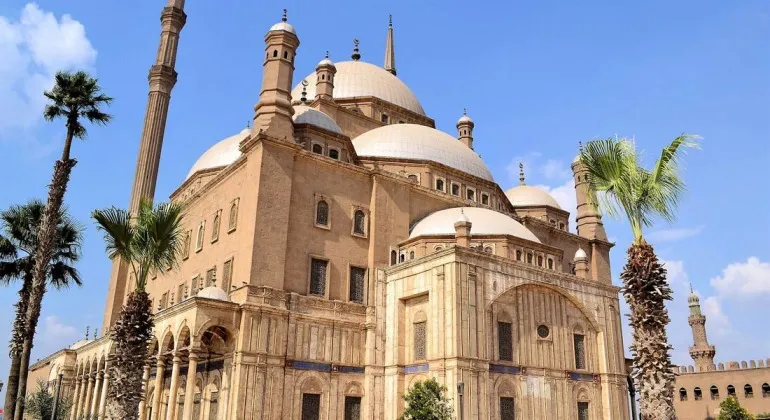
The Citadel of Saladin is located on a high point above historic Cairo. Its construction began during the reign of Saladin in the late 12th century as part of an effort to strengthen the city's defenses. The structure subsequently served as an important center of power for centuries.
Its most famous structure is the Muhammad Ali Mosque, often known as the Alabaster Mosque, which features a towering dome and minaret. Visitors can admire the Ottoman-inspired architecture, explore the fort's designated areas, and enjoy sweeping views of central Cairo. The fort grounds usually require a separate entrance ticket.
5. Khan El-Khalili Market
Khan el-Khalili is one of Cairo's most famous traditional shopping areas. Its historic streets and commercial alleys are lined with shops selling handicrafts, brassware, textiles, jewelry, decorative lamps, perfumes, spices, and other goods.
Even if shopping is not your main objective, strolling through the bazaars is an essential cultural experience. Visitors can stop at traditional coffeehouses, admire the nearby Islamic architecture, and take photos of the picturesque streets while remaining respectful of the locals and shopkeepers. Bargaining is common in the many souvenir shops, although not all shops negotiate prices.
6. Al-Azhar Mosque and Al-Muiz Street
Founded in the 10th century, Al-Azhar Mosque is one of the most historically influential institutions of Islamic learning. Its architectural and scholarly importance make it a significant cultural and religious monument. Visitors should adhere to the prayer schedule, dress modestly, and follow any restrictions imposed during prayer.
Nearby Al-Muiz Street is one of Cairo's best historic walking routes. It features the finest examples of architecture from various Islamic dynasties, including ornate arcades, mosques, schools, and historic commercial buildings. The area is particularly picturesque during late afternoon and evening strolls.
7. Coptic Cairo and the Hanging Church
Old Cairo preserves an important collection of Christian and Jewish heritage sites. The Hanging Church, also known as the Church of the Virgin Mary, is famous for its historic architecture and its elevated position atop a Roman-era colonnade. Other notable sites include the Church of Saints Sergius and Bacchus, the Coptic Museum, and the Ben Ezra Synagogue.
These sites provide important insights into Egypt's diverse religious history. The Mar Girgis Metro Station on Line 1 is a convenient way to access this district.
8. National Museum of Egyptian Civilization
The Egyptian National Museum of Civilization, located in the Fustat area, offers a comprehensive picture of Egyptian cultural history across different eras. Its main attraction is the Royal Mummy Hall, where royal mummies are displayed in a meticulously designed environment.
This museum complements the Egyptian Museum in Tahrir Square and the Grand Egyptian Museum. Visitors interested in learning about Egyptian civilization after the Pharaonic period should consider including it in their itinerary.
9. The Nile River and Zamalek
For millennia, the Nile has shaped Egypt's history, agriculture, economy and cultural identity. In Cairo, tourists can enjoy riverside walks, restaurants and boat trips. Traditional felucca boat rides are particularly popular at sunset, while Zamalek on Gezira Island is home to galleries, cafes, restaurants and charming streets.
Typically, cruise prices are set separately, and private travel arrangements should be made only after confirming the duration of the trip, route, number of passengers, and total cost.

 ColoZai