Thimphu, Bhutan – The Complete Travel Guide to Bhutan’s Himalayan Capital

Thimphu, Bhutan – The Complete Travel Guide to Bhutan’s Himalayan Capital

Thimphu
·

15 October 2026

Travel Overview & Quick Facts

Location
Thimphu
Admission / Entry Fee
Thimphu is the capital city of Bhutan and is not a ticketed attraction. There is no general entry fee to enter or explore the city. Separate entry fees may apply for individual museums, monasteries, cultural attractions and guided experiences. International visitors must meet Bhutan’s immigration requirements and pay the applicable Sustainable Development Fee (SDF). The general SDF for most non-Indian international tourists is USD 100 per adult per night. Indian nationals generally pay BTN 1,200 per person per night. A special SDF discount of USD 15 per night is available for the first 15,000 eligible Bangladeshi visitors each year, subject to annual allocation and confirmation of current regulations. Visa application fees, accommodation, meals, transportation and attraction entry fees are additional where applicable. Please check current requirements at https://bhutan.travel/visa before travelling.
Opening Hours
Open 24 hours
Category / Type
Cultural and traditional destinations, Himalayan capital cities, Buddhist religious tourism, nature and scenic tourism

Introduction to Thimphu, Bhutan – The Complete Travel Guide to Bhutan’s Himalayan Capital

Thimphu, Bhutan is the country's attractive capital, nestled in the foothills of the Eastern Himalayas in western Bhutan. Famous for its traditional architecture, Buddhist heritage, majestic monasteries, picturesque mountain scenery, and distinct national identity, Thimphu offers travelers the opportunity to experience one of South Asia's most culturally distinct destinations. Unlike many modern capitals, Thimphu maintains an atmosphere where centuries-old religious traditions coexist with government institutions, modern cafes, handicraft markets, and thriving urban areas.

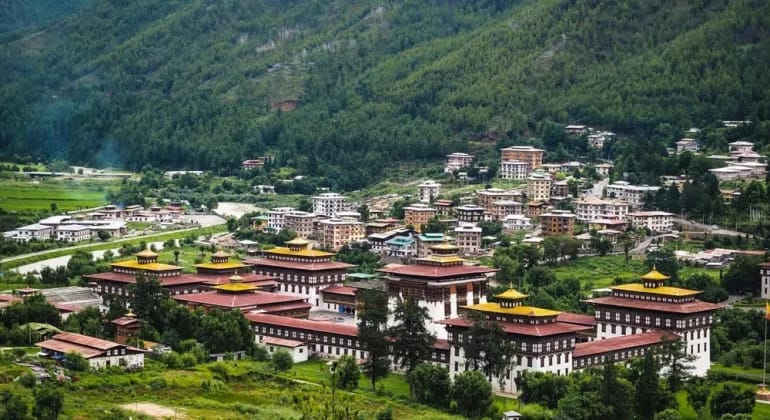
Located in the Thimphu District of western Bhutan, the city is located in a mountain valley at an altitude of about 2,300 meters above sea level. The Wang Chu River flows through the valley, and the surrounding forest-covered mountains rise high above it. The buildings are decorated with intricately designed wooden windows, colorful architecture, and distinctive sloping roofs. Thimphu became the permanent capital of Bhutan in 1955 and has since become the country's administrative, political, and cultural center.

Visitors to Thimphu can see attractions such as Buddha Dordenma , the towering Tashicho Dzong , the National Memorial Chorten, Changgangkha Lakhang, and the Royal Textile Academy. The city is also known for its traditional arts, religious ceremonies, Bhutanese cuisine, and exceptional traffic management system, including the famous manual traffic intersection in the city center.

Thimphu is a fascinating destination for culture lovers, photographers, couples, families, history buffs, and travelers interested in Buddhist heritage. From peaceful monastery visits and museum exhibits to bustling local markets and picturesque mountain views, this capital offers a memorable introduction to Bhutan. It also serves as a convenient hub for exploring the surrounding Thimphu Valley and planning trips to other destinations in the kingdom.

Tourists from Bangladesh can combine a trip to Thimphu with a larger bhutan itinerary , which often starts in Paro and continues to the capital. This journey is particularly attractive to visitors seeking Himalayan scenery, traditional architecture, and meaningful cultural experiences.


History and cultural significance

The importance of Thimphu is not limited to its role as the administrative capital of Bhutan. The valley has been associated with Buddhist practice for centuries, and its numerous monasteries, temples, and sacred sites reflect Bhutan's deep connection to Vajrayana Buddhism.

From the Sacred Valley to the National Capital

Before becoming the capital of Bhutan, Thimphu was an important religious and regional settlement. Under the leadership of the Bhutanese monarchy, the city gradually became the country's main administrative center in the 20th century. The decision to establish Thimphu as the permanent capital in 1955 marked an important chapter in Bhutan's modern development.

The capital currently houses government ministries, educational institutions, religious centers, cultural organizations, and national administrative offices. Despite continued development, traditional Bhutanese architectural principles are clearly visible throughout the city.

Bhutanese architecture and national identity

One of Thimphu's distinctive features is the architectural continuity of historic and contemporary buildings. Traditional ornamental windows, ornate painted woodwork, and Bhutanese roof designs can be seen throughout government offices, hotels, businesses, and residential areas.

The city's vast palaces, temples, and monasteries highlight Bhutan's long-standing relationship between religious institutions, political authority, and cultural identity. Visitors interested in preserving heritage will find Thimphu particularly rewarding, as traditional artistic movements are not confined to museums but are a part of everyday life.

Religion and daily life

Buddhism influences Thimphu's festivals, sacred sites, rituals, architecture, and social traditions. Prayer flags can be seen on the slopes of mountains, prayer wheels surround religious monuments, and residents visit monasteries and chortens for daily worship. Traditional clothing, including the 'gho' for men and the 'kira' for women, is still particularly prevalent in institutional and ceremonial settings.


Best things to see and do in Thimphu

Thimphu is home to a wealth of cultural attractions, religious monuments, museums, natural attractions, and traditional shopping experiences. It is possible to fit many of the attractions into a one-day itinerary, but visitors can explore at a more leisurely pace if they allow two or three days.

1. Buddha Dordenma – The Great Buddha Statue

Buddha Dordenma, located on a mountain slope in Quentsel Phodrang overlooking the Thimphu Valley, is one of Bhutan's most famous monuments. Standing at approximately 51.5 meters tall, this massive bronze Buddha statue dominates the surrounding landscape and offers sweeping views of the capital and nearby mountains.

The statue is surrounded by numerous smaller Buddha statues, and the surrounding grounds offer ample space for viewing and photography. Visitors should dress modestly and adhere to any restrictions on photography inside religious sites.

2. Tashichho Dzong – Bhutan's historic fortress-monastery

Tashicho Dzong is one of the most important structures in Thimphu. This magnificent fortress-monastery serves important governmental and religious functions and is associated with the royal throne room and the central monastic administration of Bhutan.

Its massive whitewashed walls, red decorative panels, golden roofs, and meticulously maintained courtyards make it an architectural masterpiece. Tourist access is limited to specific areas and permitted visiting hours, which may vary during official ceremonies and government activities.

3. National Memorial Chorten

The National Memorial Chorten is a prominent Buddhist monument dedicated to the memory of Jigme Dorji Wangchuck, the third king of Bhutan. Built in 1974, the Chorten is an important meeting place for religious ceremonies.

Visitors can watch devotees circumambulate the monument in a clockwise direction, spinning prayer wheels and offering prayers. This site provides insight into the daily spiritual practices of the people of Bhutan. Modest dress and respectful behavior are essential.

4. Changgangkha Lakhang

Situated on a hillside above the city, Changgangkha Lakhang is a historic Buddhist temple associated with the religious heritage of the Thimphu Valley. Local families often come here to seek blessings for their children.

The temple's elevated position offers panoramic views of the city, while its traditional architecture and religious atmosphere provide a more intimate cultural experience than some of Thimphu's larger sights.

5. Royal Textile Academy

The Royal Textile Academy introduces visitors to Bhutan's advanced weaving traditions, textile designs, formal wear, and regional clothing styles. Its exhibitions help explain how textiles express cultural identity, artistic heritage, and social customs in Bhutanese society.

Travelers interested in traditional crafts may want to consider visiting local weaving shops and textile markets along with a visit to the academy.

6. Motithang Takin Archive

The Royal Takin Sanctuary in Motithang offers a chance to observe the takin, Bhutan's rare national animal. This protected wildlife sanctuary is especially attractive to families and travelers who love to learn about Himalayan wildlife.

Visitors should stay in designated public areas, refrain from feeding animals, and follow local guidelines. Opening times and access arrangements should be confirmed before visiting.

7. Centennial Farmers Market

The Centennial Agricultural Market area offers an interesting opportunity to get acquainted with Bhutan's agricultural products and local food traditions. Depending on the current market activities and the layout of the stalls, visitors may come across seasonal vegetables, local cheeses, dried chilies, and other regional products.

Market activity and stall locations may vary, so visitors should make sure to check where the main vendors are doing business during their stay.

8. Traditional handicrafts and shopping

Thimphu's handicraft shops and artisan workshops sell woven textiles, traditional clothing, handmade paper, wooden items, decorative items, and souvenirs inspired by local traditions. The National Institute for Zorig Chusum, associated with Bhutan's thirteen traditional arts and crafts, is particularly relevant for travelers interested in traditional skills.

Access to workshops, student exhibitions, and guided tours is subject to institutional schedules and permissions. Purchasing products from reputable local artisans can provide meaningful support for traditional crafts.

Best time to visit Thimphu

Thimphu can be visited all year round , but the months of March to May and September to November are particularly attractive for sightseeing, cultural exploration, photography, and various outdoor activities.

Duration Travel experience Recommended activities
March to May Spring scenes, flower-filled landscapes, and seasonal cultural activities Monastery visits, sightseeing, photography and valley tours
June to August Green hilly landscape and a generally more peaceful travel experience Museums, traditional handicrafts, cafes and convenient itineraries
September to November Popular autumn travel season with important cultural festivals Festivals, heritage tours, photography and scenic spots
December to February A quiet time with unique winter mountain scenery. Religious sites, city tours and cultural attractions

The annual Thimphu Tshechu is a major religious and cultural festival, featuring traditional masked dances, ceremonial performances, and gatherings. Its dates are determined by the Bhutanese lunar calendar and therefore change each year. Travelers interested in attending the festival should check the official festival schedule and reserve accommodation in advance.

For a pleasant travel experience, start your outdoor activities in the morning and plan for museums, shopping, or cultural events later in the day. Leave extra time for visiting religious sites during events or national holidays.


Ticket prices and entry rules

There is no general admission ticket to enter Thimphu city. Visitors can explore the main streets, commercial areas, and many attractions without purchasing a city entrance ticket. However, certain attractions may require an entrance fee, a guide, or special permission.

Summary of entrance fees and travel expenses

Item Fees or requirements
General admission to Thimphu city Free; no separate municipal tourism entrance ticket.
Public roads and accessible sightseeing spots Usually free
Museums, cultural centers and selected heritage attractions Individual admission fees may apply; check directly for current rates.
Religious monuments and monasteries Entry requirements vary; in some cases, an entrance fee is required or tourist access is restricted.
Bhutan Sustainable Development Fee The typical rate for most non-Indian international visitors is USD 100 per adult per night; nationality-based discounts may apply.
Indian Inspector SDF Usually 1200 baht per person per night.
Qualified Bangladeshi Inspector SDF USD 15 per person per night under limited annual discount for the first 15,000 eligible visitors; confirm availability.
Visa processing General advance visa application fee is usually $40; check the rules applicable to Bangladeshi citizens.

Important: The Sustainable Development Fee is a national tourism tax, not a ticket to Thimphu or to any individual attraction. It is usually charged based on the number of nights spent in Bhutan. Accommodation, transportation, food, and attraction tickets are separate costs.

Visa and immigration requirements

Bangladeshi passport holders require a visa to enter Bhutan, but they can apply in advance or obtain a visa upon arrival, depending on Bhutan's applicable immigration regulations. It is advisable to apply before travel to avoid uncertainty and possible delays. Indian visitors generally require an entry permit instead of a tourist visa.

Other international tourists should check the visa requirements applicable to their respective countries and obtain the necessary approvals before traveling. Official information and application forms are available through the Bhutan Tourism Department and the Bhutan Immigration Services portal . (www.immi.gov.bt)

Visitor rules and cultural etiquette

  • Wear modest clothing when visiting temples, monasteries, jangs, and other holy places.
  • Remove shoes before entering religious places at the designated location.
  • Ask permission before taking photos of monks, worshippers, or religious ceremonies.
  • Please observe the ban on taking photographs inside temples and government buildings.
  • Unless otherwise instructed, walk clockwise around the chorten and other sacred monuments.
  • Do not touch religious artifacts or enter reserved ceremonial areas.
  • Follow government guidelines regarding approved guides, transportation arrangements, and trekking activities.
  • Carry identification and relevant immigration documents with you when traveling.

How to reach

Thimphu is located in western Bhutan, approximately 54 kilometres (33 mi) by road from Paro International Airport . The capital does not have its own international airport, and Bhutan does not have a passenger rail network. Most international tourists arrive by air at Paro and then by road to Thimphu.

By air from Dhaka, Bangladesh

  1. Step 1: Go to Hazrat Shahjalal International Airport in Dhaka.
  2. Step 2: Check available flights to Paro International Airport in Bhutan, including services operated by Bhutan Airlines. The availability of direct flights depends on the current airline schedule and travel dates.
  3. Step 3: Complete Bhutan immigration formalities by presenting the necessary passport, visa papers, and other travel documents at Paro Airport.
  4. Step 4: Continue your journey from Paro Airport to Thimphu using a pre-arranged private car, hotel transfer, taxi, or available airport shuttle service.
  5. Step 5: Proceed towards the capital along the Paro-Thimphu highway. This journey usually takes about 1.5–2 hours, depending on traffic, road conditions, and breaks.

This is not a verified fare, but rather a preliminary budget estimate. Depending on the type of vehicle, driver, luggage requirements, and included items, a private car from Paro to Thimphu can cost approximately 1,500–3,500 Bhutanese ngultrum per vehicle . Obtain a written price list before traveling. Bhutanese ngultrum and Indian rupees are generally accepted at par for general local transactions.

Airport shuttle and public transportation

Bhutan Airport Shuttle Service advertises connections between Paro Airport and the Changlimithang area of ​​Thimphu. At Paro Airport, its designated boarding point is outside the arrivals area, while the Thimphu boarding point is located near the Bhutan Olympic Committee office at the northern end of Changlimithang Stadium. Before relying on this service, make sure to check its schedule, fares, and baggage policy to see if it is operating on your arrival date.

Shuttle information is available on the Paro Airport Transport Information page (bus) . Bhutan's official tourism guidelines also recommend arranging airport transportation through hotels or licensed operators, especially where schedules are uncertain.

By road from Bangladesh

To travel from Bangladesh to Bhutan by land, one usually has to cross India. A possible itinerary is: Dhaka → Northern Bangladesh → Bangladesh-India authorized border crossing → Siliguri or Dooars region → Jaigaon → Phuentsholing → Thimphu .

  1. Travel from Dhaka to the appropriate Bangladesh-India border crossing by intercity bus, train, or private vehicle.
  2. Complete the formalities of leaving Bangladesh and enter India using a valid Indian visa or other applicable authorization.
  3. Head through northern West Bengal towards Jaigaon, which shares a border with the town of Phuentsholing in Bhutan.
  4. Complete the necessary procedures for Bhutanese immigration in Phuentsholing.
  5. Travel to Thimphu by authorized road transport.

For travel by land, special attention should be paid to Indian immigration permits, permitted border crossings, vehicle restrictions and conditions of entry into Bhutan. Bhutanese visas do not allow transit through India. Bangladeshi travelers should check the current regulations of both countries before purchasing transport tickets.

The distance from Phuentsholing to Thimphu by mountain road is about 170 km and usually takes 5-7 hours, depending on road conditions and breaks. Private vehicles and scheduled buses are also available. As a rough guide, intercity bus fares can be around a few hundred Ngultrums per passenger, while a private car can cost up to a few thousand Ngultrums. These are just budget estimates, not current guaranteed prices offered by operators.

By train

There is no railway station in Thimphu or anywhere else in Bhutan. Passengers starting from Dhaka can use Bangladesh Railways and subsequent Indian Railway connections as part of their overland journey to North West Bengal, but this depends on the availability of international rail services, available routes, visa and border regulations. From a suitable railway station in India, they will have to travel by road to Thimphu via Jaigaon and Phuentsholing.

As cross-border rail services and approved itineraries are subject to change, travelers should not assume that any specific Bangladesh-India train service is operational without checking current schedules and immigration regulations.

From Paro city and other Bhutanese district headquarters

From Paro city , visitors can hire a taxi or arrange for a private vehicle to travel to Thimphu. The journey usually takes about 1–1.5 hours. The road from Punakha to Thimphu usually passes through a winding pass and takes about 2.5–3.5 hours depending on the conditions. Travelers coming from remote districts should arrange for appropriate intercity transportation through their hotel, travel operator, or local transport provider.

Local transportation in Thimphu

Upon arrival in the capital, the central shopping area around Naresin Lam and Clock Tower Square can be explored on foot. Taxis are convenient for visiting the hilltop attractions such as Buddha Dordenma, Changgangkha Lakhang and Motithang Takin Conservation Area.

  • Walking: Free and convenient for small parts of central Thimphu.
  • Local taxi: Depending on your budget, short journeys within the city can cost around 150–400 baht, depending on distance and bargaining; confirm the actual fare before you start your journey.
  • Private Sightseeing Car: Ideal for visiting multiple attractions spread across multiple locations in one day; find out the daily rental price including fuel, driver, and waiting time.
  • City Bus: This is a cost-effective option on routes that match your itinerary; confirm current routes and departure times locally.
  • Hotel transfers: Often pick up from the airport, convenient for early morning departures and planned sightseeing trips.

Places of interest for orientation include Clock Tower Square, Narzin Lam, Changlimithang Stadium, National Memorial Chorten, and Tashicho Dzong . Self-driving is not usually available for international tourists; the Bhutanese tourism authority recommends renting a car with a driver.


Where to eat

Thimphu offers a diverse range of dining experiences, from traditional Bhutanese cuisine to Indian, Tibetan, Asian and international cuisine. Restaurants and cafes are concentrated in the city center's shopping streets, hotel areas and popular tourist areas.

Traditional Bhutanese food worth tasting

  • Ema Datshi: One of the main dishes of Bhutan, made with chilies and cheese, this is a must-try dish for tourists interested in authentic local cuisine.
  • Kewa Datshi: A dish made with potatoes and cheese, which can be an easy way to get acquainted with Bhutanese flavors.
  • Shamu Datshi: Mushrooms cooked with cheese, which is popular with vegetarian tourists.
  • Faksha Pa: A traditional pork dish, often made with chili and vegetables.
  • Jasha Maru: A Bhutanese chicken dish cooked with chilies, ginger, and other ingredients.
  • Momo: A type of steamed or fried dumpling, commonly found in local restaurants and casual cafes.
  • Bhutanese red rice: A typical staple food of the region, usually served with vegetable, meat, and cheese dishes.

Popular food places

Narzin Lam and central Thimphu are convenient places to find cafes, restaurants, bakeries, and local food stalls. Visitors staying near Clock Tower Square can often reach various food stalls on foot.

For families and travelers looking for more options on the menu, hotel restaurants are a convenient option. Larger hotels may serve Indian, continental, and international cuisines, as well as Bhutanese specialties.

Tourists interested in everyday Bhutanese food can consider local food stalls. The menu may include rice dishes, various noodle dishes, dumplings, and seasonal vegetables.

Estimated food budget

Dining section Estimated cost per person
Typical local food BTN 150–350
Typical restaurant food BTN 350–700
Mid-range restaurant BTN 700–1,500
High-quality hotel dining BTN 1,500 or more

These numbers are an approximate range for travel planning, not a verified menu. Prices vary based on the restaurant, ingredients, taxes, and service charges. Bhutanese food can be quite spicy, so request less spicy if needed. Vegetarian dishes are widely known as a part of the local cuisine, but travelers with dietary restrictions should check ingredients, especially cheese, stocks, and cooking utensils.


Where to stay?

Thimphu offers a variety of accommodation options, from basic guesthouses and local hotels to boutique properties and luxury resorts. Choosing a hotel in the city center reduces travel time between restaurants, markets, and major attractions, while accommodations on the hillside offer more expansive views of the valley.

Best area to stay

  • Norzin Lam and Clock Tower Square: Convenient for first-time visitors who want to visit the city's attractions such as restaurants, cafes, shops, and walking tours.
  • Motithang: This is an attractive option for travelers who prefer a residential environment and a convenient location to enjoy scenic mountain views.
  • Changjamtog and nearby southern areas: may be considered for alternative class hotels and convenient road connections.
  • Upper Thimphu and mountain slopes: Suitable for tourists who prefer a pleasant environment, quiet accommodation, and mountain views.

Housing Budget Guide

Hotel category Estimated price per night General experience
Budget guesthouse or average hotel BTN 2,000–4,000 Common rooms and necessary facilities
Comfortable mid-range hotel BTN 4,000–8,000 Private bathroom, access to restaurant and common facilities
High-quality hotel BTN 8,000–18,000 Extra services, attractive interior decoration and high quality food
Luxury resort or premium property 18,000 or more BTN Excellent hospitality, large rooms and specialized facilities

These are approximate budget estimates, not final accommodation prices. Room prices may vary significantly depending on the season, hotel, meal plan, room category, and booking conditions.

Accommodation booking tips

Book well in advance if traveling during major religious festivals or the popular travel seasons of spring and autumn. Before confirming your reservation, ask whether the published price includes breakfast, service charge, applicable taxes, transportation, and any other necessary travel arrangements.

It would be helpful for tourists from Bangladesh to choose a hotel that can arrange airport pick-up and provide clear instructions on entry regulations into Bhutan. Travelers planning their next destination should also make sure that the hotel can arrange a licensed driver or coordinate with a local tour operator.

Families should confirm room capacity and bedding arrangements, while travelers with mobility needs should inquire about accessibility to stairs, elevators, and hillside homes.


Recommended Itinerary for Thimphu

Although it is possible to visit the main attractions of Thimphu in a day, two days will allow you to get a more balanced introduction to the capital's heritage, religious customs, markets, and picturesque places.

Day 1: Historical and Cultural Thimphu

  • Morning: Start at the National Memorial Chorten, where traditional prayer rituals will be observed and the cultural significance of the site will be learned.
  • As the day progresses: Visit the Royal Textile Academy or another operating cultural museum to learn about Bhutanese crafts.
  • Lunch: Try ema datshi, red rice, or another traditional dish at a restaurant in town.
  • Afternoon: Explore Clock Tower Square, Norzin Lam, and local handicraft shops.
  • Late afternoon: If tourists are allowed to enter, visit Tashicho Jung at that time.

Day 2: Monastery, wildlife and scenic views

  • Morning: Head to Buddha Dordenma and enjoy the panoramic view of the capital from Kuensel Phodrang.
  • As the day progresses: Visit Changgangkha Lakhang and explore its traditional architecture.
  • Afternoon: Travel to Motithang Takin Reserve subject to opening hours.
  • Late afternoon: Explore the craft shops in the center of Thimphu or relax at a cafe.

Travelers with extra time on their hands may want to consider visiting Tango Monastery, Cheri Monastery, or other accessible cultural and natural sites in the greater Thimphu Valley. Longer hikes and treks require proper planning and adherence to Bhutanese hiking regulations.


Essential travel tips

With advance planning, visitors can enjoy Thimphu with ease and respect. The following practical tips are especially useful for international travelers.

  • Currency: The Bhutanese ngultrum (BTN) is used in Bhutan. The Indian rupee is also generally used at a one-to-one rate, although the acceptability of specific denominations should be checked locally.
  • Language: Dzongkha is the national language of Bhutan. English is widely used in education, tourism, and many urban businesses.
  • Time Zone: Bhutan Standard Time is UTC+6, which is the same as Bangladesh's UTC offset.
  • Elevation: Thimphu is located at about 2,300 meters above sea level. Travelers coming from lower altitudes should allow time for acclimatization and avoid overexertion if they experience altitude sickness.
  • Communication: Mobile services and internet access are available in the capital. Contact local operators for tourist SIM registration and available packages.
  • Cash and cards: Carry local currency for taxis, markets, and small purchases. International card acceptance rates may vary by establishment.
  • Clothing: Bring comfortable walking shoes and several layers of clothing to suit the changing mountain weather. Wear modest clothing for religious visits.
  • Photography: Taking pictures of beautiful outdoor scenes is generally enjoyable, but photography is prohibited in some religious buildings and government areas.
  • Transportation: Arrange for drivers or organized transportation to attractions outside of densely populated central areas.
  • Travel documents: Have a valid passport, relevant visa or permit documents, and accommodation details handy.
  • Responsible tourism: Avoid littering, respect wildlife, buy responsibly sourced souvenirs, and follow local cultural guidelines.

For reliable information on entry requirements, tourism policies, transportation, and permitted activities, visit Bhutan's official tourism website (bhutan.travel) before you travel .


Nearby attractions

Thimphu is surrounded by important religious sites, scenic spots, historical monuments, and natural destinations. The following places of interest are located within Thimphu city or its larger district and can be included in a cultural itinerary.

  • Buddha Dordenma : A huge Buddha statue located in Kuenzel Phodrang, which offers sweeping views of the Thimphu Valley, is an impressive religious complex.
  • Tashicho Dzong : A magnificent fortress-monastery with traditional Bhutanese architecture and important national administrative and religious functions.
  • National Memorial Chorten : An important spiritual site, known for its traditional prayer rituals and its connection to the third king of Bhutan.
  • Changgangkha Lakhang : A historic temple located on a mountain slope, offering a peaceful religious atmosphere and scenic views of the city.
  • Motithang Takin Sanctuary : A wildlife attraction dedicated to the takin, Bhutan's unique national animal.
  • Royal Textile Academy : A cultural institution that presents Bhutan's traditional weaving, textile design, and clothing heritage.
  • Simtokha Dzong : One of the oldest surviving dzongs in Bhutan, located south of central Thimphu and associated with the country's early fortress architecture.
  • Tango Monastery : A historic Buddhist monastery complex located in the northern Thimphu Valley, accessible from the road via a forested uphill trail.
  • Cherry Monastery : An important religious site surrounded by mountainous forests, popular with tourists interested in the monastery's history and guided nature tours.
  • Kuensel Phodrang Nature Park : A beautiful outdoor area around Buddha Dordenma Hill, from which you can enjoy the natural scenery and, subject to permission, there are recreational walks.

Tourists who wish to explore other destinations outside of Thimphu district can extend their itinerary to paro , known for its monasteries and picturesque Himalayan landscapes; orPunakha , famous for its historic jungles and river valleys. Both of these destinations complete a cultural journey in Bhutan.

Frequently Asked Questions (FAQ)

Thimphu is the capital of Bhutan , located in the Thimphu District in the western part of the country. The city is located in a Himalayan valley at an altitude of about 2,300 meters above sea level, with the Wang Chu River flowing through it. It is located about 54 kilometers by road from Paro International Airport and serves as the main administrative and cultural center of Bhutan.

logo ColoZai

ColoZai is a trusted travel guide and destination explorer platform in Bangladesh. We are making travel simple, authentic, and accessible for everyone.

Need Help ?

We are Always here for you! Knock us on Whatsapp (10AM - 10PM) or Email us.