Thimphu is home to a wealth of cultural attractions, religious monuments, museums, natural attractions, and traditional shopping experiences. It is possible to fit many of the attractions into a one-day itinerary, but visitors can explore at a more leisurely pace if they allow two or three days.
1. Buddha Dordenma – The Great Buddha Statue
Buddha Dordenma, located on a mountain slope in Quentsel Phodrang overlooking the Thimphu Valley, is one of Bhutan's most famous monuments. Standing at approximately 51.5 meters tall, this massive bronze Buddha statue dominates the surrounding landscape and offers sweeping views of the capital and nearby mountains.
The statue is surrounded by numerous smaller Buddha statues, and the surrounding grounds offer ample space for viewing and photography. Visitors should dress modestly and adhere to any restrictions on photography inside religious sites.
2. Tashichho Dzong – Bhutan's historic fortress-monastery
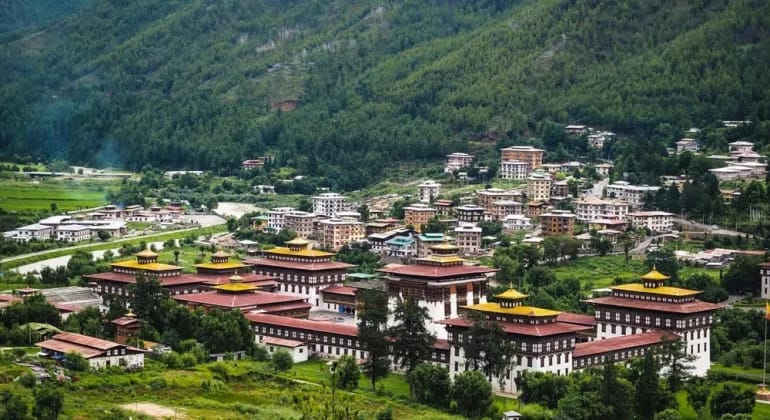
Tashicho Dzong is one of the most important structures in Thimphu. This magnificent fortress-monastery serves important governmental and religious functions and is associated with the royal throne room and the central monastic administration of Bhutan.
Its massive whitewashed walls, red decorative panels, golden roofs, and meticulously maintained courtyards make it an architectural masterpiece. Tourist access is limited to specific areas and permitted visiting hours, which may vary during official ceremonies and government activities.
3. National Memorial Chorten
The National Memorial Chorten is a prominent Buddhist monument dedicated to the memory of Jigme Dorji Wangchuck, the third king of Bhutan. Built in 1974, the Chorten is an important meeting place for religious ceremonies.
Visitors can watch devotees circumambulate the monument in a clockwise direction, spinning prayer wheels and offering prayers. This site provides insight into the daily spiritual practices of the people of Bhutan. Modest dress and respectful behavior are essential.
4. Changgangkha Lakhang
Situated on a hillside above the city, Changgangkha Lakhang is a historic Buddhist temple associated with the religious heritage of the Thimphu Valley. Local families often come here to seek blessings for their children.
The temple's elevated position offers panoramic views of the city, while its traditional architecture and religious atmosphere provide a more intimate cultural experience than some of Thimphu's larger sights.
5. Royal Textile Academy
The Royal Textile Academy introduces visitors to Bhutan's advanced weaving traditions, textile designs, formal wear, and regional clothing styles. Its exhibitions help explain how textiles express cultural identity, artistic heritage, and social customs in Bhutanese society.
Travelers interested in traditional crafts may want to consider visiting local weaving shops and textile markets along with a visit to the academy.
6. Motithang Takin Archive
The Royal Takin Sanctuary in Motithang offers a chance to observe the takin, Bhutan's rare national animal. This protected wildlife sanctuary is especially attractive to families and travelers who love to learn about Himalayan wildlife.
Visitors should stay in designated public areas, refrain from feeding animals, and follow local guidelines. Opening times and access arrangements should be confirmed before visiting.
7. Centennial Farmers Market
The Centennial Agricultural Market area offers an interesting opportunity to get acquainted with Bhutan's agricultural products and local food traditions. Depending on the current market activities and the layout of the stalls, visitors may come across seasonal vegetables, local cheeses, dried chilies, and other regional products.
Market activity and stall locations may vary, so visitors should make sure to check where the main vendors are doing business during their stay.
8. Traditional handicrafts and shopping
Thimphu's handicraft shops and artisan workshops sell woven textiles, traditional clothing, handmade paper, wooden items, decorative items, and souvenirs inspired by local traditions. The National Institute for Zorig Chusum, associated with Bhutan's thirteen traditional arts and crafts, is particularly relevant for travelers interested in traditional skills.
Access to workshops, student exhibitions, and guided tours is subject to institutional schedules and permissions. Purchasing products from reputable local artisans can provide meaningful support for traditional crafts.

 ColoZai