Paro offers a variety of activities for cultural tourists, photographers, families, pilgrims, hikers, and visitors interested in traditional Himalayan lifestyle. The most productive itinerary is to combine its major attractions with a leisurely tour of the valley.
1. Trek to Tiger's Nest Monastery
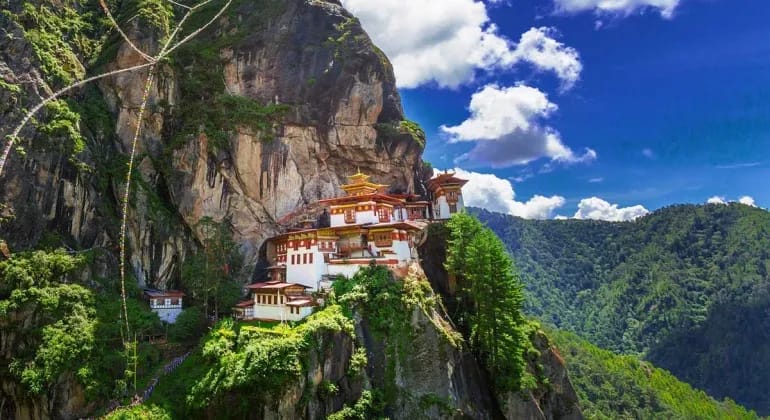
Paro Taktsang is one of the main attractions of a trip to Paro. The monastery is located on a picturesque hill about 900 meters above the plains of the valley. Its white buildings, golden roofs and steep mountain range create one of the most recognizable scenes in Bhutan.
Visitors usually start their journey from the designated entrance located northwest of Paro town. The route to the monastery grounds involves a continuous climb through pine forests and passes prayer flags, scenic viewpoints, and a cafeteria area along the way. The entire walk takes about four to six hours, with additional time for rest and sightseeing.
The path has steep sections, uneven surfaces, and a large staircase near the monastery. Visitors should wear comfortable walking shoes, carry drinking water, and adhere to the religious norms of the place. Photography is generally prohibited inside the sacred temple.
2. Visit Rinpung Dzong
Rinpung Dzong is one of the best places to enjoy the beauty of traditional Bhutanese fortress architecture. Its impressive walls, decorated courtyards, wooden galleries, and its location on a mountainside make it particularly attractive for cultural tours and architectural photography.
A picturesque view of the fort and surrounding landscape can be enjoyed from the nearby traditional wooden bridge over the Paro Chu River. Public access may be limited during official ceremonies, religious festivals, and administrative functions.
3. Visit the National Museum of Bhutan
The Bhutan National Museum, located atop Rinpung Dzong, houses important collections that showcase Bhutan's history, religion, natural heritage, arts, and crafts. The historic Ta Dzong Watchtower forms a central part of the museum complex.
The museum exhibits religious paintings, ceremonial objects, traditional clothing, masks, historical artifacts, and other items related to Bhutanese cultural identity. This museum is particularly worthwhile for visitors who want to understand the historical context of the sites they visit.
4. Travel to Kichu Lakhang
Kichu Lhakhang is one of the oldest and holiest Buddhist temples in Bhutan. Traditionally, its foundation is attributed to the 7th-century Tibetan emperor Sangsena Gampo.
The temple grounds feature sacred statues, traditional architecture, prayer circles, and peaceful courtyards. It is an active religious site, where visitors should maintain a respectful atmosphere and adhere to local regulations regarding photography and dress.
5. Explore the traditional villages of Paro
In addition to its major monuments, Paro is known for its farmland and traditional Bhutanese farmhouses. Village experiences can include observing traditional architecture, learning about farming practices, tasting home-cooked Bhutanese food, and visiting family-run homestays.
Farmhouse visits should be respectfully arranged through the host or local guide. Some farms also offer traditional hot stone baths as a cultural and wellness experience for a fee.
6. Explore local markets and handicrafts
Paro's town center is home to shops selling textiles, prayer flags, handicrafts, souvenirs, and local products. Visitors can see traditional woven fabrics, incense, woodwork, decorative items, and Bhutanese clothing.
Shopping in the city center is a comfortable alternative to long trips around the area and also provides an opportunity to support local businesses.
7. Discover Chele La Pass
Chele La is a high pass accessible by road from Paro, usually included in day trips to western Bhutan. Situated at an altitude of about 3,988 meters, the pass offers mountain views, prayer flags, forest, and walking opportunities.
The altitude is considerably higher than Paro town, so visitors should avoid overexertion unless they are accustomed to the weather. Road accessibility and visibility depend on the season and local conditions.

 ColoZai