
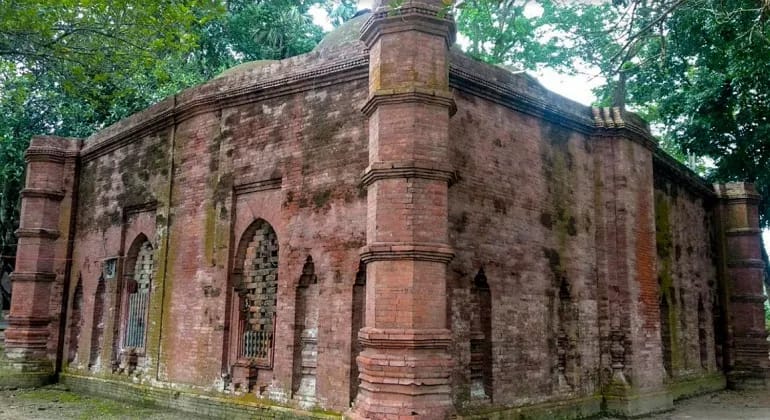
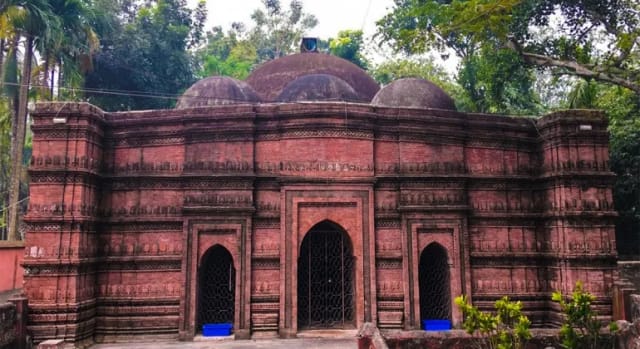
Historical Golakata Mosjid is located in Barobazar Union, 30 km away from Jhenaidah district headquarters. This mosque is one of the 19 Sultanate mosques excavated in Kaliganj. In the 1990s, the Bangladesh Directorate of Archeology excavated the mud mounds and recovered and renovated the remains of the Galakata Mosque. It is believed that this mosque was built in the 16th century during the reign of Khan Jahan Ali. Today this mosque is also well known as Galakata Dighi Dhibi Mosque. The walls of the 6-domed Galakata Mosque are 25 feet high and 5 feet wide. The square mosque, resting on 4 hexagonal pillars, has 3 terracotta entrances with pointed arches. And inside the mosque there are 3 semi-circular well-decorated arches decorated with terracotta and two minarets of 8 feet high granite.
Next to the mosque is the Galakata Dighi covering an area of about twelve bighas. It is said that a tyrant king of Barobazar used to sacrifice his subjects and throw them into this lake. Due to this, the Dighi is known as Gallakata Dighi. Some fifteenth century artefacts found during the excavation of the mosque, a handwritten Quran and a sword are preserved inside the mosque. People come here from far and wide to see this huge mosque of the Sultanate period under the Bangladesh Directorate of Archaeology, and to spend time in the beautiful surroundings of the lake. There are several historic mosques near Galakata Mosque including Jorbangla Jame Masjid, Gokar Masjid and Pir Pukur Jame Masjid.

 ColoZai