
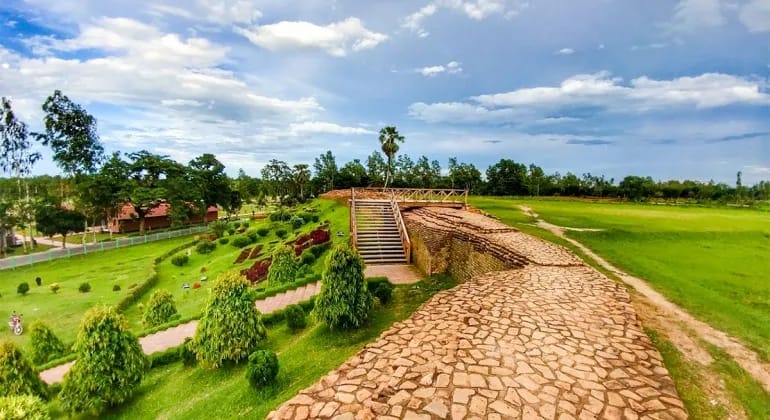
Bhimer Jangal is a road and dam built in the Barendra region of North Bengal during the ancient or early medieval period . Around 70 km area in the northern part of the country and surrounded on three sides by Mahasthangarh, there are numerous blackened historical structures of the glorious civilization of the eastern part of India in the forests of Bhim. It is believed that the forest of Bhim was used as a barrier road in this flood-prone region in ancient times.
There are many disagreements about the extent of the Bhima forest. However, most of Bhima's forests fall in Bogra region. According to many, from Ghoraghat north to Domra in Nilphamari district; According to some, the forest of Bhim extended to Kamrup in Assam. Several remnants of Bhim's jungle started from the border of Sirajganj, from Sherpur in the north-west to the edge of Bogra town near the west bank of the Karatoa river, and about 50 km to the north in Damukdah of Gobindganj police station in Gaibandha district. Later, however, these ruins spread to Virat Nagar and Ghora Ghat in Dinajpur district.
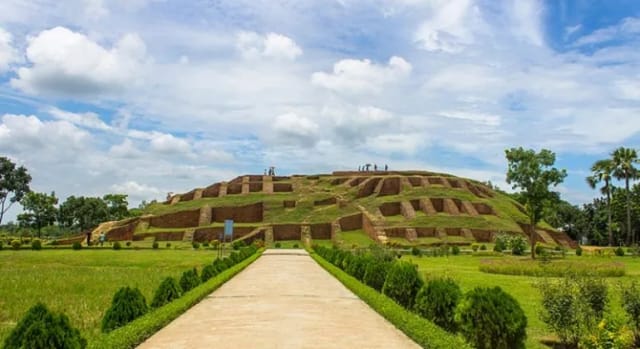
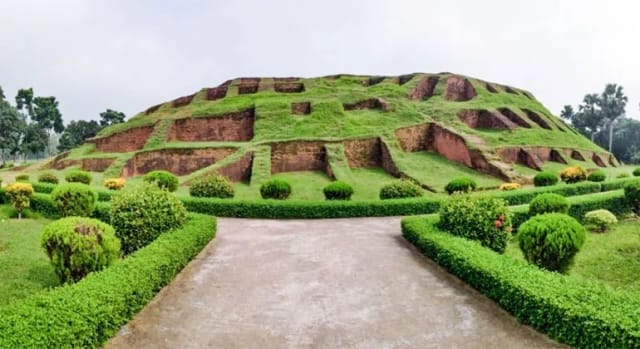
There are 36 “mounds” or mounds in the archaeologically important Bhima forest. Of which Govindavita and Vasu Vihara have been preserved. Almost every forest name has a historical folklore. According to local people, a king named Bhima built Bhimer Jangal. However, there are various differences of opinion about the identity of Bhima Raja. According to many, he was the king of the twelfth century. According to many, he is the successor of the second Pandava Bhima or Bhagiratha dynasty. Although the exact reason for the construction of the Bhima fort is not known, it is assumed that it was built on the analogy of the round forts of Italy to protect against foreign invasion.
 ColoZai