Three-Domed Mosque, Chapainawabganj

Three-Domed Mosque, Chapainawabganj

Chapainawabganj
·

18 October 2026

Travel Overview & Quick Facts

Directions
Location
Chapainawabganj
Admission / Entry Fee
No separate entry fee has been confirmed for the mosque. Visitors can usually enter without purchasing a ticket, but donations or local arrangements may apply. Please observe prayer times and any access restrictions imposed by the mosque authorities or the Department of Archaeology.
Best Time to Visit
October to March; travel during the day and if possible, do it at times other than congregational prayers.
Opening Hours
Opening times are not reliably published. Visit during the day and make sure to check in locally, as prayer times and religious activities can affect visitor access.
Category / Type
Historic Mosques, Mughal Architecture, Religious Heritage Sites, Historical Monuments

Introduction to Three-Domed Mosque, Chapainawabganj

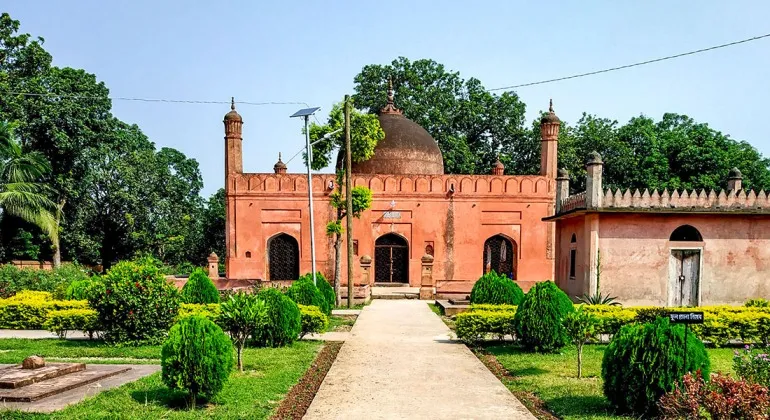
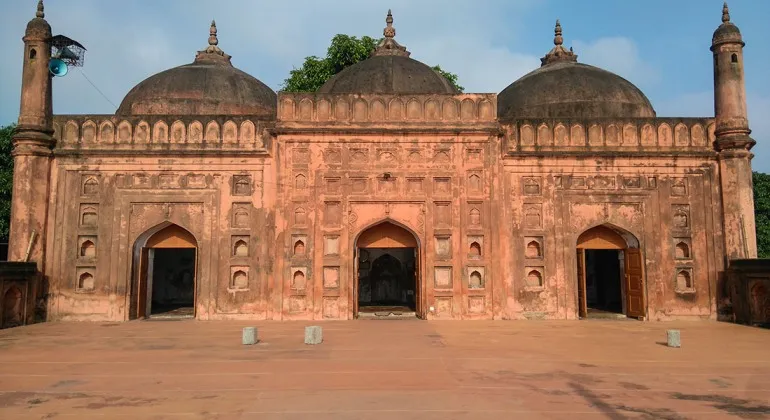
The Three Dome Mosque in Chapainawabganj, Bangladesh is a notable example of Mughal-era religious architecture in the country. Also known as Shah Niamatullah Wali Mosque or Shah Niamatullah Wali Mosque, this historic place of worship is located within the famous Tahkhana complex in Firozpur, Shahbazpur Union, Shibganj Upazila. Its three magnificent domes, traditional brick construction style, arched entrance, and its association with the revered Sufi saint Shah Niamatullah Wali have made it an important destination for history buffs, architecture lovers, and culture-minded travelers.

The mosque is part of a traditional landscape associated with the Mughal governor Prince Shah Shuja, son of Emperor Shah Jahan. The Tahakhana courtyard is traditionally associated with Shah Shuja's meeting with his spiritual master and is generally dated to the mid-17th century. Although the exact builder and construction date of the mosque have not been definitively established by any inscription, its architectural features are consistent with the Mughal period.

Unlike a modern tourist attraction with ticket counters and extensive visitor facilities, the Three Domes Mosque remains a religious and historical site. Visitors can experience its architecture, learn about the spiritual history of the area, and explore the nearby historic buildings and pond. To plan a larger heritage tour, consider combining this tour with the Chota Sona Mosque, one of the most famous architectural monuments of the Sultanate period in Bengal. (Chhota Sona Mosque)


History of the Three Domes Mosque

The history of the mosque is inextricably linked to the Tahakhana complex and the spiritual legacy of Shah Niamatullah Wali. According to conventional historical accounts, the complex is associated with Shah Shuja, who ruled Bengal in the 17th century and is believed to have built buildings in the area to meet his spiritual master.

The Tahakhana complex is generally believed to have been built between approximately 1639 and 1660, although there is disagreement about its exact construction date. The mosque, the adjacent tomb, and the historic palace together form a distinct architectural ensemble, reflecting the religious, residential, and ceremonial life of Mughal Bengal.

Shah Niamatullah Wali is remembered as a revered Muslim spiritual figure whose shrine attracts devotees. The mosque continues to serve religious purposes today and connects the local community with the architectural and spiritual heritage of the region.

For travelers interested in the larger historical development of Muslim architecture in Chapainawabganj, the nearby Darasbari Mosque provides a valuable comparison with the earlier architectural heritage of Bengal. Together, these sites reveal how successive historical periods shaped the architectural landscape of the district.


Architecture and design

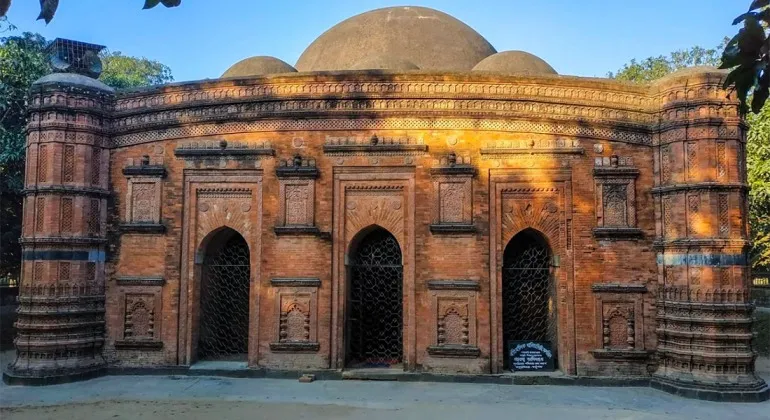
The main feature of the Three Dome Mosque is its three domes, which, like many historic mosques in Bengal, form a balanced roofline. Its relatively compact form is complemented by arched entrances, brickwork, and decorative architectural styles associated with Mughal religious architecture.

Three distinct domes

The domes are what give the mosque its well-known name and establish the building's visual identity. Their arrangement reflects a regional tradition, where the prayer space is divided into several chambers, each covered by a separate dome. Although the overall structure is modest in size, its significance within this historic architectural complex is immense.

Brickwork and arched entrance

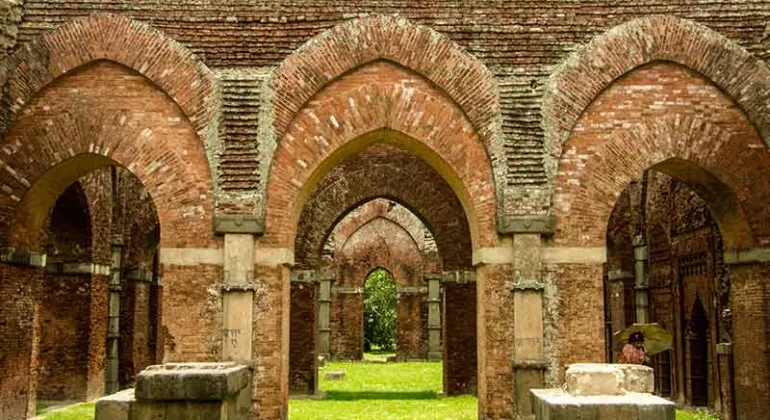
An important feature of the mosque is its traditional brick construction. The arched doorways provide access to the prayer rooms and contribute to the rhythm and symmetry of the facade. Visitors should carefully observe the exterior to appreciate the relationship between the arches, the surface of the walls, and the domed roof.

Architectural context

The mosque should not be seen as an isolated building, but rather as part of a larger architectural heritage. The nearby Tahakhana Palace, historic ponds, and tombs help to explain the spatial relationship between Mughal architecture, religious rituals, and the patronage of spiritual leaders.

The architectural history of this district spans different eras. For a good comparison, you can visit the Khaniadighi Mosque , also known as the Rajbibi Mosque. It is a piece of architecture from the Sultanate period of Bengal and shows variations in the arrangement of domes and architectural styles.


Things to see and do

A visit to the Three Domes Mosque is best viewed as a cultural and heritage experience. The site rewards travelers who take the time to observe its architecture, appreciate its religious significance, and respectfully explore the surrounding historic landscape.

  • Admire the domes and facades: Observe the proportions of the three domes, the arched entrance, and the traditional brickwork from a public space.
  • Explore the Tahakhana Square: discover the relationship between the mosque, historic palace, pond, and nearby mausoleum.
  • Learn about Shah Niamatullah Wali: Understand the spiritual heritage associated with this shrine and the importance of this square to local devotees.
  • Photograph architecture: Where permitted, photograph exteriors and be careful not to disturb worshippers or religious activities.
  • Explore the Greater Gaur Heritage Area: Extend your visit to nearby mosques and archaeological sites to get a broader understanding of the history of this district.

Allow about 30-60 minutes for the mosque, depending on access, prayer times, and your interest in architecture. If you plan to visit the nearby Tahakhana complex and other historical sites, more time may be required.


Ticket prices and entry rules

There is no reliable information available on separate entrance tickets for the Three Domes Mosque. Being an active religious site, the mosque is generally viewed as a place of worship rather than a commercial attraction. Visitors should not assume that the access system for each structure or area of ​​the larger heritage complex is the same.

Expected entry price

  • Entrance to the mosque: It is not confirmed whether there is a separate entrance fee; check locally before visiting.
  • Donations: Voluntary donations may be accepted, but visitors should not assume that making a donation is mandatory.
  • Other Complex Facilities: Entry requirements may vary for palaces, places of worship and protected archaeological sites. Please check with the relevant authorities for any applicable charges or restrictions.

Visitor etiquette

  • Wear modest clothing that covers your shoulders and knees.
  • If necessary, remove your shoes before entering the place of prayer.
  • Speak softly and avoid interrupting prayers or religious ceremonies.
  • Ask permission before taking photos of worshippers, shrine visitors, or interior spaces.
  • Do not touch, climb on, or remove any objects from historic architectural monuments.
  • Follow any instructions given by the mosque's caretaker and heritage officials.

Since opening times, conservation work, and local religious activities may vary, be sure to secure entry permits before making the long journey just to visit the mosque.


Best time to travel

October to March is a good time to visit the Tin Gombuj Mosque and other historical sites in Chapainawabganj. November to February is especially suitable for tourists who plan to spend a full day exploring the Tahkhana Complex and the historic Gaur region.

Come during the day to see the brickwork and domes clearly. Visiting in the morning gives you plenty of time to explore the surrounding area before heading to other heritage sites. However, don't assume that the mosque is open to tourists all day, as access may be affected by prayer times and local religious activities.

Schedules and visitor restrictions may vary during the month of Ramadan and major Islamic religious festivals. If your trip coincides with a religious event, check locally for appropriate visiting times and restrictions on photography.


How to reach

The Three Dome Mosque is located in the Tahkhana Complex in Firozpur, Shahbazpur Union, Shibganj Upazila, Chapainawabganj District, Rajshahi Division, Bangladesh. It is approximately 35 kilometers from Chapainawabganj city by conventional road, although the actual distance and journey time depend on the starting point and route.

1. By bus from Dhaka

Travel from Dhaka to Chapainawabganj by intercity bus. Depending on the operator and departure schedule, direct and connecting buses via Rajshahi may be available. Confirm current routes, terminals and fares with the bus company before you start your journey. The journey usually takes a few hours and may take longer due to traffic jams or bus changes.

Upon reaching Chapainawabganj town, proceed towards Shibganj and Shahbazpur heritage areas. Local buses, shared CNG autorickshaws and reserved vehicles are available. For the last part, tell the driver that you are going to Tahkhana Complex or Shah Niamatullah Wali Mosque.

2. By train from Dhaka

Check the current Bangladesh Railway timetable or other suitable rail connections to get to Rajshahi. If you go to Rajshahi by train, from there take a road or a connecting train to Chapainawabganj. From Chapainawabganj, hire a CNG autorickshaw, private car or microbus to get to the mosque. Train routes and timetables may change, so check the connections before booking.

3. By air from Dhaka

For air travel, check the domestic flights available from Dhaka to Shah Makhdum Airport in Rajshahi. Flight availability and schedule should be confirmed with the airline. From Rajshahi, travel by road to Chapainawabganj and then to Shibganj and Shahbazpur. There is no scheduled passenger airport service directly to the mosque.

4. From Chapainawabganj city

The district headquarters is the most convenient hub for local transportation. Arrange for a car from the city's bus terminal or railway station to Shibganj and Shahbazpur. For travelers planning to visit multiple historical sites in a day, a reserved CNG, car, or microbus is often the most convenient option. If you want to return in the same car, ask the driver to wait while you explore.

5. Local transportation and estimated fare

The exact current fares have not been independently verified. The figures below are rough estimates, not guaranteed prices; check local fares before you start your journey.

Transportation Estimated cost Useful advice
Shared local bus or CNG Approximately ৳50–৳200 per person depending on the route Ask if you need a transfer to reach Shahbazpur.
Reserved CNG auto-rickshaw Approximate ৳1,000–৳2,000 for return or sightseeing arrangements, negotiable Agree in advance on waiting times, breaks, and return arrangements.
Private car or microbus Estimated cost for a one-day trip is ৳3,000–৳7,000 or more, depending on the vehicle and itinerary. Confirm fuel, driver wait time, and additional destinations.

These estimates may vary depending on fuel prices, number of passengers, season, and negotiations. These are not official fares. You may need to walk to the complex on public transportation or transfer to additional local transportation.

6. Nearby attractions and directions

When asking for directions, use the name Shah Niamatullah Wali Mosque or Tahakhana Complex, Shahbazpur, Shibganj . The mosque is located inside the historical complex, near the Tahakhana Palace, the tomb of Shah Niamatullah Wali, and a large pond. The well-known Chhota Sona Mosque is another important landmark in the same larger heritage area.

Allow extra time for your journey from Dhaka, arrange return transport before visiting remote places, and carry drinking water. Mobile navigation can be helpful, but local directions can be helpful if the final leg of your journey is on smaller roads.

Three

GPS: 24.818056, 88.139361
Get Directions

Where to eat

For the most food options, plan to eat in Chapainawabganj town or at the large local markets along the way to Shibganj. Small restaurants and local food stalls can offer rice, dal, vegetable dishes, fish, chicken and familiar Bangladeshi dishes. Options near the historic complex may be limited and opening hours may vary.

Tourists who prefer to eat near the mosque should ask a local resident or driver about currently open restaurants and tea shops before starting their journey. In the case of long journeys, it is wise to arrange lunch in advance rather than relying on finding a large restaurant next to the monument.

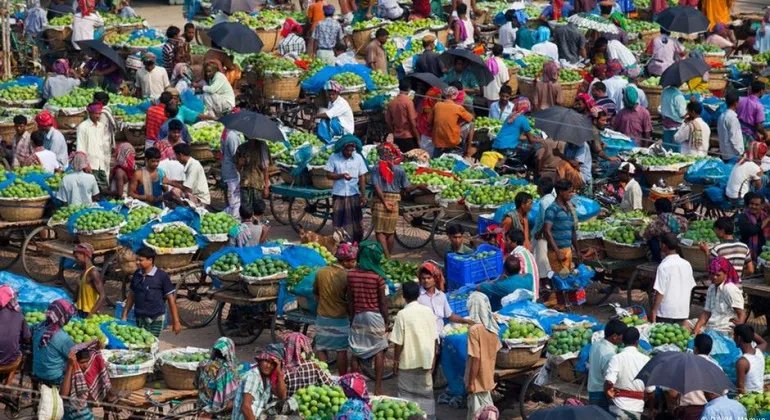
Chapainawabganj is famous for its mangoes and mango products. During the local mango season, visitors can visit the district's fruit markets and sample seasonal fruits wherever available. The Kansat Mango Market is a well-known destination to experience this part of the district's agricultural culture, although market activity varies depending on the season.

Carry drinking water with you, choose food from clean places, and check prices before ordering at small roadside food stalls.


Where to stay?

The city of Chapainawabganj is the most convenient base for tourists visiting the Tri Gombuj Mosque, especially if they wish to explore the various heritage sites around Shibganj and the historic Gaur region. The city offers a variety of local accommodation options, including budget hotels and residential properties, although their quality, amenities and availability vary.

Reserve your accommodation well in advance during peak travel times and make sure that private bathrooms, air conditioning, secure parking and late check-in are important to you. Current room rates have not been verified, so check directly for prices before booking.

It is also easier to arrange a driver for a traditional day trip from the city. Visitors who want to see multiple monuments can plan to leave early in the morning and return to the city for dinner, rather than relying on the limited services of the historic square.

If you are going for a short stay, ask your hotel to arrange a reliable CNG, car or microbus and arrange a return journey before you go. Don't assume that accommodation or extensive tourist services will be available within walking distance of the mosque.


Some tips to make your trip better

  • Check entry permits first: The mosque is an active religious site, and its opening hours are not reliably published.
  • Dress modestly: It is appropriate to wear modest clothing for both the mosque and nearby shrines.
  • Plan your transportation: If using reserved CNG or a car, especially if visiting multiple monuments, arrange a vehicle for the return trip.
  • Bring cash: Small local businesses and transportation providers may not accept digital payments.
  • Protect the heritage: Avoid climbing on old walls, touching fragile decorations, or removing any materials.
  • Ask permission before taking photos: Respect worshippers and follow any restrictions on taking photos.
  • Combine nearby places: A planned itinerary makes a long journey to the Shibganj heritage area more worthwhile.

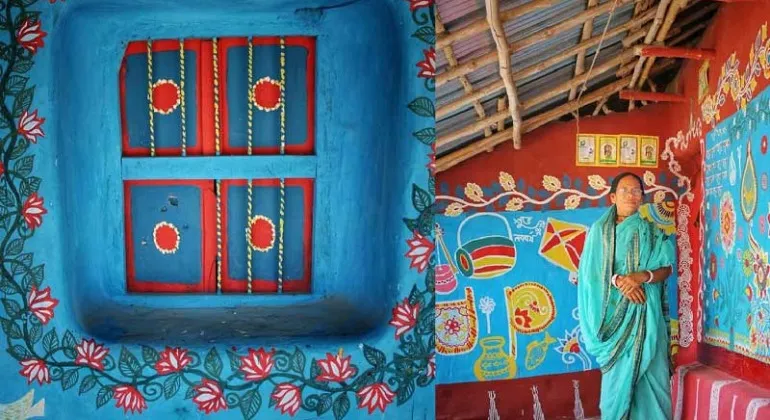
Tourists interested in rural culture can also visit the village of Tikayel Alpana (Tikoil Alpana Village) , known for its painted walls and tribal art. Since the village is located in a different part of the district, check the road distance and allow enough time before combining it with a visit to the mosque.


Nearby attractions

The Three Dome Mosque is an excellent starting point for exploring the historical and cultural landscape of Chapainawabganj. A larger itinerary can be created by combining several notable attractions, although not every location should be considered within walking distance from the mosque due to distance and road conditions.

Chhota Sona Mosque

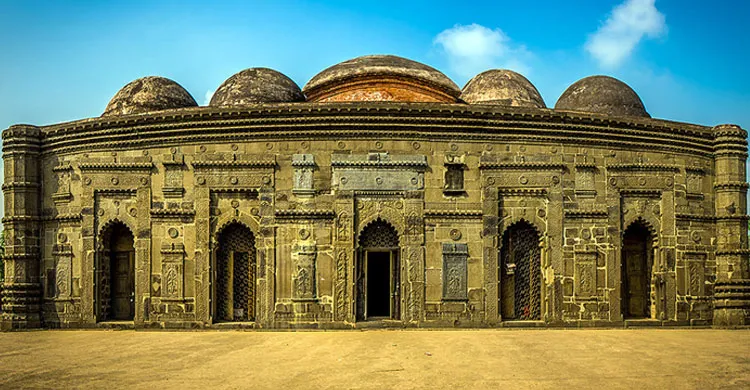
The Chhota Sona Mosque is a famous architectural monument of the Bengal Sultanate period, built in the late 15th or early 16th century. Its ornate stonework and distinctive domes create a valuable architectural contrast to the three-domed mosques of the Mughal period.

Darasbari Mosque

Darasbari Mosque is another important historical religious structure in the Gaur heritage region. Its ruins provide an idea of ​​the region's previous architectural heritage and the historical importance of the former Bengali capital.

Khaniadighi Mosque

Khaniadighi Mosque , also known as Rajbibi Mosque, is notable for its historic brick structure, domed prayer room, and adjoining veranda. It is a worthwhile destination for travelers interested in comparing mosque architecture from different eras.

Mughal palace

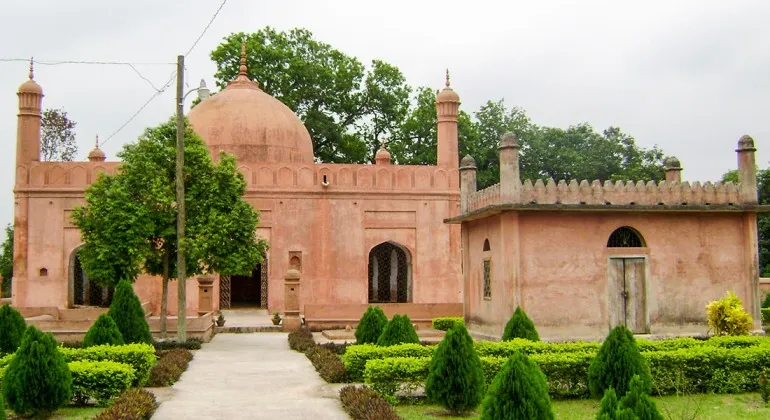
The Mughal Tahakhana is an essential part of the same historic complex. Explore its relationship with the mosque, nearby tombs, and pond to understand its larger historical context.

Shrine of Hazrat Shah Niamatullah

The Shrine of Hazrat Shah Niamatullah is deeply connected to the spiritual heritage of the region. Visitors should approach the shrine with respect and observe local religious customs.

Monument of Mohiuddin Jahangir

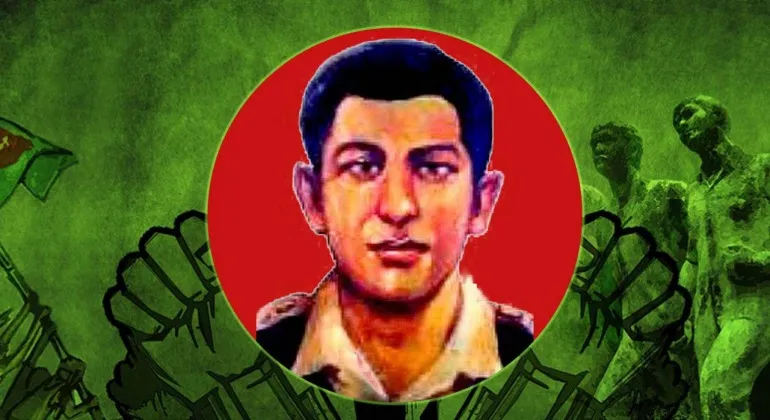
The Mohiuddin Jahangir Monument commemorates a hero of Bangladesh's liberation war. It adds an important modern historical dimension to a tour that is primarily focused on medieval and Mughal heritage.

Tikoil Alpana Village

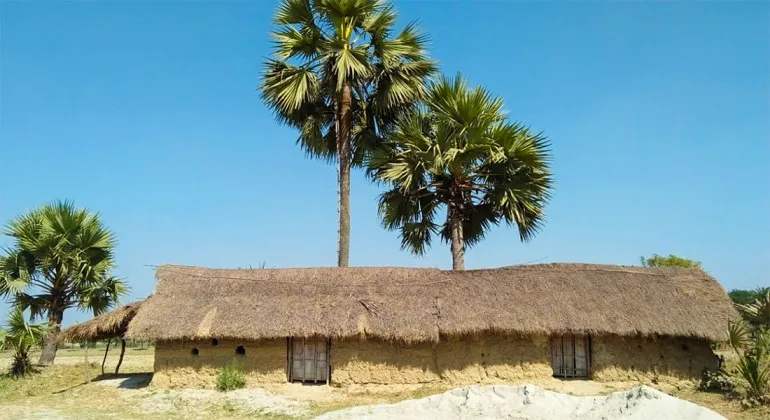
With its painted village walls and local artistic heritage, Tikoil Alpana Village offers a different cultural experience. Check its distance from your itinerary before including it in your same-day itinerary.

Kansat Mango Market

The Kansat Mango Market is associated with the important mango trade of the district. It becomes especially attractive during the mango season, when the market is much busier than during the rest of the year.

Babu Dying Picnic Spot

babu Dying Picnic Spot is an alternative outdoor destination for travelers who want to incorporate recreation into their itinerary . Be sure to check current access and local amenities before you set off.

Naoda Tower

Naoda Burj is another tourist attraction in the region that can attract tourists interested in historical architecture and local heritage. Check its location and road connectivity when planning a trip to the larger district.

Suggested itinerary: Start with the Three Dome Mosque, visit the Tahkhana Complex and Shrine, then head to other easily accessible historical sites in the Shibganj and Gaur areas. If you want to visit more distant attractions, consider setting aside a separate day to experience village arts or the seasonal mango market.

Frequently Asked Questions (FAQ)

The Three-Domed Mosque, also known as Shah Niamatullah Wali Mosque, is located within the Tahakhana complex in Firozpur, Shahbazpur Union, Shibganj Upazila, Chapainawabganj District, Rajshahi Division, Bangladesh. It is located near the historic Tahakhana Palace, a pond, and the tomb of Shah Niamatullah Wali.

Explore The Area

Top Attractions & Places to Visit in Chapainawabganj

Discover more heritage, nature, and must-visit spots across Chapainawabganj.

View all in Chapainawabganj

Darasbari Mosque, Chapainawabganj – Complete History, Architecture and Travel Guide

Darasbari Mosque , also known as Darasbari Mosque, is one of the historical and archaeological monuments of Chapainawabg...

Shafayet Al-Anik

Mughal Tahkhana Chapainawabganj – Complete History, Architecture and Travel Guide

Mughal Tahkhana, also known as Shah Shuja Tahkhana, Tahkhana Complex or Tohkhana , is one of the most significant surviv...

Shafayet Al-Anik

Babu Dayang Picnic Spot, Chapainawabganj, Bangladesh

Babu Daing Picnic Spot, also known as Babudaing or Babu Daing, is a unique natural destination in Jhelim Union of Chapai...

Shafayet Al-Anik

Shrine of Hazrat Shah Niamatullah, Chapainawabganj, Bangladesh

Discover the spiritual heritage of northwestern Bangladesh at the Shrine of Hazrat Shah Niamatullah, a revered pilgrimag...

Shafayet Al-Anik

Khaniadighi Mosque Chapainawabganj

Khoniadighi Mosque , also known as Khania Dighi Mosque and also known as Rajbibi Mosque, Khanjan Dighi Mosque and Chamch...

Shafayet Al-Anik

Monument of Mohiuddin Jahangir

The Mohiuddin Jahangir Memorial, located in Rehaichar, Chapainawabganj, Bangladesh, commemorates one of the country's mo...

Shafayet Al-Anik

Naoda Buruj Chapainawabganj – History, Location, How to Reach and Complete Travel Guide

Naoda Buruj, also known as Naoda Buruj, Naoda Shar Buruj or Shar Buruj , is an interesting archaeological site located i...

Shafayet Al-Anik

logo ColoZai

ColoZai is a trusted travel guide and destination explorer platform in Bangladesh. We are making travel simple, authentic, and accessible for everyone.

Need Help ?

We are Always here for you! Knock us on Whatsapp (10AM - 10PM) or Email us.