Sonarong Jora Moth Munshiganj

Sonarong Jora Moth Munshiganj

Munshiganj
·

17 October 2026

Travel Overview & Quick Facts

Directions
Location
Munshiganj
Admission / Entry Fee
Entry is free, according to an expert guide. No verified ticket prices are currently available; confirm locally before visiting. Transportation, parking, donations, and any special arrangements may incur additional costs.
Best Time to Visit
October to March; travel during the day, preferably in the morning or late afternoon.
Opening Hours
No officially verified opening hours have been published. Travel during the day and ensure local entry permits are in place before traveling.
Google Rating
★ 4.4 (392 reviews)
Category / Type
Historical monuments, Hindu temple architecture, archaeological heritage sites, cultural tourism

Introduction to Sonarong Jora Moth Munshiganj

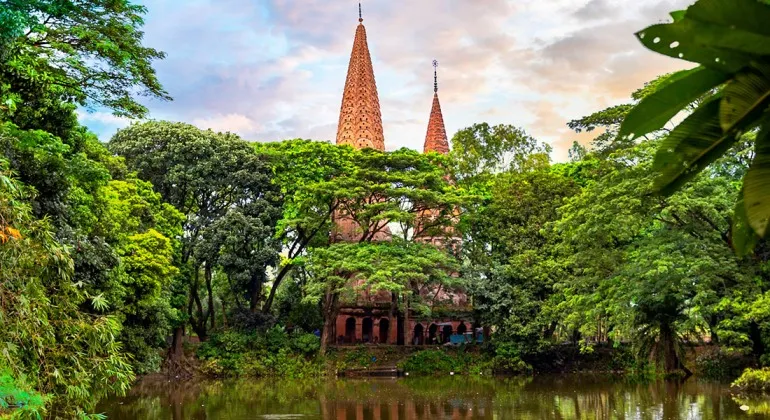
Discover Sonarang Jora Moth, one of the most unique historical monuments in Munshiganj, Bangladesh . Located in Sonarang village of Tongibari upazila, this remarkable heritage site consists of two adjacent Hindu temples, whose slender spires stand tall above the surrounding rural landscape. Although they are known as Jora Moths or Math Churas, these structures are actually temples dedicated to the worship of Kali and Shiva. Their historic architecture, ornate arches, high spires, and location in the same location make it a worthwhile destination for architecture lovers, photographers, history buffs, and travelers exploring the cultural heritage of Bikrampur.

These twin temples offer a different experience from the riverside resorts and busy ferry terminals of the two areas. The attraction here lies in the surviving architectural details, the quiet rural atmosphere and the opportunity to learn about a little-known chapter in the religious and artistic history of Bengal. The renovation work that began in 2025 has brought renewed attention to the site, making it a particularly attractive destination for tourists visiting the historical sites of Munshiganj.

Plan your trip by combining this architectural landmark with Munshiganj's Idrakpur Fort or Munshiganj's historic baba Adam Mosque as part of your district-wide itinerary. These places reveal different aspects of the region's layered history and cultural landscape.


History of the Sonarong Jora Moth

The Sonarang Jora Math is associated with the 19th century religious and architectural heritage of the historic Bikrampur region. According to the heritage records of the Munshiganj district administration, a local Hindu merchant named Roopchandra was associated with the construction of these two temples. According to historical records, the larger Kali temple was generally built in 1843 and the smaller Shiva temple in 1886, although some secondary accounts differ in the description of the architecture and the time of their construction.

Local tradition associates these monuments with commemoration and funerary practices. Various accounts suggest that the temples were built on a site associated with the final rites of Rupachandra or his family. This interpretation is part of the traditional history of the site, not a detail that each historical source establishes independently.

The distinction between the moat and the temple is important in explaining the monument. The common name refers to the shape of the minarets, while the buildings are described as Hindu pilgrimage sites. Their close positioning on a common elevated platform gives the structure its familiar twin form and explains the name 'Jora Moat', meaning twin moats or minarets.

Years of exposure and deterioration have raised concerns about the preservation of this architectural structure. The 2025 news report on its restoration and development work has revived public interest in the site. Since preservation can change the appearance of historic architecture, visitors should appreciate both its original architectural features and the ongoing challenges of preserving this monument for future generations.


Architecture and notable features

The most striking visual feature of Sonarang Jora Moth is the contrast between its two temple spires. One is considerably larger than the other, creating an asymmetrical arrangement that is easily recognizable in photographs. According to district heritage information, the two structures stand close together on a common base, and the main temple is about 15 meters high.

Twin Temple Peaks

The complex contains a larger temple dedicated to Kali and a smaller temple dedicated to Shiva. Their towering form distinguishes them from the low-rise buildings and vegetation of the surrounding village. The pinnacles, sometimes described as spire-style minarets, are one of the most striking features seen from the outside.

Arches, plasterwork and decorative details

Note the buildings' characteristic repetitive arch designs, ornate surface designs, and structured entrances. The combination of curved arches, vertical minarets, and decorative carvings reflects the craftsmanship used in 19th-century religious architecture in Bengal. Some of the original features may have been damaged by the effects of time and renovations, so observe the structures with respect, avoiding touching the fragile surfaces.

Settings and shared platforms

The proximity of the twin temples creates a strong sense of unity despite their different sizes. The surrounding village environment provides a context for how historic religious buildings are intertwined with everyday social life. Depending on the current state of the site, the view of this architectural complex may also include green nature and the structures of the nearby village.

Take time to view the temples from different angles from the outside. Photos taken from a distance reveal the relationship between the two minarets, while close-up photos capture the arches, ornate surfaces, and changes in shape. Avoid climbing structures, entering restricted areas, or standing in any place where taking photos could disrupt worship or conservation efforts.


Things to do in Sanarang Jora Monastery

  • Explore historical architecture: Compare the height, proportions, and decorative details of two adjacent temples.
  • Learn about local heritage: Read the available heritage plaques and ask a knowledgeable local guide about the monument's heritage history.
  • Take photos of the Twin Towers: Daylight is helpful for capturing their contrasting shapes and architectural details. Be sympathetic to the worshippers and residents.
  • Experience rural life in Munshiganj: Explore the village streets and surrounding natural scenery without disturbing private property or social activities.
  • Plan a traditional day trip: Instead of seeing the temples as just a full-day attraction, combine them with other historical sites in the district.
  • Support responsible preservation: Keep the grounds clean, follow posted instructions, and refrain from touching, marking, or climbing on historic structures.

Sonrang Jora Moth is not an entertainment attraction, but rather a place to explore in a peaceful setting. There are no reliably verified arrangements for organized activities, guided tours, or visitor services, so bring the necessary supplies and, if you need specific historical interpretation, make your own arrangements.


Ticket prices and entry rules

Entrance Fee: A specific temple guide states that entry to the Sonarang Jora Temple is free. However, no recent official ticket list has been found, so this free entry should be considered as a given, rather than a firm policy for every visit.

There is no set general admission price or separate photography fee. Check the notices at the entrance and ask the site supervisor or local authority if any fees, grants or temporary entry restrictions apply. Transportation and parking charges are separate from the entrance fee.

Visitor etiquette

  • Please dress modestly, as this square is a Hindu religious heritage site.
  • Follow instructions regarding entry to pilgrimage sites and any active places of worship.
  • Do not climb the towers, touch the fragile decorative parts, or remove any fragments from the site.
  • Ask permission before taking photos of people, religious events, or private property.
  • Dispose of trash responsibly and comply with any temporary restrictions related to conservation work.

Opening times are not reliably published on official online timetables. It is best to arrive during the day, and it is advisable to check local access before setting off, especially during religious events or conservation activities.


How to reach

Sonarang Jora Moth is located in Sonarang village, Tongibari upazila, Munshiganj district, Bangladesh. It is usually reached by road from Dhaka or Munshiganj city and then by local transport via Tongibari and Sonarang. The final route and journey time depends on traffic congestion, the chosen route and the current local conditions.

Option 1: By bus from Dhaka

  1. Travel from any departure point in Dhaka bound for Munshiganj or Tongibari. Gulistan is a popular starting point for regional buses and local services.
  2. Before boarding a bus or any other public transport, confirm the correct destination from the driver and head towards Munshiganj or Tongibari.
  3. If the service ends in Munshiganj town, proceed towards Tongibari by local bus, shared autorickshaw or CNG autorickshaw.
  4. Hire a CNG, autorickshaw or local rickshaw from Tongibari to Sonarang village and ask about Sonarang Jora Moth Road or Twin Temple.

Estimated Cost: Allow around 100–250 taka one-way for the initial journey by public transport from Dhaka, with additional costs for connecting routes and final local journeys. These are tentative estimates, not verified current fares. Confirm the full route and fare locally before starting the journey.

Option 2: By private car or rented vehicle

From Dhaka, travel towards Munshiganj using a current navigation route and then continue to Tongibari and Sonarang. A private car or rented microbus offers the most convenience, especially if you plan to visit more than one place in a day. When leaving Dhaka, allow extra time for traffic jams and slow village roads. Ask the driver for an all-inclusive cost estimate, including fuel, waiting time, tolls, and return journey.

Estimated transportation budget: Depending on the distance, whether the vehicle is shared or reserved, and bargaining, a local CNG or autorickshaw fare can be around 100–400 taka. Depending on the type of vehicle and the duration of the journey, renting a private car from Dhaka can cost several thousand taka for a round trip. Do not rely on this estimated cost, but check the current fare.

Option 3: From Munshiganj District Headquarters

  1. Arrange for road transport starting from Munshiganj city towards Tongibari upazila.
  2. To get from Tongibari to Sonarang village, take a local CNG, auto rickshaw, or rickshaw.
  3. Ask the driver to take you not only to the center of Sonarang village, but also to the historic twin temples.

The journey by road from the district headquarters is usually described as a short regional journey, but the exact distance and duration depend on the route and starting point. Budget approximately 200–600 taka for various parts of local transport, depending on current availability and whether you are using ride-sharing.

Option 4: By train or plane

There are no direct trains or commercial flights to Sonarang Jora Moth. Visitors arriving by air will need to land at Hazrat Shahjalal International Airport in Dhaka and travel by road. Train travelers will need to check current rail services at a suitable station in the Dhaka area and then travel by road; there is no direct train service to the temple. For most travelers, traveling entirely by road from Dhaka is the easiest option.

Nearby attractions and directions

Use the destination name 'Sonarang Jora Math, Sonarang Tongibari, Munshiganj' in a navigation app and verify that the pin is in Sonarang village. This complex is connected to Sonarang Jora Math Road and Tongibari area. Do not confuse it with Shyamsiddhi Math, another historical minaret in Munshiganj district. As bus routes, fares and road conditions may change, confirm the final connection with the driver or a local resident.

Sonarong Jora Moth Munshiganj

GPS: 23.52239, 90.45918
Get Directions

Where to eat

Sonarang Jora Moth is a heritage site located in a rural setting, and no reliable list of restaurants could be found right next to the monument. Plan to eat at a local roadside food stall or restaurant in Tongibari or on the way from Munshiganj town. Depending on what is available that day, typical Bangladeshi meals may include rice, lentils, vegetables, fish, chicken, and simple snacks.

If your itinerary takes you to Bhagyakul, you can try the regional sweets of the Bhagyakul Bazar area of ​​Munshiganj (Bhagyakul Bazar Munshiganj's sweets) if you want to go a different route for food . It is a separate destination and should not be assumed to be within walking distance of the temples.

Bring drinking water and some cash, as payment options may be limited in small village shops. Check local food availability and opening times, especially if you are travelling late in the day or on a public holiday.


Where to stay?

Most visitors can visit the Sonarang Jora Moth on a day trip from Dhaka, or spend the night in Munshiganj town, depending on their itinerary. There is no reliable information about accommodation right next to the monument, so if you need a hotel, family room, or any other special facilities, make your accommodation arrangements in advance.

Travelers who want a resort-style experience can check out Padma Resort , Mawa Resort Munshiganj or Meghna Village Holiday Resort . These are all distinct attractions, and their suitability depends on your planned itinerary, current availability and transportation arrangements. Be sure to check the location, rates, amenities and booking terms and conditions directly before finalizing.

For a short cultural trip, leaving Dhaka early in the morning gives you enough time to visit the temples and other attractions in the district and return the same day. If you have to stay overnight, choose accommodation based on guaranteed availability, rather than assuming there is a hotel near the monument.


Travel tips and practical information

  • Recommended duration of visit: Approximately 30–60 minutes, excluding travel time, for viewing, taking photos, and reading available information.
  • Best time of day: Morning or late afternoon, when there is daylight and the architectural details can be easily seen and photographed.
  • Clothing: Wear comfortable walking shoes and appropriate and modest clothing for religious heritage sites.
  • Cash: Carry small Bangladeshi rupees for local transportation, snacks, and incidental expenses.
  • Directions: If the driver is unfamiliar with the monument, confirm the pin on the map and ask a local about Sonarang Jora Moth Road.
  • Accessibility: The site is historic and may have uneven ground or stairs. Wheelchair access and visitor accessibility have not been verified.
  • Facilities: Toilets, drinking water facilities, ticket counters, and formal guided-tour services cannot be reliably confirmed online.
  • Conservation: Obey the instructions of barriers, restoration work, and caretakers.

Allow extra time for road congestion, vehicle changes, and village traffic. If you are visiting multiple tourist attractions in Munshiganj, divide your stops geographically and ensure entry permits before you begin your journey. Religious events, local events, and conservation activities can affect the tourist experience.


Nearby attractions

Sonarang Jora Moth can be visited as part of a larger itinerary through Munshiganj district, known for its historic forts, mosques, educational institutions, riverside destinations and rural heritage. The following places offer different experiences, but distances and travel times should be checked before planning an itinerary.

For a realistic itinerary, rather than trying to visit all the attractions in one day, choose one or two additional places that fit into your itinerary. Before you set off, check road access, opening times, and travel times for each destination.

Frequently Asked Questions (FAQ)

Sonarang Jora Math is located in Sonarang village, Tongibari upazila, Munshiganj district, Bangladesh. It is a pair of two historic Hindu temples located in rural areas of the greater Bikrampur region. Before traveling, search for Sonarang Jora Math or Sonarang Jora Mandir in your navigation app and verify the PIN.

Explore The Area

Top Attractions & Places to Visit in Munshiganj

Discover more heritage, nature, and must-visit spots across Munshiganj.

View all in Munshiganj

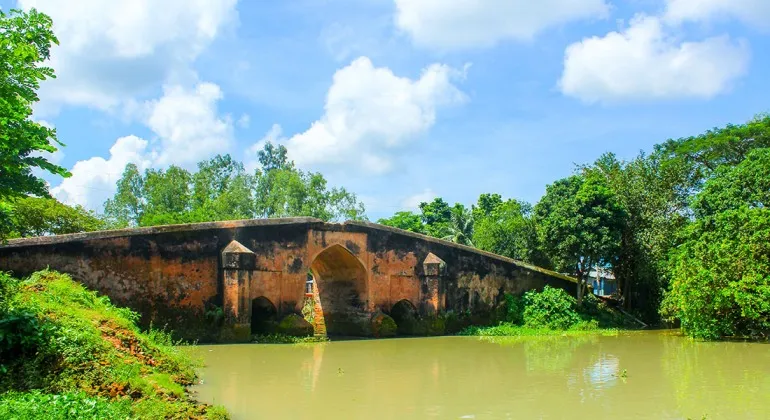
Polghata Bridge Munshiganj

Visit Polghata Bridge, one of the most historic architectural landmarks in the culturally rich Munshiganj district of Ba...

Shafayet Al-Anik

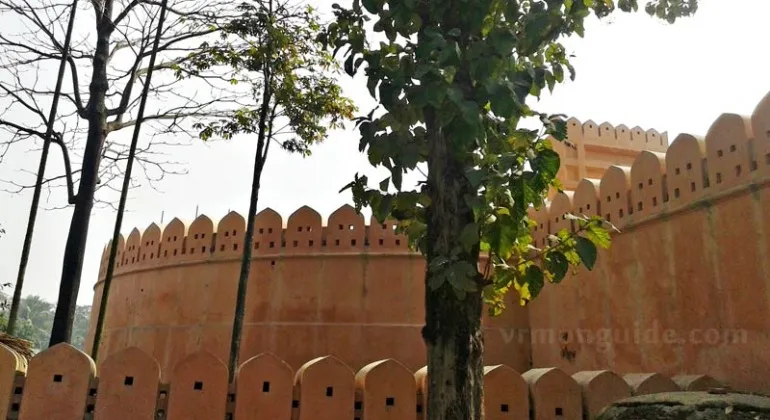
Idrakpur Fort Munshiganj

Idrakpur Fort Munshiganj , locally known as Idrakpur Kella or ইদ্রাকপুর দুর্গ , is one of Bangladesh's remarkable surviv...

Shafayet Al-Anik

Mona Bay Water Park Munshiganj

Mana Bay Water Park Munshiganj is a premium water-entertainment center located in Bausia, Gazaria Upazila, Munshiganj Di...

Shafayet Al-Anik

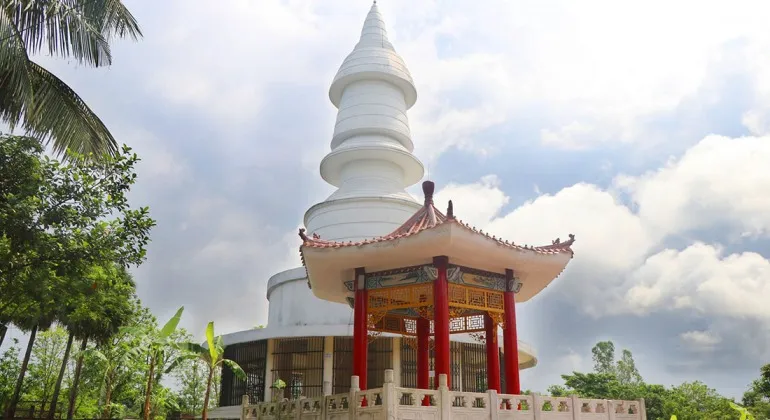
Atish Dipankar's birthplace, Munshiganj, Bangladesh

Discover the birthplace of Atish Dipankar Srigyan, one of the most influential Buddhist scholars and teachers in the Bik...

Shafayet Al-Anik

Mawa Ferry Ghat Munshiganj

Mawa Ferry Ghat in Munshiganj, locally known as Mawa Ghat or Mawa Ferry Ghat , is one of the most well-known riverside d...

Shafayet Al-Anik

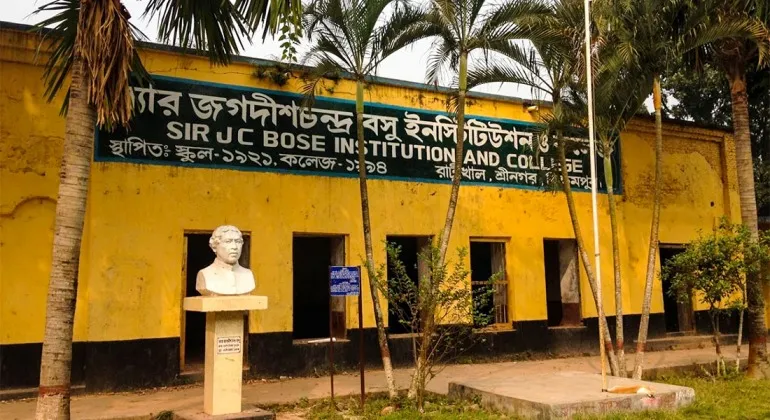
Sir Jagadish Chandra Bose Institution Munshiganj

Discover an important chapter in Bengal's scientific and educational heritage at the Sir Jagadish Chandra Bose Instituti...

Shafayet Al-Anik

Meghna Village Holiday Resort

Meghna Village Holiday Resort is a rurally inspired family resort and entertainment center located in Baluakandi, Gazari...

Shafayet Al-Anik

Mawa Resort Munshiganj

Mawa Resort Munshiganj is a popular riverside resort in Louhajang Upazila of Munshiganj District, Bangladesh . Located o...

Shafayet Al-Anik

Padma Resort, Munshiganj, Bangladesh

Padma Resort, located in Louhajang, Munshiganj, is a riverside resort connected to the scenic beauty of the Padma River....

Shafayet Al-Anik

Paddohem Dham Munshiganj

Paddohem Dham, also known as Padmahem Dham or Padmahema Dham, is a unique spiritual and cultural pilgrimage site located...

Shafayet Al-Anik

Aerial Bill Munshiganj

Aerial Beel, also known as Aerial Beel, is a vast seasonal wetland located in the Srinagar and Sirajdikhan areas of Muns...

Shafayet Al-Anik

Baba Adam Mosque Munshiganj

Baba Adam Mosque , also known as Baba Adam Shahi Mosque or Baba Adam Mosque, is one of the most important surviving exam...

Shafayet Al-Anik

logo ColoZai

ColoZai is a trusted travel guide and destination explorer platform in Bangladesh. We are making travel simple, authentic, and accessible for everyone.

Need Help ?

We are Always here for you! Knock us on Whatsapp (10AM - 10PM) or Email us.