
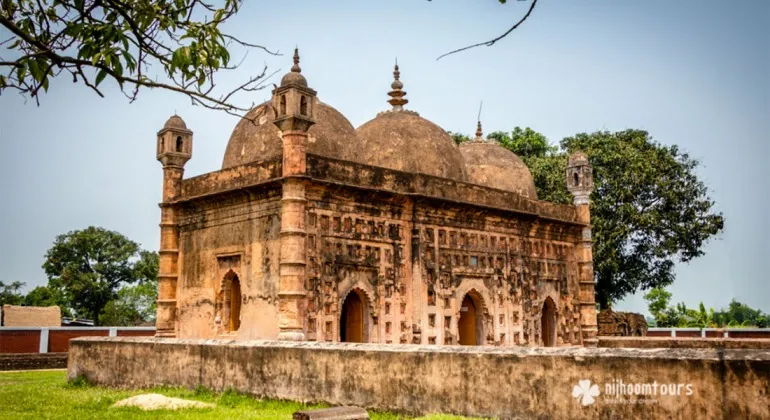
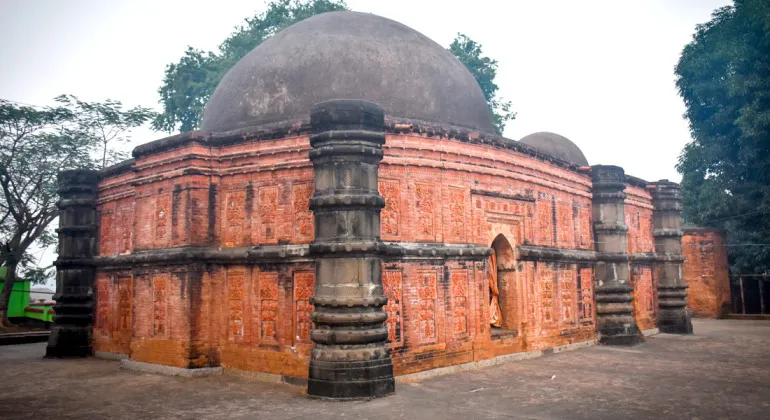
The Nayabad Mosque in Dinajpur is one of the most notable historical mosques in northern Bangladesh, known for its striking three-domed architecture, intricate terracotta artwork, and its striking connection to the famous Kantajiu Temple. Located in Nayabad village in Kahral upazila, about 20 kilometers from Dinajpur town, this late 18th-century mosque stands on the banks of the Dhepa River, surrounded by the tranquil rural landscape of northern Bangladesh.
Commonly known as the Nayabad Mosque, it is believed to have been built during the reign of Mughal Emperor Shah Alam II, in 1793. Its architectural style reflects a distinct chapter in the architectural history of Bengal, when regional craftsmanship, Mughal architectural traditions, and terracotta decoration flourished together. Despite its relatively small size, the mosque preserves all the architectural styles that make it an important destination for history buffs, architecture lovers, photographers, and cultural travelers.
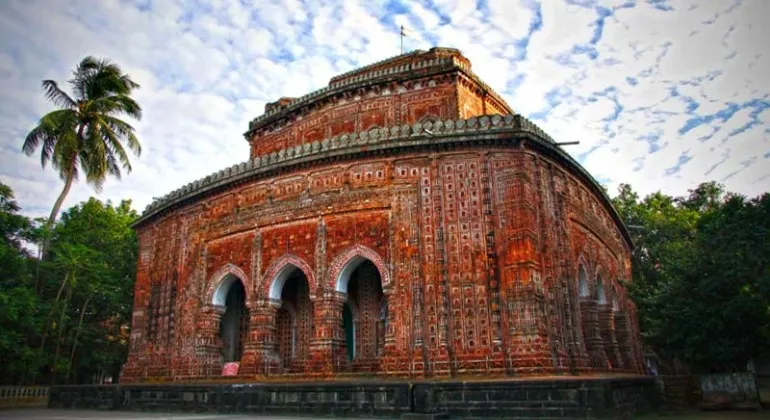
What makes the Nayabad Mosque particularly interesting is (Kantajeu Temple) its historical connection with the Muslim craftsmen who worked at the nearby Kantjeu Temple. Local accounts suggest that these craftsmen settled in the village of Nayabad and built the mosque for their religious rituals. While the exact identity and origins of its builders are a matter of historical debate, the relationship between these two structures provides visitors with a fascinating insight into the artistic and religious heritage of Dinajpur.
Unlike the highly commercialized tourist destinations, Nayabad Mosque offers an intimate heritage experience. Travelers can appreciate the centuries-old brickwork, surviving terracotta panels, the rustic surroundings, and the ongoing religious significance of the mosque. A visit here usually takes about 30-60 minutes , making it a great addition to a half-day heritage tour from Dinajpur city.


 ColoZai