
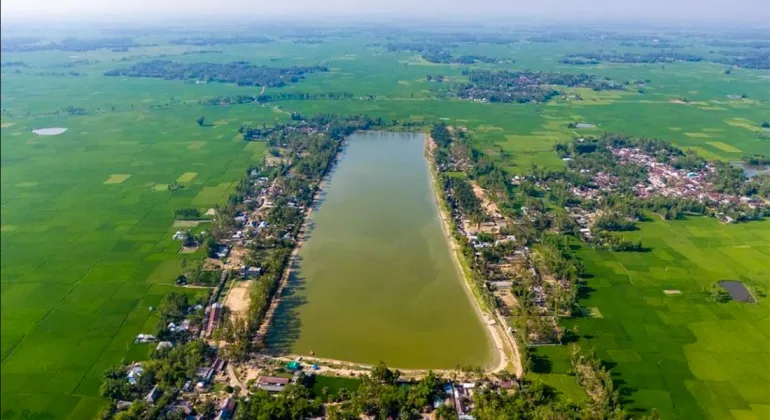
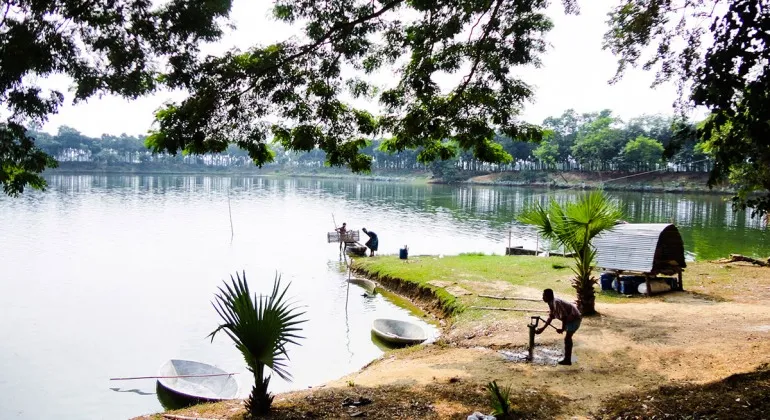
Nandail Dighi in Joypurhat is one of the most notable historical reservoirs in northern Bangladesh, famous for its vast water body, centuries-old heritage, tranquil rural environment and seasonal birdlife. Located in Nandail village of Punat union in Kalai upazila of Joypurhat district, this huge artificial reservoir presents a unique blend of natural beauty, local folklore and historical significance. Visitors looking for places to visit in Joypurhat will find Nandail Dighi particularly attractive for taking photographs, taking a leisurely walk, enjoying the rural scenery and for a relaxing family trip.
According to the Joypurhat district administration, this historic reservoir is spread over an area of about 59.40 acres and is about 1 km long . According to local folklore, it was excavated by a ruler named Raja Nandalal around 1610. According to another popular legend, the entire reservoir was excavated in a single night. Although these stories are an important part of the cultural identity of the region, their historical accounts have not been independently established through archaeological records.
Depending on the route and starting point, it can be reached in a half-day trip from the district headquarters of Nandail Dighi, located about 19-23 km east of Joypurhat town. Its appeal lies in the vastness of the reservoir, the surrounding rural landscape, and the opportunity to experience a quieter side of rural Bangladesh, away from commercial amusement parks and busy urban attractions.
This reservoir is particularly attractive to nature lovers, as it has historically been visited by migratory birds during the winter. Travelers interested in exploring more traditional reservoirs in Joypurhat can also consider another historical reservoir in the district, Acharanga Dighi Joypurhat.
Location: Nandail Village, Punat Union, Kalai Upazila, Joypurhat District, Rajshahi Division, Bangladesh. Suggested duration of visit: About 1-2 hours, with additional time for photography, bird watching or picnicking. Best time to visit: November to February, especially in the morning and late afternoon.
 ColoZai