Idrakpur Fort Munshiganj

Idrakpur Fort Munshiganj

Munshiganj
·

18 October 2026

Travel Overview & Quick Facts

Location
Munshiganj
Admission / Entry Fee
Free general admission according to a public attraction listing checked in September 2026. No standard entrance ticket is currently listed. Special exhibitions, guided services or future ticketing arrangements may have separate charges. Confirm the latest admission policy with the site management before visiting.
Best Time to Visit
Open year-round, with October to March ideal for sightseeing
Opening Hours
Monday 02:30 PM - 06:00 PM; Tuesday - Thursday 10:00 AM - 01:00 PM and 01:30 PM - 06:00 PM; Friday 10:00 AM - 12:30 PM and 02:30 PM - 06:00 PM; Saturday 10:00 AM - 01:00 PM and 01:30 PM - 06:00 PM; Sunday Closed. These are published attraction-listing hours; seasonal government archaeological-site schedules may differ.
Google Rating
★ 4.3 (2393 reviews)
Category / Type
Historical Landmark, Mughal Architecture, Archaeological Heritage, Cultural Tourism

Introduction to Idrakpur Fort Munshiganj

Idrakpur Fort Munshiganj, locally known as Idrakpur Kella or ইদ্রাকপুর দুর্গ, is one of Bangladesh's remarkable surviving Mughal river fortifications. Standing in the heart of Munshiganj town, approximately 27–35 kilometres south of central Dhaka depending on the starting point and route, this seventeenth-century fortress offers visitors an opportunity to explore the military architecture, river-based history and cultural heritage of ancient Bikrampur.

Built around 1660 AD under Mir Jumla II, the Mughal governor of Bengal, Idrakpur Fort was designed to defend the important waterways approaching Dhaka and Narayanganj. During that period, the rivers of Bengal were major routes for commerce, communication and military activity. The fort helped protect settlements and trading centres against attacks by Magh, or Arakanese, and Portuguese raiders.

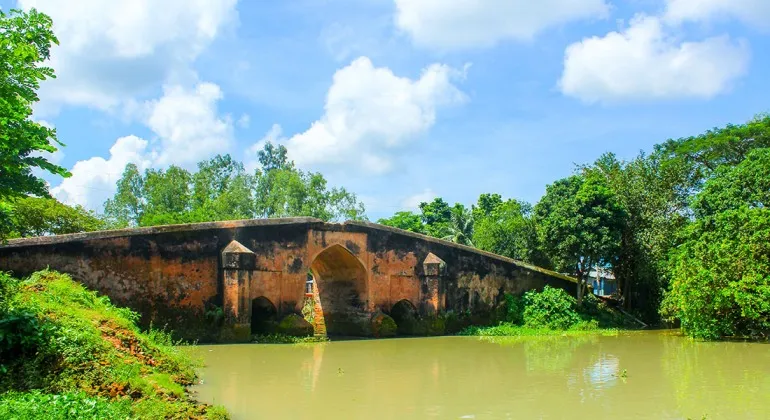
Unlike a grand royal palace, Idrakpur Fort was primarily a strategic military installation. Its powerful brick enclosure, defensive battlements, observation positions and distinctive raised circular platform reveal how Mughal engineers adapted fortification techniques to Bengal's riverine geography. The historic structure remains particularly interesting because its original defensive purpose can still be understood from its surviving architectural features.

Today, the fort is an accessible heritage attraction within Munshiganj Sadar. Visitors come to admire its historic walls, learn about Mughal Bengal, photograph the distinctive architecture and experience a quieter alternative to the major monuments of Dhaka. It is particularly rewarding for history enthusiasts, students, photographers, families and travellers exploring the cultural landscape of Munshiganj district.

Location: Idrakpur Fort, Moddho Courtgaon Road, near the Old Court area, Munshiganj Sadar, Munshiganj 1500, Bangladesh. The fort is also associated with nearby Munshiganj District Stadium and Haraganga College, which are useful local navigation landmarks.

Recommended visiting duration: Approximately 45–90 minutes for a relaxed visit, with additional time for photography and historical interpretation. Travellers interested in other Mughal monuments can combine the fort with Baba Adam Mosque Munshiganj for a broader introduction to the district's Islamic architectural heritage.


History and Historical Significance

Idrakpur Fort occupies an important place in the military history of Mughal Bengal. Its construction is generally attributed to Mir Jumla II around 1660 AD, when securing the waterways surrounding the Mughal provincial capital at Dhaka was a major administrative and military priority.

Why was Idrakpur Fort built?

During the seventeenth century, Bengal's river networks connected major settlements, trading centres, agricultural regions and administrative cities. These same waterways also provided access for armed raiders who threatened river traffic and prosperous communities. Magh and Portuguese raiding groups were particularly associated with attacks along parts of eastern Bengal's river system.

Idrakpur was strategically situated near the historical waterways of the Ichamati, Dhaleshwari, Meghna and Shitalakshya rivers. The surrounding river courses and navigation channels have changed over the centuries, but their earlier importance explains the location of the fortress.

The fort allowed Mughal forces to monitor movement along the waterways, maintain a defensive position and strengthen protection of the routes toward Dhaka. Its thick walls and raised artillery platform were designed for surveillance and resistance rather than ceremonial display.

The Mughal river-fort defence network

Idrakpur Fort is commonly discussed alongside Hajiganj Fort and Sonakanda Fort in neighbouring Narayanganj. Together, these strongholds formed part of the historical defensive network protecting river approaches to Dhaka. They illustrate the importance of naval power and fortification in the administration of Mughal Bengal.

This defensive role makes Idrakpur more than an isolated archaeological monument. It is physical evidence of a period when controlling waterways was essential to controlling territory, maintaining trade and protecting major settlements.

From military outpost to protected monument

As political conditions and river routes changed, Idrakpur Fort gradually lost its original strategic role. The site was recognised as a protected historic monument in 1909, reflecting its importance as a surviving example of Mughal military architecture.

Over time, sections of the historic compound were used for various administrative and institutional purposes. Conservation initiatives have sought to protect the surviving fortifications and make the heritage site more accessible to visitors.

Today, Idrakpur Fort offers a valuable connection between the Mughal period and the wider heritage of Bikrampur. Travellers interested in the region's earlier cultural history may also appreciate Atish Dipanker Birthplace, associated with one of the most influential Buddhist scholars of medieval Bengal.


Architecture and Major Attractions Inside the Fort

The architecture of Idrakpur Fort is unusual because its defensive design was closely connected to the surrounding rivers. Rather than relying on elaborate palace buildings, the fortress used strong masonry walls, strategic observation points and an elevated circular artillery platform to support its military functions.

The fortified brick enclosure

The fort consists of a substantial brick-built defensive enclosure with an irregular overall arrangement combining angular and curved elements. Published measurements vary depending on which architectural boundaries are included, but the historic compound is approximately 80–90 metres along its longer dimension.

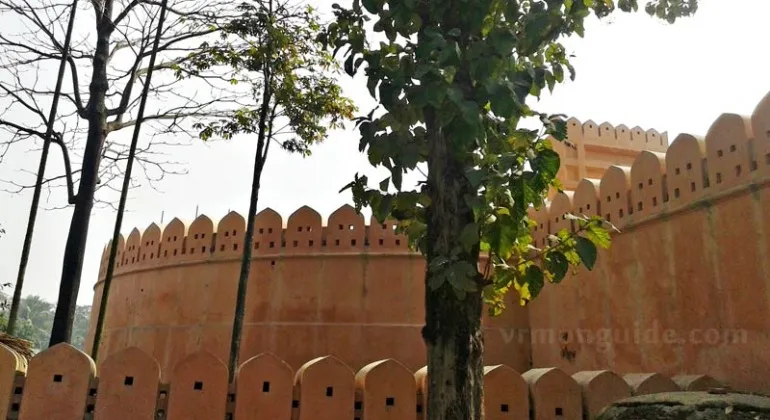
The perimeter walls incorporate protective parapets and regularly spaced openings associated with observation and defensive activity. Their repetitive forms create one of the most recognisable visual features of Idrakpur Fort.

The elevated circular artillery platform

The most distinctive feature is the large raised circular platform, often described as a circular drum or bastion. Historical architectural descriptions place its diameter at approximately 32 metres. The structure was designed to provide an elevated position for monitoring the surrounding landscape and deploying defensive artillery.

A staircase provides access toward the elevated defensive area, although present-day visitor access may be restricted to protect the structure. The circular form, masonry construction and surrounding battlements demonstrate the practical military engineering used in Mughal Bengal.

The entrance gateway

The historic entrance incorporates a prominent arched opening and substantial masonry construction. The gateway is an attractive subject for architectural photography, particularly when photographed with the surrounding fort walls and stairways.

Defensive parapets and observation openings

The walls feature characteristic crenellations and small openings associated with the fort's original defensive functions. These details are useful for understanding how soldiers could observe approaching vessels while maintaining protection behind substantial brickwork.

Underground chamber and local legends

Historical descriptions refer to an underground chamber associated with the elevated platform, traditionally interpreted as a storage area or military magazine. Local stories also describe a secret passage connecting Idrakpur Fort with Lalbagh Fort in Dhaka. No reliable archaeological evidence establishes that such a tunnel connected the two forts, so the story is best understood as local folklore rather than verified history.

The courtyard and surrounding environment

The open compound and surviving fortifications allow visitors to appreciate the relationship between the enclosed defensive area and the larger platform. Trees, open ground and historic masonry provide opportunities for photography and observation. The fort's urban surroundings also help illustrate how Munshiganj has developed around its older heritage landmarks.

Conservation reminder: Avoid climbing fragile sections of masonry, entering blocked chambers or touching unstable decorative elements. Follow any barriers and directions provided by heritage-site staff.


Things to Do at Idrakpur Fort

Although Idrakpur Fort is a relatively compact archaeological attraction, it offers several worthwhile experiences for visitors interested in Bangladesh's history, architecture and local culture.

  • Explore Mughal military architecture: Observe the defensive enclosure, circular artillery platform, entrance gateway and surviving battlements.
  • Take architectural photographs: Capture the symmetry of the crenellated walls, aged brick textures, arched entrance and prominent stairway.
  • Learn about river warfare: Consider how the nearby historical waterways influenced the design and strategic position of the fort.
  • Enjoy educational sightseeing: Use the site as an outdoor learning destination for students interested in history, geography and archaeology.
  • Discover the history of Bikrampur: Connect the fort's Mughal heritage with the wider cultural history of Munshiganj.
  • Experience local town life: Explore the surrounding Old Court neighbourhood and nearby commercial streets after visiting the monument.

Photography recommendations

The entrance gateway, curved defensive walls and raised platform are among the most interesting subjects. Morning and late-afternoon visits can produce attractive architectural photographs, subject to the site's operating schedule. Photograph historic features from permitted viewing areas and avoid blocking paths or disturbing other visitors.

Educational visits

Idrakpur Fort is particularly suitable for history students because it provides visible examples of fortification, defensive planning and the relationship between geography and military strategy. Teachers and group organisers should consider discussing seventeenth-century Bengal, the Mughal administrative system and the importance of river transport before arriving.

Suggested one-hour visit

  • First 10 minutes: Observe the gateway and overall layout of the fortress.
  • Next 20 minutes: Study the perimeter walls, battlements and circular platform from permitted areas.
  • Next 20 minutes: Take photographs and learn about Mir Jumla's defensive strategy.
  • Final 10 minutes: Explore the accessible grounds and prepare for the next destination.

For travellers planning a longer cultural itinerary, the fort can be paired with Sonarong Jora Moth Munshiganj, another historic attraction that reflects a different architectural tradition in the district.


Entry Fee, Opening Hours and Visitor Rules

Idrakpur Fort is currently listed as a free-entry historical landmark in a public attraction directory checked in September 2026. However, museum operations, special exhibitions and government-managed archaeological-site arrangements may be subject to separate rules. Visitors should confirm admission conditions locally before travelling.

Admission and estimated costs

ItemCost or information
General fort admissionFree according to the referenced attraction listing
ChildrenNo separate general admission charge listed
Special exhibitions or guided servicesAsk site management if available
Personal photographyGenerally possible in permitted public areas; confirm any restrictions
Commercial photography or filmingPrior permission may be required
Local rickshaw or auto-rickshawPaid separately according to distance and negotiation

Published attraction-listing opening hours

DayPublished visiting hours
Monday02:30 PM - 06:00 PM
Tuesday10:00 AM - 01:00 PM; 01:30 PM - 06:00 PM
Wednesday10:00 AM - 01:00 PM; 01:30 PM - 06:00 PM
Thursday10:00 AM - 01:00 PM; 01:30 PM - 06:00 PM
Friday10:00 AM - 12:30 PM; 02:30 PM - 06:00 PM
Saturday10:00 AM - 01:00 PM; 01:30 PM - 06:00 PM
SundayClosed

Important seasonal clarification: The Bangladesh Department of Archaeology publishes a general winter schedule from October to March, with a 05:00 PM closing time, earlier opening times on several days and different Friday breaks. The attraction-specific listing above is not fully consistent with that government schedule. Treat the published hours as provisional and confirm which timetable is being followed before visiting, especially during October–March, public holidays or conservation work.

Visitor guidelines

  • Respect archaeological structures and posted heritage-protection instructions.
  • Do not scratch, paint, write on or remove material from historic walls.
  • Avoid climbing unstable battlements or accessing restricted sections.
  • Keep the monument and surrounding grounds free from litter.
  • Supervise children around stairways, elevated areas and uneven surfaces.
  • Ask permission before using drones, professional filming equipment or organising commercial photo sessions.
  • Allow extra time for group visits, inspections or temporary access restrictions.

For authoritative information on government archaeological-site visiting schedules, consult the Bangladesh Department of Archaeology.


Best Time to Visit Idrakpur Fort

October to March is a practical and popular period for exploring Idrakpur Fort and other historical attractions in Munshiganj. The monument can be visited throughout the year when open, but its appeal lies primarily in outdoor sightseeing, architectural exploration and photography.

Best time of day

Morning visits are useful for travellers who want to study the architecture and photograph the monument before beginning a wider sightseeing itinerary. Late afternoon can also provide attractive natural lighting on the brick structures, provided visitors enter early enough to finish before closing.

Weekdays versus weekends

Weekdays outside major holidays can be convenient for visitors who prefer an unhurried experience. Fridays, Saturdays and public holidays may attract more local visitors or organised groups. Actual visitor numbers vary and should not be assumed from the day alone.

Planning around seasonal hours

Because government archaeological-site schedules may change between October–March and April–September, check the applicable closing time before departure. Avoid arriving close to the final admission period, especially if you want enough time to examine the historical features carefully.

Travellers combining the fort with outdoor destinations such as Arial Bil Munshiganj should allow separate travel and sightseeing time because the wetland lies outside Munshiganj town.


How to Reach

Idrakpur Fort is located on Moddho Courtgaon Road near the Old Court area of Munshiganj Sadar. It is accessible from Dhaka by road and from central Munshiganj by rickshaw, battery-powered auto-rickshaw or CNG auto-rickshaw. The journey is straightforward for a day trip, although actual travel time depends on the Dhaka departure point, route and traffic conditions.

1. From Dhaka by bus

  1. Travel to the Gulistan area of Dhaka, a commonly used departure point for road transport towards Munshiganj.
  2. Look for a bus serving Munshiganj, Muktarpur or the relevant district-bound route. Historically reported operators include Dhaka Transport and Dighirpar Transport; confirm current routes and operators at the counter.
  3. Board a service going towards Munshiganj or Muktarpur and tell the conductor that your destination is Idrakpur Fort in Munshiganj Sadar.
  4. If the bus stops at Muktarpur, take a local auto-rickshaw, CNG or rickshaw towards the Old Court area.
  5. Ask the local driver for Idrakpur Kella or Idrakpur Fort, near Moddho Courtgaon Road.

Estimated bus fare: Approximately ৳70–৳150 per person for an ordinary Dhaka–Munshiganj service, depending on the operator and boarding point. This is a planning estimate rather than a verified current ticket price. The road journey commonly takes around 1–2 hours from suitable southern Dhaka departure points, but congestion can extend travel considerably.

2. From Dhaka by private car or hired vehicle

Travellers using a private car can follow the road network towards Narayanganj, Muktarpur and Munshiganj Sadar. Use the fort's local address for navigation and follow current road directions rather than relying on a fixed historical route.

The distance from central Dhaka varies substantially depending on where the journey begins. A reasonable planning allowance is approximately 30–45 kilometres by road, with additional distance possible from northern Dhaka.

Estimated private transport costs: A locally negotiated CNG or small-vehicle trip from parts of Dhaka may cost several hundred taka or more, while a dedicated car rental with driver may cost approximately ৳3,000–৳6,000 or higher for a round trip depending on vehicle class, journey duration, fuel arrangements and waiting time. Confirm all charges before booking.

3. From Munshiganj town and district headquarters

Idrakpur Fort is already located within Munshiganj Sadar, making it a convenient destination from the district's central administrative and commercial areas.

  1. Reach Munshiganj town centre, the Old Court area or a convenient local transport stand.
  2. Hire a rickshaw or battery-powered auto-rickshaw.
  3. Ask to be taken to Idrakpur Kella on Moddho Courtgaon Road.
  4. Use nearby landmarks such as Haraganga College or Munshiganj District Stadium if the driver needs further orientation.

Estimated local fare: Roughly ৳20–৳80 for a short rickshaw or auto-rickshaw journey within town, with higher fares possible for longer trips, reserved vehicles or multiple passengers. Older official district tourism information quoted fares as low as ৳10 per person by shared auto-rickshaw and ৳20–৳25 by rickshaw from Muktarpur, but those historical figures should not be treated as guaranteed current fares.

4. By train

There is no regularly established direct passenger train service to Idrakpur Fort or Munshiganj town centre. Travellers arriving at Dhaka Railway Station in Kamalapur should continue by road, using a bus, ride-hailing vehicle or hired car. Rail travel is therefore not usually the most direct option for visiting the fort.

5. By air

The closest major international airport is Hazrat Shahjalal International Airport in Dhaka. After landing, visitors can travel by airport taxi, ride-hailing service or private car toward Munshiganj Sadar. Allow approximately 2–3 hours or more for a road transfer depending on traffic and road conditions. There is no airport in Munshiganj serving this attraction.

6. By river transport

Munshiganj has a long history of river communication, and launch travel has historically connected parts of the district with Dhaka's Sadarghat. Passenger services, terminals and operating routes may change, so verify whether an appropriate launch is running before making this your primary journey. Where a suitable service operates, continue from the local landing point to Idrakpur Fort by road.

7. Useful navigation landmarks

  • Old Court area, Munshiganj Sadar
  • Moddho Courtgaon Road
  • Haraganga College
  • Munshiganj District Stadium
  • Muktarpur, an important approach point from Dhaka

Practical navigation advice: Tell the driver the Bengali name 'Idrakpur Kella' if English place names are unfamiliar. Confirm the destination before starting and agree on the fare when using a reserved local vehicle.

Where to Eat

Idrakpur Fort is situated within Munshiganj town, so visitors can usually find restaurants, tea stalls, bakeries and local eateries within a short journey of the monument. Most travellers will find it easier to eat in the surrounding commercial area rather than expect a dedicated dining facility inside the historic fort.

Local restaurants in Munshiganj Sadar

Public business listings identify restaurants such as Friends Kitchen & Party Palace, Bites and The Haunted House within roughly one kilometre of the fort. Their menus, operating hours and current availability should be checked locally before visiting.

Depending on the establishment, typical meals may include rice, fish curry, chicken dishes, vegetables, dal, paratha and familiar Bangladeshi snacks. Small local restaurants are often suitable for a straightforward lunch during a sightseeing trip.

Suggested food budget

Food or drinkApproximate budget
Tea and a light snack৳30–৳100
Simple local breakfast৳60–৳150
Basic rice meal with vegetables or egg৳100–৳200
Rice meal with fish or chicken৳180–৳400
Restaurant meal for twoApproximately ৳400–৳1,000 or more

These are general food-budget estimates for planning, not verified menu prices at specific restaurants.

Traditional food experiences

Munshiganj and the wider Bikrampur region are associated with traditional Bengali sweets and river-fish dishes. For travellers interested in regional confectionery, sweets Of Bhagyakul Bazar Munshiganj is a worthwhile addition to a longer district itinerary.

Visitors continuing towards the Padma River may also explore local fish restaurants around Mawa Ferry Ghat Munshiganj. Fish availability and pricing vary, particularly for premium river fish, so confirm the variety, portion size and price before ordering.

Food and drinking-water tips

  • Carry drinking water for the fort visit.
  • Choose eateries where food appears freshly prepared and properly stored.
  • Confirm prices before ordering fish by weight.
  • Keep small cash notes for snacks and local restaurants.
  • Dispose of packaging responsibly rather than leaving waste at the monument.

Where to Stay

Most travellers visiting Idrakpur Fort from Dhaka can comfortably complete the trip within a day. However, staying overnight in Munshiganj or at a riverside resort can be useful for visitors planning to explore multiple historical sites, rural landscapes and riverfront destinations across the district.

Budget accommodation in Munshiganj Sadar

Munshiganj town has local guesthouses and small hotels that may be suitable for travellers prioritising proximity to Idrakpur Fort. Budget accommodation options vary in quality and facilities, so inspect recent reviews, confirm cleanliness and verify identification requirements before booking.

Approximate planning budget: ৳800–৳2,500 per night for basic or modest accommodation, depending on the property and facilities. Availability and current rates must be confirmed directly.

Riverside resorts in Munshiganj district

For visitors seeking a more relaxed overnight experience, Padma Resort offers a district-based riverside accommodation alternative. It is geographically separate from Idrakpur Fort, so travellers should include road-transfer time when planning their itinerary.

Another option is Mawa Resort Munshigonj, which may appeal to travellers planning to spend additional time around the Mawa area and Padma riverfront.

Families interested in a resort-focused outing can also research Meghna Village Holiday Resort. Confirm the property's current operation, booking conditions, location, facilities and family policies before reserving.

Staying in Dhaka

Dhaka remains the most practical overnight base for many domestic and international visitors. It offers a wider range of accommodation, restaurants and transport choices. Travellers can depart in the morning, visit Idrakpur Fort, explore a second Munshiganj attraction and return to Dhaka later in the day.

Accommodation booking checklist

  • Confirm the exact address and travel time to your planned attractions.
  • Ask about air conditioning, private bathrooms and backup electricity if required.
  • Verify parking availability when travelling by private vehicle.
  • Confirm check-in rules and accepted identification.
  • Check recent guest reviews and cancellation policies.
  • For resorts, ask whether meals, transport or recreational activities are included in the room price.

Practical Travel Tips and Accessibility

A little preparation makes a visit to Idrakpur Fort more enjoyable, particularly for first-time visitors travelling independently from Dhaka.

What to bring

  • Comfortable footwear: Historic paving, open ground and stairways can be uneven.
  • Drinking water: Carry a personal bottle rather than relying on refreshments inside the monument.
  • Camera or smartphone: The fort provides several attractive opportunities for architectural photography.
  • Small cash notes: Useful for local rickshaws, snacks and incidental expenses.
  • Identification: Sensible for travel and any site-specific visitor registration requirements.
  • Personal essentials: Carry any necessary medication and other important supplies.

Accessibility considerations

Public listings identify some accessible entrance, parking and seating features. However, this does not mean every section of the historic monument is wheelchair accessible. The elevated platform, old stairways and irregular surfaces may present challenges for visitors with limited mobility.

Visitors requiring step-free access should check current conditions and any available assistance before travelling. Elderly visitors and families with young children should allow additional time and avoid restricted or unstable areas.

Facilities

Because Idrakpur Fort is primarily an archaeological site, visitors should not assume the availability of extensive tourist facilities. Toilet access, drinking water, guided interpretation and museum displays may differ depending on the site's management arrangements and maintenance status.

In 2024, reporting in The Daily Star highlighted limitations associated with the fort's museum and its artefact displays. Travellers should therefore visit primarily for the historic architecture and confirm whether any museum exhibitions are operating before making a special trip.

Safety and heritage etiquette

Remain within authorised visitor areas, especially around elevated structures and old masonry. Respect conservation barriers, do not enter closed chambers and supervise children carefully. For emergencies in Bangladesh, the national emergency number is 999.

Visitors with additional time can explore more of Munshiganj's heritage, including Rai Bahadur Srinath Palace and Vaggokul Jamidar Bari Munshiganj, subject to their current accessibility and preservation conditions.


Suggested One-Day Itinerary from Dhaka

Idrakpur Fort is an excellent starting point for a heritage-focused Munshiganj day trip. The following itinerary combines the fort with other historical attractions while leaving time for local food and transport. Timings are illustrative and should be adjusted for actual opening hours, road conditions and the distances between sites.

Approximate timeSuggested activity
07:30 AMDepart Dhaka towards Munshiganj Sadar.
09:30 AMArrive in Munshiganj and enjoy breakfast or tea.
10:00 AMExplore Idrakpur Fort, subject to confirmed visitor hours.
11:30 AMContinue towards Baba Adam Mosque for historical sightseeing.
01:00 PMStop for lunch in Munshiganj town.
02:30 PMVisit another selected heritage destination, allowing adequate travel time.
04:30 PMBegin the return journey towards Dhaka.

Heritage-focused itinerary

For travellers interested primarily in archaeology and architecture, a rewarding combination is Idrakpur Fort followed by Baba Adam Mosque Munshiganj. A longer excursion can include Sonarong Jora Moth Munshiganj, providing a contrast between Mughal defensive architecture and historic religious monuments.

History and riverfront itinerary

Travellers who prefer a combination of heritage and scenic experiences can visit Idrakpur Fort first and then continue by road towards Mawa Ferry Ghat Munshiganj. This adds significant travel distance compared with a Munshiganj Sadar-only outing, so allow sufficient time for the transfer and return journey.

Planning advice: Avoid attempting too many geographically separated attractions in a single short trip. Munshiganj district covers several upazilas, and some destinations require substantial road travel from the district headquarters.


Nearby attractions

Idrakpur Fort sits within a district known for ancient settlements, archaeological landmarks, traditional architecture and river landscapes. Several attractions can be combined with a visit to the fort, although not all are within walking distance. The following destinations provide ideas for expanding a Munshiganj itinerary.

Historical and cultural attractions

  • Baba Adam Mosque Munshiganj: A historic mosque at Rampal associated with the fifteenth-century Sultanate period. It is one of the most relevant nearby heritage stops for visitors interested in Islamic architecture.
  • Sonarong Jora Moth Munshiganj: A striking pair of historic temple towers in the Tongibari area, offering a contrasting example of regional religious architecture.
  • Atish Dipanker Birthplace: A destination associated with the renowned Buddhist scholar Atisha Dipankara and the wider historical significance of Bikrampur.
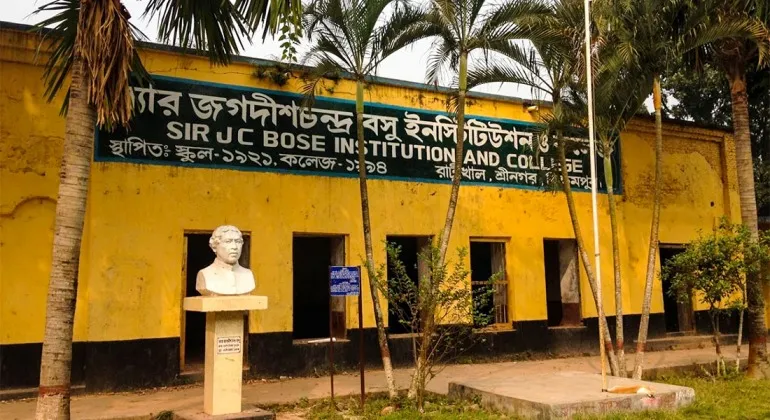
  • Sir Jagadishchandra Bose Institution Munshiganj (Sir Jagadish Chandra Bose Institution Munshiganj): A heritage-oriented destination associated with the distinguished scientist Jagadish Chandra Bose and the intellectual history of the region.
  • Vaggokul Jamidar Bari Munshiganj: A destination reflecting the district's traditional landed-estate architectural heritage.
  • Rai Bahadur Srinath Palace: A historic mansion destination of interest to travellers exploring old estates and regional architectural history.
  • Poddohem Dham Munshiganj: A religious and cultural destination that can be considered for a broader district heritage itinerary.

Rivers, wetlands and scenic destinations

  • Arial Bil Munshiganj: A vast wetland landscape known for rural scenery, agricultural surroundings and seasonal changes in water levels.
  • Mawa Ferry Ghat Munshiganj: A historically important Padma River crossing area, now attractive for riverfront sightseeing and local food experiences.
  • Sholoani Saikat Munshiganj: A local riverside recreation destination worth researching before a scenic district outing.
  • Polghata Bridge Munshiganj: A local bridge landmark that may appeal to visitors interested in photography and the surrounding landscape.

Resorts and relaxation destinations

  • Padma Resort: A riverside accommodation option for travellers extending their Munshiganj sightseeing into an overnight trip.
  • Mawa Resort Munshigonj: A leisure-oriented option for visitors planning activities around Mawa and the Padma River.
  • Meghna Village Holiday Resort: A resort destination for families and groups seeking a separate recreation experience within the wider district.

Regional food destination

sweets Of Bhagyakul Bazar Munshiganj: An appealing stop for travellers interested in the traditional sweets of Bikrampur and the culinary heritage of Munshiganj.

Recommended combination: For a manageable heritage outing, start with Idrakpur Fort and Baba Adam Mosque. Travellers with a full day and private transport may add another carefully selected attraction. For a separate scenic excursion, explore the Mawa riverfront, Padma Resort or Arial Bil rather than assuming that all listed places are close together.

Frequently Asked Questions (FAQ)

Idrakpur Fort is located on Moddho Courtgaon Road near the Old Court area in Munshiganj Sadar, Munshiganj district, Dhaka Division, Bangladesh. It stands within Munshiganj town rather than in a remote rural location. Haraganga College and Munshiganj District Stadium are useful nearby landmarks. The fortress is also locally known as Idrakpur Kella or ইদ্রাকপুর কেল্লা.

Explore The Area

Top Attractions & Places to Visit in Munshiganj

Discover more heritage, nature, and must-visit spots across Munshiganj.

View all in Munshiganj

Polghata Bridge Munshiganj

Visit Polghata Bridge, one of the most historic architectural landmarks in the culturally rich Munshiganj district of Ba...

Shafayet Al-Anik

Sonarong Jora Moth Munshiganj

Discover Sonarang Jora Moth, one of the most unique historical monuments in Munshiganj, Bangladesh . Located in Sonarang...

Shafayet Al-Anik

Mona Bay Water Park Munshiganj

Mana Bay Water Park Munshiganj is a premium water-entertainment center located in Bausia, Gazaria Upazila, Munshiganj Di...

Shafayet Al-Anik

Atish Dipankar's birthplace, Munshiganj, Bangladesh

Discover the birthplace of Atish Dipankar Srigyan, one of the most influential Buddhist scholars and teachers in the Bik...

Shafayet Al-Anik

Mawa Ferry Ghat Munshiganj

Mawa Ferry Ghat in Munshiganj, locally known as Mawa Ghat or Mawa Ferry Ghat , is one of the most well-known riverside d...

Shafayet Al-Anik

Sir Jagadish Chandra Bose Institution Munshiganj

Discover an important chapter in Bengal's scientific and educational heritage at the Sir Jagadish Chandra Bose Instituti...

Shafayet Al-Anik

Mawa Resort Munshiganj

Mawa Resort Munshiganj is a popular riverside resort in Louhajang Upazila of Munshiganj District, Bangladesh . Located o...

Shafayet Al-Anik

Meghna Village Holiday Resort

Meghna Village Holiday Resort is a rurally inspired family resort and entertainment center located in Baluakandi, Gazari...

Shafayet Al-Anik

Padma Resort, Munshiganj, Bangladesh

Padma Resort, located in Louhajang, Munshiganj, is a riverside resort connected to the scenic beauty of the Padma River....

Shafayet Al-Anik

Paddohem Dham Munshiganj

Paddohem Dham, also known as Padmahem Dham or Padmahema Dham, is a unique spiritual and cultural pilgrimage site located...

Shafayet Al-Anik

Roy Bahadur Srinath Palace

Learn about the history of Roy Bahadur Srinath Palace, one of the most notable relics of Munshiganj's aristocratic past....

Shafayet Al-Anik

Aerial Bill Munshiganj

Aerial Beel, also known as Aerial Beel, is a vast seasonal wetland located in the Srinagar and Sirajdikhan areas of Muns...

Shafayet Al-Anik

logo ColoZai

ColoZai is a trusted travel guide and destination explorer platform in Bangladesh. We are making travel simple, authentic, and accessible for everyone.

Need Help ?

We are Always here for you! Knock us on Whatsapp (10AM - 10PM) or Email us.