Gangatia Zamindar Bari, Kishoreganj – History, Architecture, Location and Complete Travel Guide

Gangatia Zamindar Bari, Kishoreganj – History, Architecture, Location and Complete Travel Guide

Kishoreganj
·

18 October 2026

Travel Overview & Quick Facts

Directions
Location
Kishoreganj
Admission / Entry Fee
No specific entry fee has been reliably documented for Gangatia Zamindar House. Traditionally, visitors can visit this heritage property without purchasing a formal ticket, subject to the permission of the resident family. This estate is a private residence, not a government museum. Please seek permission before entering the grounds or taking photographs of the residential area, and ensure that no entry or maintenance fees are charged.
Best Time to Visit
Open year-round; October to March is ideal, especially in the morning or late afternoon.
Opening Hours
Daily 9:00 AM - 5:00 PM (visiting hours indicated; not independently verified on Google Maps, and access is subject to resident permission)
Google Rating
★ 4.3 (433 reviews)
Category / Type
Historical sites, Zamindar estates, Colonial architecture, Cultural and heritage tourism

Introduction to Gangatia Zamindar Bari, Kishoreganj – History, Architecture, Location and Complete Travel Guide

Gangatia Zamindar Bari, also known as Gangatia Zamindar Bari, Gangatia Zamindar Bari or Manab Babur Bari , is a notable historic estate located in Gangatia village, Gobindpur Union, Hossainpur Upazila, Kishoreganj District, Bangladesh. Located about 11–12 kilometres from Kishoreganj city, this century-old zamindar's residence preserves the architectural features, family traditions and social history of the former landowning elite of Bengal.

Unlike many abandoned zamindars scattered across Bangladesh, the Gangatia zamindar bari is particularly interesting because it is associated with the descendants of its original landowner family. The property is widely known locally as 'Manab Babar Bari' , after Manabendranath Chakraborty, a descendant of the owners of this historic estate . The report, published in September 2025, describes him as an elderly resident who continued to welcome visitors and tell stories of the family's past. As it is a living residential property, visitors must ensure permission to enter and respect the family's privacy.

The estate is known for its elegant classical-style pillars, ornate gateways, vast courtyards, elaborate architecture, old trees, and traditional rural ambience. Its distinctive form reflects the influence of European architecture that became popular among wealthy Bengali landlord families during the colonial era.

For travelers interested in architecture, traditional photography, local history, and rural Bangladesh, Gangatia Zamindar Bari is a rich alternative to the crowded commercial tourist centers. It also (Jangalbari Fort) complements historical attractions like Jangalbari Fort, which represents another important chapter in Kishoreganj's zamindari and regional political history.

Location: Gangatia Village, Gobindpur Union, Hossainpur Upazila, Kishoreganj District, Dhaka Division, Bangladesh. Alternative local name: Manab Babur Bari. Suggested duration of visit: Approximately 45–90 minutes depending on accessibility and personal interest. Attraction type: Historic landlord's residence and architectural heritage monument.

History of Gangatia Zamindar House

The history of the Gangatia Zamindar House is closely linked to the Chakraborty family and the development of the zamindari system in Bengal. The historical context of this estate extends beyond the construction of the present building, so it is important to distinguish between the traditions of the original family settlement and the later establishment of the estate.

Early settlement and the Chakravarti family

Local historical accounts indicate that the family's arrival in the area began around the 16th century with a learned Brahmin ancestor from northern India. According to this tradition, the family first settled near a Shiva temple to the south of the present building. The exact chronology of these early events has not been conclusively established through archaeological records that are open to the public.

The later zamindari system is generally associated with Dinanath Chakraborty , who became a landed proprietor in the region during the British rule. Local history shows that he purchased a significant portion of the Husainshahi pargana, which laid the foundation for the family's position as local landlords.

It is known that subsequent generations expanded their ownership through additional land purchases, including transactions with neighboring estates. These acquisitions helped to consolidate the family's status in the regional land ownership system.

Development during the colonial period

The original residence is generally described as an 18th-century zamindar's house, although parts of it may have been built, renovated or altered in later generations. Its classical columns, ornate roof ridges and monumental arcades reflect the architectural style that spread to Bengal during the colonial period.

In the zamindari system, landlords held a dominant position in the administration and collection of land revenue. Estates like Gangatia were not just private residences; they were also centres of local authority, agricultural administration and family life.

Gangatia Zamindar Bari and the Liberation War of 1971

The estate also bears memories of the Bangladesh Liberation War. Local historical accounts reveal that the property was subjected to horrific violence and destruction in 1971. These accounts describe an attack by the Pakistani military and their collaborators, in which members of the Chakraborty family, including Bhupatinath Chakraborty, were killed.

Some accounts state that the date of the attack was 7 May 1971 and mentions a memorial to the victims. Visitors interested in this history should seek out locally verified information about the memorial and treat it with respect. Beyond its architecture, the wartime events are an important part of the estate's historical significance.

From zamindari residence to living heritage

Although the zamindari system in East Bengal was abolished in the 20th century, the architectural and cultural heritage of many former landlord families survived. The Gangatia Zamindar Bari is particularly notable for its continued association with the Chakraborty family.

Manabendra Nath Chakraborty, better known as Manab Babu, has been featured in various newspapers in Bangladesh as an important keeper of this family history. A report published in The Business Standard on 15 September 2025 describes his personal recollections and the continued use of the family residence.

Today, the historical significance of the Gangatia Zamindar House lies in its surviving architecture, local folklore, memories of the Liberation War, and the personal stories of the people associated with this zamindari.

Tourists can visit Agrosindur Fort and Jangalbari Fort on separate heritage-focused tours to learn about different aspects of Kishoreganj's historical heritage and military heritage .


Architecture and main attractions

The main attraction of Gangatia Zamindar Bari is its surviving architectural style. Although it is smaller than some of the famous Zamindar palaces in Bangladesh, the estate has a unique blend of classical architectural influences and traditional Bengali residential features.

1. The main building in the classical style

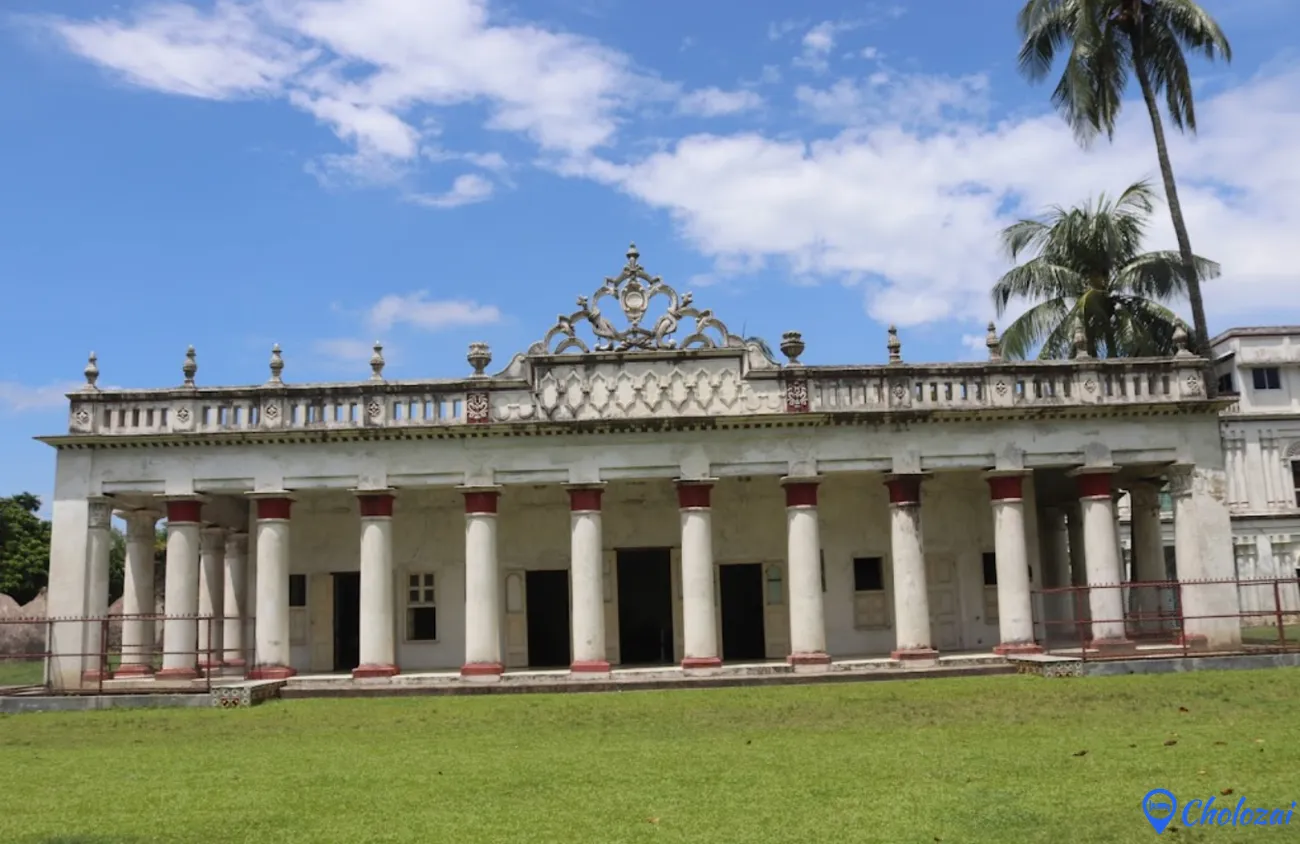
The main building has a striking façade, with a row of tall columns supporting the roof of an extended veranda. These columns show the influence of European classical architecture, sometimes described in travelogues as Greek or Roman in style. Their arrangement creates an elegant and symmetrical form, which stands out against the surrounding countryside.

The light-colored exterior, high entrance, ornate roofline, and traditional doors and windows provide excellent subjects for architectural photography. Note the relationship between the columns, roof ornamentation, and balconies, which highlight how imported architectural ideas were adapted to local building traditions.

2. Ornate entrance

One of the most striking features of this property is its historic entrance. The entrance incorporates ornate plasterwork, pillars, traditional masonry, and decorative designs. This entrance creates a majestic atmosphere before visitors enter the main residence.

The entrance area is particularly interesting for photography, as it beautifully blends the architectural details with the surrounding vegetation and the connecting road. Visitors should avoid touching the rough or fragile decorative surfaces of the older structures.

3. Courtyard and green surroundings

The estate is surrounded by open fields, mature trees and a spacious courtyard. Coconut trees and other plants contribute to its characteristic rural atmosphere, while the open entrance provides a picturesque view of the historic residence.

Walking through the permitted outdoor area provides an opportunity to observe the overall layout of the property and appreciate how wealthy rural families arranged their residences around courtyards, gardens, and service buildings.

4. Historical residential and administrative structures

The description of the estate includes buildings traditionally associated with the landlord family, including a kachari or administrative building and a space used for ceremonial gatherings. Some of the surviving parts are quite dilapidated and not every building is easy or safe to access.

These structures help explain the historical role of the manor as more than just a family residence. Landlords' properties often included spaces for collecting revenue, conducting estate business, entertaining guests, and performing household chores.

5. Traditional religious and water features

Local accounts mention an old Shiva temple and a large historical pond known as Sagar Dighi in the greater Gangatia area. The temple is associated with the family's early settlement tradition, while the pond reflects the importance of water bodies in historic Bengali landholdings and rural settlements.

These features can be a valuable addition for travelers interested in the wider cultural landscape. Before visiting religious or privately maintained areas, ask local residents for directions and confirm whether entry is permitted.

6. The historical atmosphere of the estate

Gangatia Zamindar Bari is not a traditional reconstructed museum. Its charm lies in observing an authentic historical setting, where dilapidated architecture, family memories and contemporary village life coexist. The eroded surfaces, traditional paths and quiet open spaces contribute to creating a sense of continuity between the past and the present.

Photography Tip: Morning and late afternoon light typically provide attractive lighting for columns and ornate facades. Ask permission before photographing residents, residential interiors, religious activities, or protected areas. Additional approval may be required for commercial photography or organized filming.


Things to do at Gangatia Zamindar House

Although Gangatia Zamindar House does not have any amusement rides or organized entertainment, it still offers several worthwhile experiences for heritage-loving tourists, photographers, students, and families interested in Bengali history.

  • Enjoy the historic architecture: check out its classical columns, ornate entrances, architectural proportions, and surviving traditional building elements.
  • Explore permitted outdoor areas: Walk through accessible parts of the yard and landscaped enclosures without entering private residential areas.
  • Take photos of architectural details: capture the entrance, colonnaded facade, old paths, doors, windows, and the beautiful views outside.
  • Learn about local zamindari history: Understand the estate's relationship with the Chakraborty family and the ancient land ownership system in Bengal.
  • Discover the heritage of the Liberation War: Learn about the events of 1971 and the historical experiences of the estate's residents.
  • Experience the rural lifestyle of Kishoreganj: observe village streets, traditional markets, agricultural environments, and daily social life.
  • Visit nearby attractions: Subject to accessibility and permission, ask locally about the historic Shiva Temple and Sagar Dighi.

Suggested travel plans

Allow approximately 15-20 minutes to observe and photograph the entrance and main façade, another 20-30 minutes to explore the grounds, and additional time to learn about the estate's history. If you have arranged for a local guide or are invited to listen to family stories, the visit can be extended to around 90 minutes.

Visitors interested in a more extensive cultural experience can return to Kishoreganj city and visit the popular urban entertainment center, Narsunda Lake City . A more extensive historical itinerary can include the Kabi Chandrabati Temple .


Ticket prices, entrance fees and visiting rules

Gangatia Zamindar Bari is a historic residential area, not an officially run archaeological museum. As a result, visitors should not assume that this property follows the same ticketing system, opening hours, or visitor regulations as government-run heritage sites.

Admission information

Inspectorate Department Admission information
Bangladeshi adults There is no verified fixed ticket price; access is traditionally informal and subject to permits.
Children and students There is no separately published or verified ticket price.
International visitors There is no verified entrance fee for foreign visitors; obtain permission before entering.
Photography General photography outside the home is permitted with permission. Commercial photography is not permitted.
Guided tours There are no verified institutional guide services or published guide fees.

Important: The lack of a published ticket price does not guarantee free and open access. Residents or caretakers may control access, charge a fee, or temporarily close the space to visitors.

Opening hours

According to a third-party itinerary, the hours of visitation are from 9 a.m. to 5 p.m. However, the current seven-day schedule from Google Maps could not be independently verified. As this estate is also a residence, access may be subject to family members attending, religious ceremonies, private events or maintenance work.

For the best experience, plan to arrive between approximately 10 am and 4 pm and avoid traveling early in the morning or late at night. Travelers arriving from Dhaka should make sure to arrange local transportation before setting off.

Visitor etiquette and safety

  • Ask permission before crossing gates or entering residential areas.
  • Respect the privacy of family members and other residents.
  • Do not enter damaged rooms, shaky structures, or restricted buildings.
  • Avoid touching old plasterwork, decorative columns, or fragile architectural elements.
  • Ask permission before taking photos of people or the inside of a house.
  • Wear comfortable shoes suitable for village paths and uneven surfaces.
  • Keep the premises clean and remove garbage.
  • Supervise children near ponds, damaged structures, and boundary walls.
  • Do not operate a drone without proper permission.

As tourist facilities are limited, visitors should carry drinking water, essential personal items, and sufficient cash for local transportation and light meals.


Best time to visit Gangatia Zamindar Bari

The months of October to March are particularly favorable for visiting the Gangatia Zamindar House , although it may be possible to visit throughout the year, subject to access to the property.

Best time of day

The best time to explore the exterior architecture and take photos of the entrance is between 9:30 and 11:30 a.m. Late afternoon, around 3:00 to 4:30 p.m., is another interesting time to explore the facade and surrounding vegetation before the tour ends.

As the estate is a private residence, the most convenient time to visit is when residents or caretakers are present to receive visitors. Make sure to check with permission rather than relying solely on the opening hours listed online.

Recommended visit duration

Most visitors can enjoy the main architectural features in about 45-60 minutes. History buffs and photographers can take 60-90 minutes, especially when there is extra time to examine the details or learn about local traditions.

Weekdays and weekends

A relatively peaceful travel experience can be found on weekdays, while weekends and public holidays can see small groups of local tourists. Crowd levels vary and no official data is available on visitor capacity.

Tourists planning a multi-day trip to Kishoreganj can combine architectural sightseeing with a seasonal visit to Nikli Haor or Mithamain Haor . These haor destinations have different seasonal attractions and require separate travel plans.


How to reach

Gangatia Zamindar Bari is located in Gangatia village of Gobindapur union of Hossainpur upazila, about 11-12 kilometers from Kishoreganj district headquarters. The easiest way for most visitors is to come to Kishoreganj city by bus or train and from there travel to Gangatia by local CNG auto-rickshaw, battery-powered easy bike or reserved vehicle.

This residence is locally known as 'Manab Babur Bari'. It may be more useful to use this name when asking for directions than to rely solely on the English name 'Gangatia Zamindar Bari'.

Option 1: Travel by bus from Dhaka

  1. Start your journey from Dhaka: Depending on the operator, find intercity buses to Kishoreganj from terminals on this route, including departure centers in Mohakhali and East Dhaka, such as Sayedabad or Golapbag.
  2. Kishoreganj Yatra: This journey usually takes about 3-5 hours, depending on the departure point, route, traffic congestion, and road conditions.
  3. Reach Gaital Bus Stand: Gaital is a major transport hub in Kishoreganj city.
  4. Proceed towards Battola intersection: Take a local auto-rickshaw or easy bike towards Battola intersection near Kishoreganj Sadar Hospital area, which is a much-mentioned departure point for transport to Gangatia.
  5. Use local transport to get to Gangatia: Take a shared CNG auto-rickshaw or a battery-powered easy bike heading towards Gangatia or Govindapur.
  6. Complete the final leg of the journey: Get off at Gangatia Bazar or the nearest drop-off point and ask for Manav Babar Bhare. Depending on the route of the vehicle, some walking may be required.

Estimated Bus Fare: As per published travel guide estimates, a typical one-way intercity journey costs around 300–400 taka per person. Premium services or future fare adjustments may increase the cost. Confirm fare and departure location directly with the bus operator.

Option 2: Travel by train from Dhaka

  1. To board the train to Kishoreganj, use Kamalapur Railway Station or Airport Railway Station in Dhaka for the selected train.
  2. Choose the right service: Historically, the Igarsindhu service connected Dhaka and Kishoreganj. Check the current train name, operating days, and departure time before booking.
  3. Upon reaching Kishoreganj Railway Station, continue your journey by local easy bike, auto-rickshaw, or reserved CNG vehicle.
  4. Travel towards Battola Intersection: If direct Gangatia-bound vehicles are not available at the station, use this local transport hub.
  5. Continue to Gangatia village: Ask the driver for Manav Babu's house or Gangatia Zamindar's house and confirm the final walking distance.

Estimated train fares: Published travel guides mention an estimated Tk 135–370 per person by class. These are historical planned estimates, not verified fares as of October 2026. For current fares, seat availability, and schedules, visit Bangladesh Railway's official e-ticketing service .

Option 3: From Kishoreganj District Headquarters

Local travel from Kishoreganj city is relatively easy. First, reach Battala intersection near Sadar Hospital area. From there, shared CNG vehicles and battery-powered easy bikes are available to go towards Gangatia, Gobindapur or nearby rural markets.

Transportation Approximate one-way fare Travel information
Shared CNG or Easy Bike from Battola About 25-50 taka per person Affordable option; service and product delivery location dependent on local availability.
Reserved CNG or Easy Bike Approximately ৳300–৳350 per car Negotiate the fare before you start your journey and make sure it includes waiting time.
Local auto-rickshaws in the city center Approximately ৳10–৳30 for a short-distance shared ride It is convenient to reach Battola from the bus stand or railway station.
Private car or microbus Variable Convenient for families and groups; request a quote from a local operator.

Allow approximately 30-60 minutes for local travel from Kishoreganj city, including possible waiting time and last minute arrival at the destination. The fares mentioned above are estimates derived from local travel reports, not specific government tariffs.

Option 4: By private car or rented vehicle

Travelers using private vehicles can take the road from Dhaka towards Kishoreganj and then take local roads towards Gobindpur Union and Gangatia village in Hossainpur. Private vehicles offer flexibility when traveling with children, carrying photography equipment, or including additional historical attractions.

Use Gangatia Zamindar Bari or Manav Babu Bari as the destination name in your navigation app. Make sure to check with local residents for the final route, as some village roads may be narrow and large vehicles may not be able to reach the entrance easily.

For rental cars, negotiate the total price, driver waiting charges, fuel arrangements, parking space, and return journey in advance. The price of renting a car or microbus for the whole day can vary significantly depending on the type of car, driver, and season.

Option 5: By air

There is no regular commercial passenger airport serving Gangatia Zamindar Bari in Kishoreganj. International visitors generally arrive via Hazrat Shahjalal International Airport in Dhaka and travel by road or rail.

From the airport, passengers can arrange transportation to the appropriate Dhaka bus terminal, take a taxi to Kamalapur Railway Station, or use the airport railway station if a suitable train to Kishoreganj stops there. Renting a car directly from the airport is also another option, especially for those traveling in groups.

Important local landmarks and directions advice

  • Kishoreganj Railway Station: A convenient arrival center for passengers arriving by train from Dhaka.
  • Gaital Bus Stand: A major hub for intercity bus arrivals in Kishoreganj.
  • Bottola Intersection: A widely used local transport junction near Kishoreganj Sadar Hospital.
  • Gangatia Bazar: A useful local landmark to find the final destination.
  • Manob Babu's House: The local name used when asking residents about this historic property.
  • Gobindpur Union, Hossainpur: Administrative area comprising Gangatia village.

Travel tip: Download an offline map and keep a small notepad with you before leaving Kishoreganj town. Local transportation availability can vary, especially later in the day. If traveling by reserved vehicle, consider arranging a return trip before entering the village.

Gangatia Zamindar Bari, Kishoreganj

GPS: 24.4627016, 90.7033328
Get Directions

Where to eat

Gangatia Zamindar Bari is located in a rural residential area, where specific dining options for tourists are limited. Visitors should not expect any restaurants, well-organized food courts, or guaranteed snack services inside the estate.

Food near Gangatia village

Gangatia Bazaar and its surrounding market areas are home to small shops and traditional roadside eateries. These establishments generally cater more to locals than tourists, so their menus, opening hours, and seating may be limited.

Visitors can get tea, biscuits, bottled water, seasonal snacks, rice dishes, pulses, vegetables and other everyday Bangladeshi dishes, subject to availability. Always know which ones are freshly prepared before ordering.

Restaurants in Kishoreganj city

For a more relaxed lunch or dinner, Kishoreganj town is a good option. Local travel guides mention some established eateries like Gangchil Restaurant, Taj Restaurant, Dhansiri Food Palace and Panshi Food Palace. These names can be researched, but it is best to check the current opening hours, menu and food quality before going there.

Typical Bangladeshi dishes may include fish curry with rice, chicken or beef dishes, pulses, vegetable dishes, biryani, and traditional sweets. Availability may vary from restaurant to restaurant.

Estimated food budget

Food options Estimated budget
Tea and light snacks ৳30–৳100 per person
Typical local rice dish ৳120–৳250 per person
Simple restaurant food ৳200–৳450 per person
Big meal with family Varies depending on the restaurant and the dish ordered.

These figures are estimates of typical travel budgets, they are not verified current menus or restaurant price lists.

Suggested meal plan: Have breakfast before leaving Kishoreganj town, bring bottled water and light snacks for visiting the heritage sites, and return to town for lunch. This arrangement avoids reliance on the limited food services in the village.


Where to stay?

Most visitors visit Gangatia Zamindar Bari as part of a half-day or day trip from Kishoreganj town. As there is no specific list of conventional tourist hotels in the area around Gangatia village, it is more convenient to stay in the district headquarters.

Accommodation in Kishoreganj city

Kishoreganj has local residential hotels and modest guesthouse-style accommodations. Hotels mentioned in the regional travel guide include Hotel Riverview, Hotel Gangchil, Hotel Sheraton and Castle Salam. Availability, management status, room quality and rental rates should be checked separately before booking.

These accommodation names are provided as a local planning reference, not as a verified recommendation or guarantee of current service.

Estimated accommodation costs

Housing Department Estimated nightly budget
General local residential hotel Approximately 800–1,500 taka
Standard air-conditioned room Approximately ৳1,500–৳3,000
High-class local accommodation About 3,000 taka or more

These are not verified prices for the hotels mentioned, but rather a general guideline. The actual price depends on hotel amenities, room size, dates, room occupancy, and reservation method.

What to check before booking

  • Confirm the exact location of the hotel and its distance from Kishoreganj Railway Station or Gaital Bus Stand.
  • Ask if the room has air conditioning, an attached bathroom, and reliable electricity.
  • Confirm identification requirements, check-in policies, and payment methods.
  • Review recent guest reviews and, if possible, take a good look at room photos.
  • If you plan to leave early for Gangatia, make arrangements for local transportation in advance.
  • Check if there are suitable accommodations for families or international visitors.

Should you spend the night?

If your only destination is Gangatia Zamindar Bari and you can arrange convenient transportation to return, then there is no need to stay overnight. However, staying in Kishoreganj city gives you extra time to explore religious sites, architectural heritage, and local cuisine.

Tourists planning to visit Itna Haor , Ashtagram Haor , or other remote parts of the district may benefit from having a longer itinerary and accommodation close to their planned destination.


Essential travel tips and visitor information

A little advance preparation makes visiting the Gangatia Zamindar Bari easier and helps preserve the historic character of this privately owned estate.

Before the trip

  • Ensure permission: This property is not a traditional public museum. Access is dependent on communication with residents or caretakers.
  • Check transportation: Check current bus and train schedules, especially if you are traveling from Dhaka and returning on the same day.
  • Carry cash: Local easy bikes, CNG autorickshaws, market stalls, and small shops may not accept electronic payments.
  • Have extra time on hand: In rural transportation, you may have to wait for shared vehicles to fill up before starting your journey.
  • Choose practical shoes: Village paths, old paved roads, and some outdoor surfaces can be uneven.
  • Protect the architecture: Avoid climbing walls, leaning on fragile walls, or entering visibly dilapidated buildings.
  • Respect local customs: Dress appropriately for residential heritage sites and nearby places of worship.
  • Carry essentials: Drinking water, necessary medicines, a charged phone, and a power bank can come in handy.

Is Gangatia Zamindar Bari suitable for families?

This area can be an educational destination for families with children interested in Bangladesh's history. However, parents should keep an eye on their children as there are ponds, old buildings, damaged structures, and uneven walking areas. There are no designated playgrounds or formal activity areas for children.

Accessibility considerations

Wheelchair accessibility, accessible restrooms, ramps, and other specialized facilities for visitors have not been independently verified. The property's historic character and potential uneven surfaces may present challenges for visitors with mobility limitations. Those requiring stair-free access should make arrangements in advance.

Preserving a living heritage site

The Gangatia Zamindar House is significant not only as an old building, but also as a place associated with generations of family memories and important local events. Responsible visitors should treat this compound as both a heritage property and a home.

Tourism can help to increase appreciation for lesser-known heritage sites if visitors behave respectfully. Avoid littering, making excessive noise, disturbing local residents, or sharing intrusive photos of private family spaces.


Nearby attractions

Gangatia Zamindar Bari can be associated with various important tourist attractions in Kishoreganj district. Its most convenient addition is the heritage and cultural sites around Kishoreganj city, while the vast haor destinations of the district are generally more suitable for separate or longer trips.

Historical and cultural attractions around Kishoreganj

  • Kabi Chandrabati Temple : A heritage site associated with Chandrabati, one of the most prominent female poets of early Bengal. It is a significant addition for visitors interested in Bengali literature and religious history.
  • Pagla Mosque Kishoreganj : An important religious site, known for its cultural significance and huge contribution of devotees. Visitors should respect the prayer activities and mosque etiquette.
  • Sholakia Eidgah : One of the most well-known Eidgahs in Bangladesh, which is especially significant during Eid-ul-Fitr and Eid-ul-Azha.
  • Narsunda Lake City Kishoreganj : A popular urban riverside recreation area, perfect for an evening stroll after visiting the historic estate.
  • Jangalbari Fort : An important historical site associated with the Isa Khan and Baro-Bhuiyan traditions, which provides a deeper understanding of the political and land-owning history of the region.
  • Agarsindur Fort : A historically important site associated with medieval regional power and the history of Bengal.
  • Satyajit Ray's Father's House : A cultural heritage site associated with the ancestral roots of filmmaker Satyajit Ray's family.
  • Qutub Shah Mosque : A worthwhile destination for travelers interested in the history of Islamic architecture.

Haors and natural attractions of Kishoreganj

  • Nikli Haor : A popular destination for expansive wetland landscapes, boating opportunities, and seasonal landscape photography.
  • Mithamain Haor : Known for its unique wetland environment and scenic road trips through the haor region.
  • Ashtagram Haor : A destination for travelers seeking rural wetland landscapes and rural experiences.
  • Itna Haor Kishoreganj : A scenic natural area for travelers interested in the seasonal transformation of the wetlands of northeastern Bangladesh.
  • Balikhola Kishoreganj : A destination known for its haor landscape and rural tourism opportunities.

Additional heritage and local cultural experiences

  • Itna Shahi Mosque : An additional destination for discovering the Islamic architectural heritage of Kishoreganj.
  • Kurikhai Mela Katiyadi : A traditional cultural gathering, which may be of interest if the travel dates coincide with the actual schedule of the fair.

One-day traditional itinerary

For a heritage-focused tour, head to Gangatia Zamindar House from Kishoreganj town in the morning. After exploring the estate, return to the town for lunch and visit Pagla Masjid or Sholakia Eidgah , where there are religious activities and restrictions on access, if any. End the tour with a walk around Narsunda Lake City in the evening. (Narshunda Lake City Kishoreganj)

For a second day focused on history, you can visit Jangalbari Fort and Egarsindur Fort . Tourists who prefer scenic views can instead allocate a separate day for (Egarosindur Fort)Nikli Haor or Mithamain Haor , but before that, you need to know about local transport and boat travel arrangements.

Planning Note: These attractions are spread across different parts of Kishoreganj district. They should not be considered as part of the walking distance from Gangatia Zamindar Bari. Plan your itinerary based on realistic travel times, transport availability, seasonal access, and opening times of each location.

Frequently Asked Questions (FAQ)

Gangatia Zamindar Bari is located in Gangatia village, Gobindapur Union, Hossainpur Upazila, Kishoreganj District, Bangladesh. It is located about 11-12 kilometers from Kishoreganj District Headquarters. This property is also known as Manab Babu Bari , which is a familiar name to the local residents. Visitors can take a CNG auto-rickshaw or easy bike from Kishoreganj town towards Gangatia Bazar and then reach this historical residence.

Explore The Area

Top Attractions & Places to Visit in Kishoreganj

Discover more heritage, nature, and must-visit spots across Kishoreganj.

View all in Kishoreganj

Sheikh Mahmud Shah Mosque Kishoreganj

Sheikh Mahmud Shah Mosque, also known as Shah Mahmud Mosque or Shah Mohammad Mosque, is a notable historical religious s...

Shafayet Al-Anik

Pagla Mosque Kishoreganj

Pagla Mosque, officially known as Pagla Mosque and Islamic Complex, is one of the most well-known religious sites in Kis...

Shafayet Al-Anik

Nikli Haor, Kishoreganj

Nikli Haor is one of the most attractive freshwater wetlands in Kishoreganj district of Bangladesh . Located in Nikli Up...

Shafayet Al-Anik

Egarosindur Fort, Kishoreganj – History, Archaeological Ruins, Location and Complete Travel Guide

Egarosindur Fort , also known as Egarasindhur Fort, Egarosindur Durgo or Isa Khan's Fort, is one of the historically sig...

Shafayet Al-Anik

Qutub Shah Mosque, Kishoreganj – History, Architecture, Travel Guide & Travel Information

Qutub Shah Mosque , also known as Qutub Masjid or Qutub Shahi Mosque, is a notable historic mosque located in Ashtagram ...

Shafayet Al-Anik

Mithamain Haor, Kishoreganj

Mithamain Haor, also spelled Mithamain Haor, is one of the most picturesque freshwater wetlands in Kishoreganj District,...

Shafayet Al-Anik

Itna Haor Kishoreganj – Complete Travel Guide, Boat Trips, Scenic Drives, Cost and Travel Tips

Itna Haor is one of the most notable natural attractions in Itna Upazila of Kishoreganj District, Bangladesh . Situated ...

Shafayet Al-Anik

Narshunda Lake City Kishoreganj

A popular urban leisure center in Kishoreganj city, Bangladesh, is Narsunda Lake City Kishoreganj , which is built aroun...

Shafayet Al-Anik

Itna Shahi Mosque, Kishoreganj – History, Architecture, Location and Complete Travel Guide

Itna Shahi Mosque, also known as Itna Shahi Mosque, Ghaybi Mosque or Itna Three-Domed Mosque , is an important historica...

Shafayet Al-Anik

Ashtagram Haor, Village

Ashta Haor, also known as Ashtagram Haor or Ashta Haorgram, is a beautiful wetland in the Orgram Ashtak Upazila of the c...

Shafayet Al-Anik

logo ColoZai

ColoZai is a trusted travel guide and destination explorer platform in Bangladesh. We are making travel simple, authentic, and accessible for everyone.

Need Help ?

We are Always here for you! Knock us on Whatsapp (10AM - 10PM) or Email us.